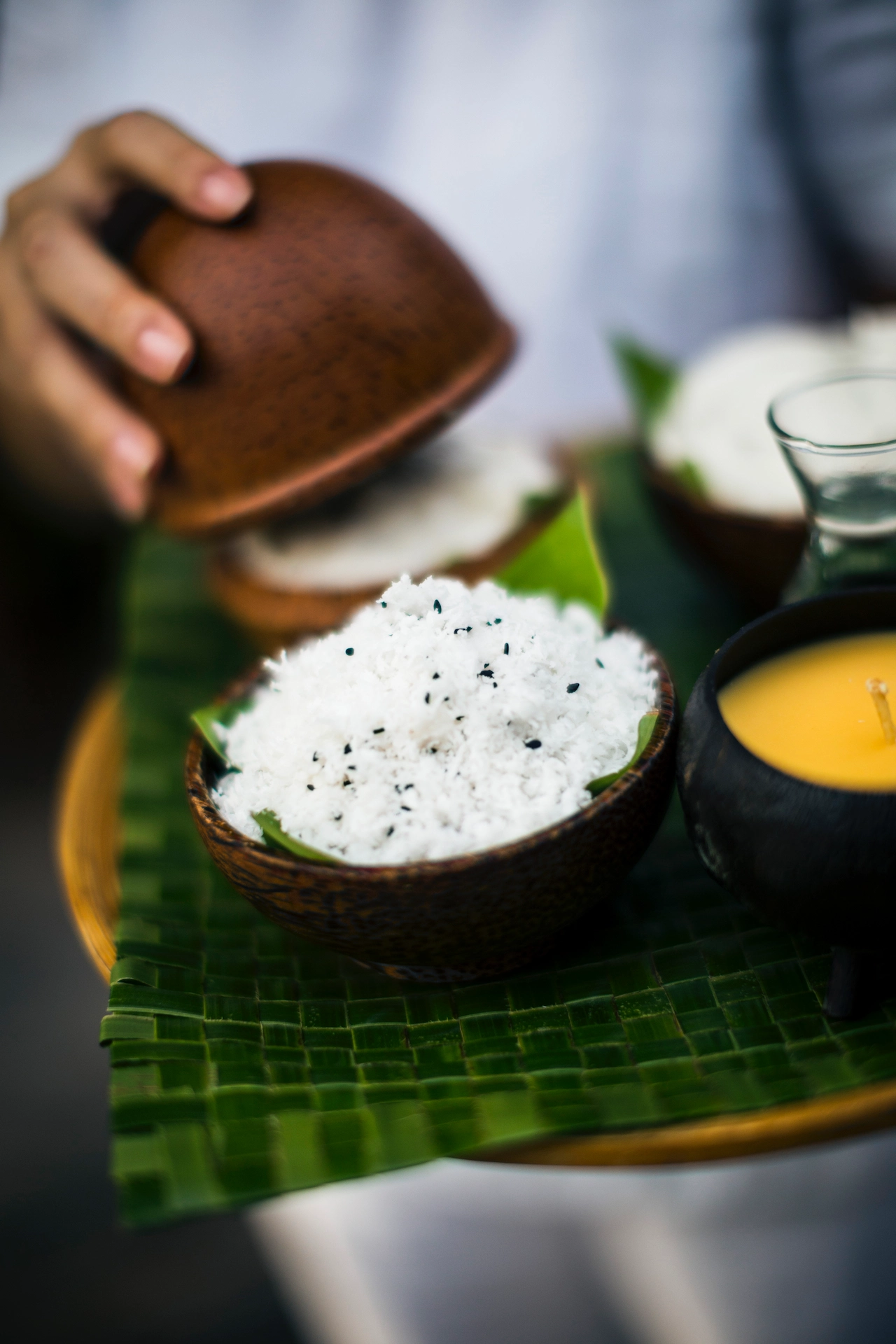
 CUISINE
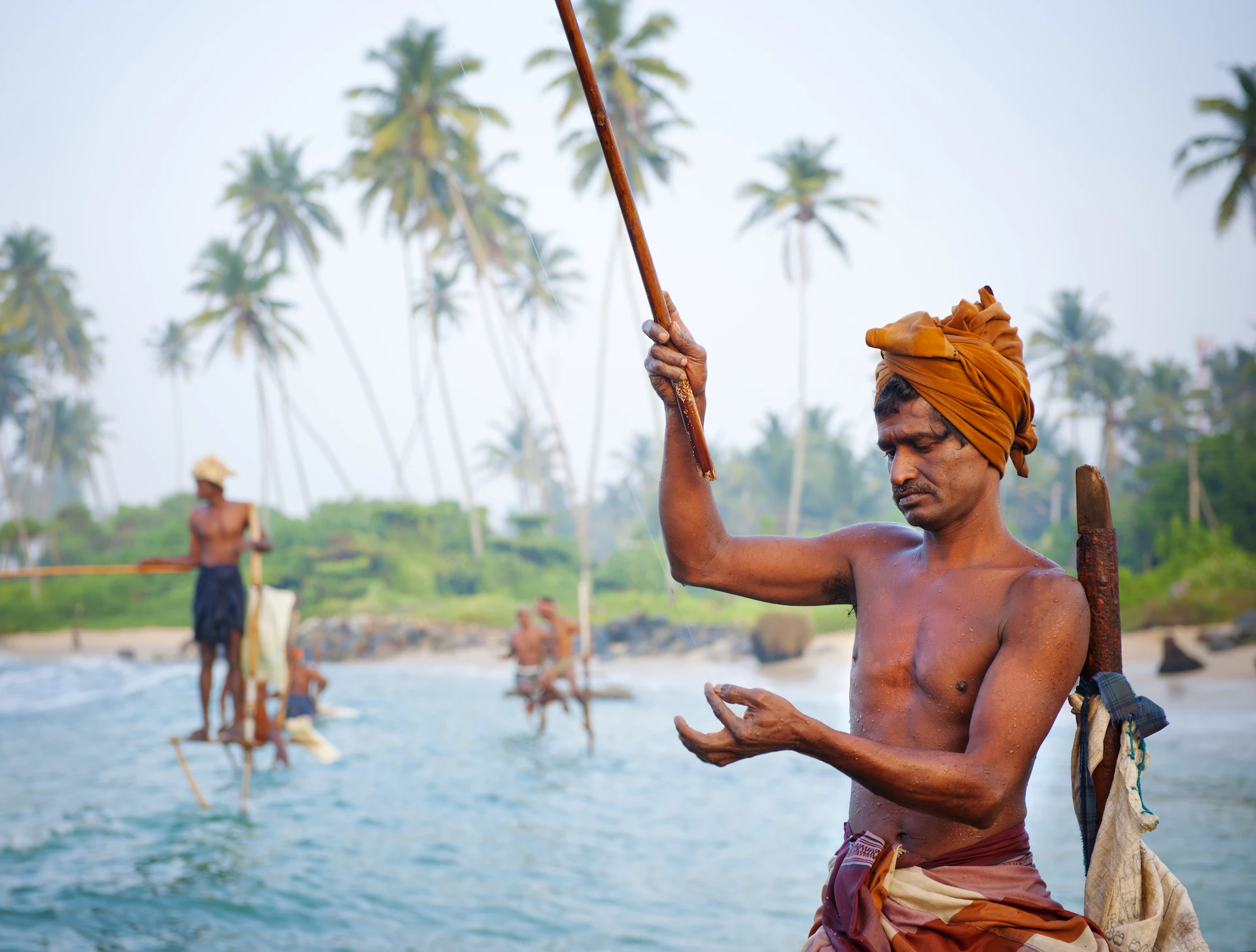 HISTORY
 JOURNALS
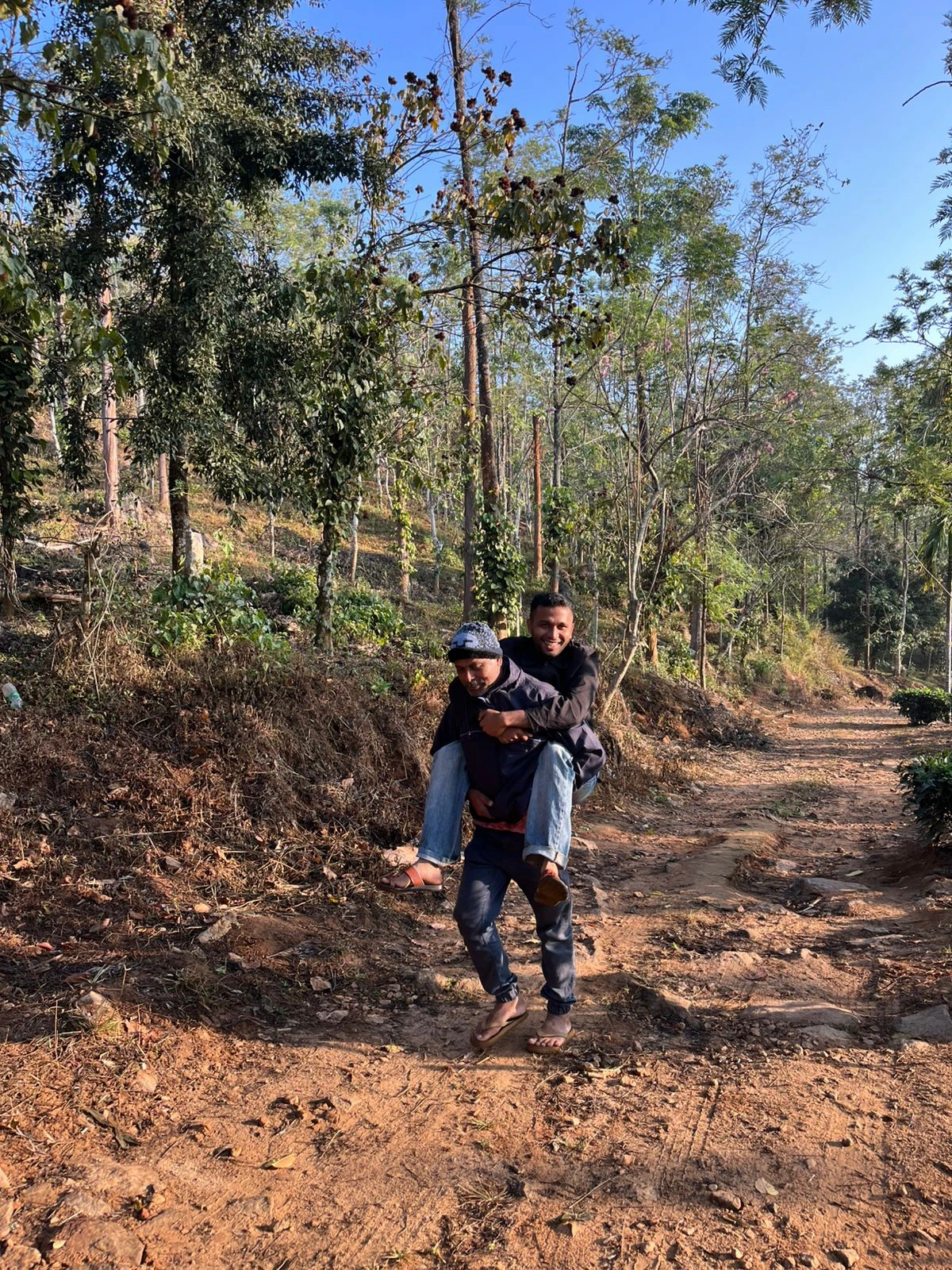 PEOPLE
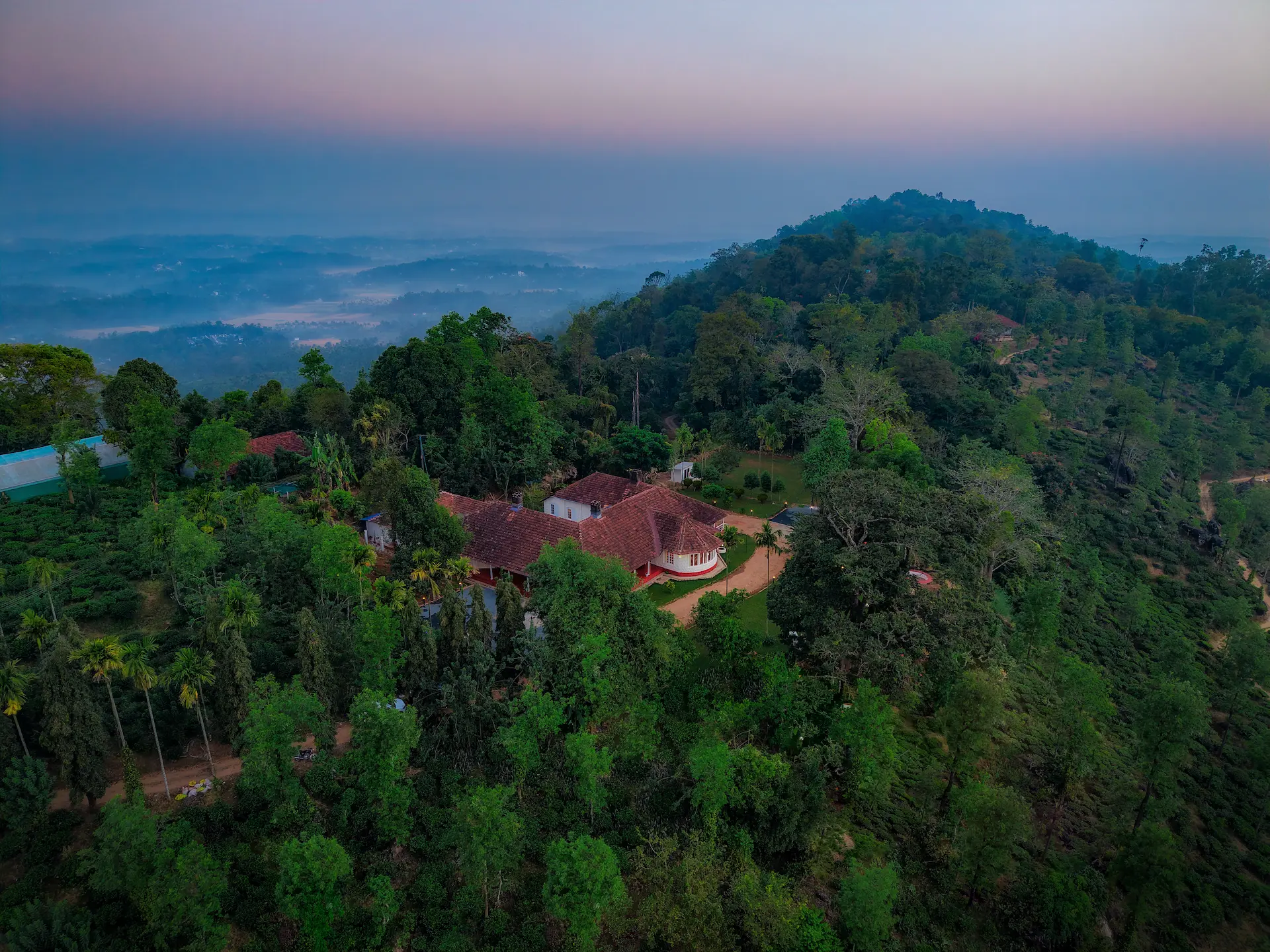 CONSERVATION
A Table That Remembered Malabar
At The Hundred House, some evenings arrive with intention. Not loud, not announced, but carrying a quiet idea waiting to unfold. Kisah Stays has always been drawn to memory, to the things we grew up with and slowly forgot to notice. This time, the question was simple and difficult at once. What happens when the food of our childhood is seen again, but differently. Not changed beyond recognition. Not dressed up for the sake of novelty. But gently reimagined. A modern conversation with the traditional culinary heritage of Malabar. So the table was set. Nine courses, each one holding a fragment of home. Not as it was, but as it could be seen when time slows down and attention deepens. Flavours that once lived in everyday meals were given space to breathe. Pepper was not just spice, but memory. Coconut was not just ingredient, but texture and silence. Rice appeared in forms that felt both familiar and new, like a story told in a different voice. The house watched quietly. The red oxide floors held the weight of footsteps from another century. Fireplaces flickered softly against thick walls that have seen planters, workers, seasons, departures. Outside, the estate rested under a moving mist. The hills did not interrupt. They listened. Guests arrived from different places, carrying different lives into the same room. Some came with curiosity. Some with hunger. Some with no expectation at all. They sat down as individuals, but the table slowly began to rearrange them into something shared. Conversations moved easily, then paused, then deepened again. Food has a way of doing that. It removes the distance between strangers without asking permission. Among them was Tobias, who had been staying with us for some weeks. Long enough to understand the rhythm of mornings here. Long enough to recognise the silence between the trees. That night, he met Malabar through its flavours. A dish would arrive, and with it something unexpected. A taste that did not belong to his past, yet felt immediate. Not foreign. Just new. The kind of new that does not push you away, but invites you closer. The meal moved slowly. Each course arrived like a thought. Some playful, some quiet, some intense enough to stay back on the tongue. The familiar appeared and disappeared in different forms. A memory of a roadside meal. A whisper of a grandmother’s kitchen. A hint of something festive, something everyday, something almost forgotten. There was no rush toward the end. Somewhere between the fourth and fifth course, the idea of a structured dinner dissolved. It became something else. A gathering held together not by sequence, but by feeling. Laughter rose without effort. Silence settled without discomfort. Glasses touched lightly. Firelight moved across faces. Outside, the night in Wayanad remained still, as if it had stepped back to give space. This is what Kisah Stays seeks, without ever saying it too loudly. To take what we know and let us see it again. To bring people together not just to eat, but to experience something that lingers after the last plate is cleared. A modern expression of heritage that does not forget where it comes from. At The Hundred House, that evening did not end with the ninth course. It stayed back. In the walls. In the conversations that continued long after. In the quiet understanding that food, when treated with care, can become more than nourishment. It can become memory, rediscovered.

Itinerary for Wayanad
🌄 Day 1: Arrival + Waterfalls + Sunset View Relaxed start + scenic immersion Morning Arrive via Kalpetta or Sulthan Bathery Check in, freshen up, slow breakfast with mountain air Late Morning Visit Soochipara Falls Short forest trek Mist, sunlight, and cascading water, perfect first feel of Wayanad Afternoon Lunch at a local spot Head to Edakkal Caves Moderate climb Ancient carvings that feel like time whispering from stone Evening Sunset at Lakkidi View Point Watch clouds slide through valleys Night Dinner + unwind 🌿 Day 2: Wildlife + Glass Bridge + Lakes Nature + thrill + calm balance Early Morning Safari at Wayanad Wildlife Sanctuary Choose Muthanga or Tholpetty Expect quiet जंगल moments… and maybe elephants emerging from mist Mid-Morning Highlight Visit 900 Kandi Glass Bridge Suspended glass skywalk over deep forest Jeep ride from The Hundred House (Optional) Afternoon Visit Pookode Lake Gentle boating, relaxed vibe Lunch nearby Head to Banasura Sagar Dam Vast landscapes + optional speed boating Evening (Optional swap if tired) Visit Karlad Lake Zipline / kayaking OR skip and rest Night Campfire at The Hundred House ⛰️ Day 3: Trek + Heritage + Departure Adventure + silence + closure Early Morning (Non-negotiable start) Trek Chembra Peak Permit required Heart-shaped lake = surreal reward Late Morning / Noon Visit Jain Temple Wayanad Quiet, grounding, historical Optional Stop Phantom Rock Quick, unique rock formation Departure Lunch → Check-out → Head back

3-Day Easy Wayanad Itinerary – Temples, Caves, Waterfalls & Banasura Dam
Wayanad is a land of misty hills, ancient caves, quiet temples, and scenic plantations. This relaxed 3-day itinerary lets you experience some of the most beautiful and well-known places in the region without rushing. Your base can be The Hundred House, a restored 140-year-old British plantation bungalow surrounded by tea estates, pepper vines, and birds. Day 1 – Arrival and Temple Visit Arrive in Wayanad and check into your stay by afternoon. Take some time to relax and enjoy the plantation surroundings. Walk around the estate, listen to birds in the trees, and take in the fresh mountain air. In the evening, visit Thirunelli Temple, one of the most sacred temples in Kerala. Surrounded by forested hills, the temple has a peaceful atmosphere and beautiful stone architecture. On the way back, stop at a local tea shop for Kerala tea and snacks like pazham pori. Return to The Hundred House for a calm evening and dinner overlooking the hills. Day 2 – Edakkal Caves and Banasura Dam Start the morning with a drive to Edakkal Caves. A short uphill trek leads to the cave, where prehistoric carvings believed to be thousands of years old are etched into the rock walls. The carvings include human figures, animals, and mysterious symbols from ancient civilizations. After the visit, have lunch at a nearby restaurant. In the afternoon, head to Banasura Sagar Dam, one of the most iconic landmarks in the region. The huge reservoir surrounded by green hills creates a spectacular landscape, and visitors can enjoy walking along the dam or taking a speed boat ride. Return to your stay in the evening and relax. Day 3 – Waterfall and Plantation Walk Begin the day with a slow morning and breakfast. Later, visit Soochipara Falls, a beautiful three-tier waterfall hidden inside thick forest. A short walk through the trees leads to the falls where you can enjoy the cool mist and sound of rushing water. Spend the rest of the day exploring plantation roads or relaxing in the garden at your stay. After lunch, begin your journey back with the quiet memory of Wayanad’s hills and forests. Travel Tip Wayanad has many hidden forest trails and rock inscription sites, but some of them are deep inside plantation or forest areas and may not be suitable for all visitors. It’s always best to explore such places with local guidance. Where to Stay? The Hundred House A 140-year-old British plantation bungalow located in Tourimala, Wayanad. The house features red oxide floors, fireplaces, large halls, and sweeping views of surrounding tea estates and hills. It offers a peaceful heritage stay experience close to many of Wayanad’s major attractions.

A Year That Never Stops Celebrating
In Kerala the year does not simply pass. It arrives again and again wearing different colours. The first whisper of celebration often begins with Vishu. Before dawn breaks, houses wake quietly. Lamps are lit while the sky is still dark. In many homes a small sacred arrangement waits in a brass uruli bowl. Rice grains. Fruits. A mirror. Coins. Yellow konna flowers glowing like drops of sunlight. This is the Vishukkani, the first sight of the year. Children are gently led with closed eyes to see it. When they open them, the year begins with light. Outside, the morning air fills with the sharp crack of fireworks. Elders place small coins into the hands of children, Vishukkaineettam, a blessing disguised as pocket money. In villages and towns alike the day moves slowly through temple visits and festive meals. It is a quiet beginning, but deeply rooted in the rhythm of land and harvest. Soon the sky grows louder. Summer heat gathers over the plains when the great temple festival of Thrissur Pooram arrives. Elephants stand in long majestic rows beneath golden caparisons. Drums thunder like monsoon clouds yet to arrive. The air trembles with chenda melam rhythms that seem to come from the earth itself. Crowds gather not as spectators but as participants in something ancient and overwhelming. Parasols bloom above elephants in sudden bursts of colour. Fireworks tear open the night sky. For a moment the whole city of Thrissur feels like a living heartbeat. Far away in the northern districts another kind of festival appears. In the sacred groves of North Kerala, the ritual performance of Theyyam transforms human beings into gods. The performer emerges wearing towering crowns, fire circling his body, face painted in patterns that carry centuries of memory. When the drums begin and the dance unfolds, the boundary between actor and deity dissolves. Villagers approach not to watch but to seek blessings. In that moment, mythology breathes again. As the monsoon approaches, another celebration slowly gathers its fragrance. When the rains soften the land, Kerala welcomes its grandest festival, Onam. Onam remembers the legendary king Mahabali whose reign was said to be a time of equality and joy. People believe he returns each year to see whether his land is still happy. Homes bloom with intricate pookalam flower carpets. Kitchens awaken early to prepare the great sadya feast served on banana leaves. Rice, curries, pickles, payasam, each dish arriving in careful order like notes in a long musical composition. Across wide rivers the snake boats begin to move. Hundreds of oars strike water in perfect rhythm as crowds shout encouragement from the banks. The boats glide forward like black serpents cutting through rain fed rivers. And just when the year feels full already, another moon begins to glow. When the crescent moon appears, the celebration of Eid al-Fitr spreads through Kerala. Morning prayers gather thousands in mosque courtyards. White garments move like waves of quiet devotion. After a month of fasting, food returns with deep gratitude. The kitchens of Malabar fill with the aroma of biryani, pathiri, and sweet dishes shared with neighbours. Doors remain open. Conversations stretch late into the night. The festival feels less like an event and more like a reunion of the entire community. And when the year begins to cool under December skies, Kerala lights another lamp. Paper stars appear above doorways as Christmas approaches. Churches fill with song during midnight mass. Bakeries glow with trays of plum cakes heavy with dried fruits and spices. The celebration of Christmas carries a quiet warmth through towns and villages. Homes shine with decorations while children wait for morning surprises. Kerala’s Christian history stretches back almost two thousand years, when early traders and missionaries arrived along the same spice routes that once carried pepper to distant empires. Over centuries Christmas became another thread woven gently into the land’s cultural fabric. And then the year circles back again. Temple bells ring. Mosque calls echo through the air. Church choirs sing under candlelight. Festivals rise and fade like tides along the Arabian Sea. Perhaps this is the secret rhythm of Kerala. Here celebration does not belong to one religion or one season. It moves freely across communities and months, carried by food, music, prayer, and memory. In this narrow green strip between the Western Ghats and the sea, the calendar is not simply a measure of time. It is a continuous festival of life itself.

The Mosque Before Sabarimala
In Kerala, faith does not always walk in straight lines. Sometimes it bends like a river, sometimes it pauses at another doorway before climbing its own mountain. Before many pilgrims begin their final ascent to Sabarimala, they stop at a mosque in Erumeli. They remove their slippers. They step inside. They bow their heads. They whisper a prayer. The mosque is known as Vavar Mosque, or Vavar Palli. It stands quietly in the small town of Erumeli, not far from the forested path that leads toward the shrine of Lord Ayyappa. Here, devotion is not divided by walls. The story is older than argument. Legend says that Vavar was a warrior, sometimes described as an Arab trader, sometimes as a sea-faring fighter, who met Ayyappa in battle. Steel met steel. Pride met pride. And somewhere in the clash, respect was born. Instead of enemies, they became companions. A Muslim warrior standing beside a Hindu deity. Not erased. Not converted. Not absorbed. Simply acknowledged. So when pilgrims dressed in black or blue, carrying their irumudi kettu, begin their sacred journey, many first visit Vavar. They offer prayers at the mosque before proceeding to the temple. They also stop at a small shrine dedicated to Vavar near Sabarimala itself. In this ritual pause, something ancient breathes. During the season, Erumeli transforms. The air fills with chants of Swamiye Saranam Ayyappa. Drums echo through narrow streets. The Pettathullal ritual unfolds in color and sweat, recalling the mythic battle between Ayyappa and Mahishi. Devotees dance, smear colors, and move in waves toward both mosque and temple, as if history itself is walking with them. There are no loud declarations here about harmony. It simply exists. A practice older than modern suspicion. A rhythm repeated each year without press conferences. For centuries, the Western Ghats have watched this quiet choreography. Pepper vines once climbed these hills while Roman ships waited on distant shores. Colonial officers later mapped these forests with ink and ambition. But somewhere between empire and independence, ordinary people kept doing something extraordinary. They continued to greet each other’s sacred spaces without fear. Kerala’s spiritual landscape is layered like its monsoon soil. Temples rise near churches. Mosques stand beside shrines. Faith spills into markets and backwaters and hill paths. At Erumeli, the idea becomes visible. A mosque that is part of a pilgrimage to a Hindu temple. A Muslim name spoken in reverence by Hindu lips. It is not a political statement. It is not a slogan. It is habit shaped by centuries. When pilgrims finally climb the eighteen sacred steps at Sabarimala, the memory of that earlier stop lingers. The journey to the mountain included a doorway with a crescent. The forest path carried more than one story. Perhaps that is Kerala’s quiet gift to the world. Devotion that is confident enough to pause at another threshold. A faith that does not shrink when it meets difference. In Erumeli, before the mountain, there is a mosque. And in that small act of stopping, history softens.

Black Gold
There was a time when a small wrinkled berry from the forests of Kerala could bend the spine of an empire. Black pepper. Not merely a spice, not merely a seasoning crushed between fingers. It was breath and fever and appetite. It was what the Romans called luxury and what the Malabar called ordinary life. It grew quietly on vines that climbed jackfruit trees and silver oaks, listening to monsoon rain, unaware that in faraway Rome senators argued over its scent. By the first century CE, ships from the Mediterranean crossed the Arabian Sea, riding the monsoon winds described in the Periplus of the Erythraean Sea. They came for pepper from Muziris, the ancient port believed to have stood near today’s Kodungallur. They came with gold. Pliny the Elder wrote in 77 CE, in his Natural History, that India was draining the Roman Empire of its wealth. He complained that Rome was sending vast amounts of gold eastward for luxuries that weakened Roman virtue. He called India a sink of the world’s gold. He was irritated by pepper. He thought it unnecessary, indulgent. And yet Rome could not stop craving it. Roman senators debated restrictions on luxury imports. Some argued that gold flowing to India weakened the empire’s economic spine. But prohibition is a poor match for desire. Pepper continued to move in sacks across oceans. Roman coins continued to move in chests toward Kerala. Archaeologists have found thousands of Roman aurei and denarii across Tamil Nadu and Kerala, especially near the Kaveri river delta. At places like Karur and in the broader Cauvery basin, hoards of Roman coins surfaced from the soil, often with small cuts or chisel marks. These were test marks. Merchants in South India sliced into the coins to verify that the gold was pure and not plated fraud. Trust was measured with a blade. Kerala, it seems, had little interest in Roman goods. Amphorae of wine and olive oil arrived, yes. Glassware too. But the balance of trade leaned heavily eastward. What Rome truly offered was gold. And gold was accepted not as submission, but as price. In 2011, when vaults of the Padmanabhaswamy Temple were opened in Thiruvananthapuram, the world stared in disbelief. Gold coins, ornaments, jewels, artifacts accumulated across centuries were found in staggering quantity, with estimates reaching around twenty two billion dollars in value. Among them were coins bearing foreign faces, echoes of long dissolved empires. History sleeping in darkness. Trade turned into devotion. Was Roman hunger for pepper the seed of colonial ambition centuries later. Not directly in a single straight line. The Roman Empire did not colonise Kerala. But the pattern was planted early. Europe’s appetite for spices never faded. When overland routes became unstable and intermediaries controlled trade, European powers searched for sea routes. The voyages of the Portuguese at the end of the fifteenth century were driven by spice. Pepper was no longer seasoning. It was strategy. Vasco da Gama did not sail to India out of curiosity alone. He sailed because black pepper was worth war. What Rome once paid for in gold, later Europe tried to control with cannons and forts. The Portuguese, then the Dutch, then the British. Colonialism was not born from pepper alone, but pepper was one of its most fragrant excuses. And yet not everything was taken back. Some gold remained, sealed in temple vaults. Some coins stayed buried in riverbeds. Some colonial bungalows survived on hill slopes, their fireplaces still cold with memory. At places like The Hundred House in Wayanad, time feels layered. You can almost imagine a Roman coin pressed into a landlord’s palm, then centuries later a British planter counting wages under a tiled roof while pepper vines climbed outside. Black gold moved empires. It crossed oceans without a passport. It made senators anxious and sailors wealthy. It turned Kerala into a whisper in Roman halls. Today when pepper crackles in hot oil in a kitchen in Wayanad, it is easy to forget that this small dark bead once tilted the balance of the ancient world. It was counted alongside gold and silver not because it shone, but because it made people want more. Empires rise from desire. Sometimes all it takes is a taste.

Kerala to be named Keralam
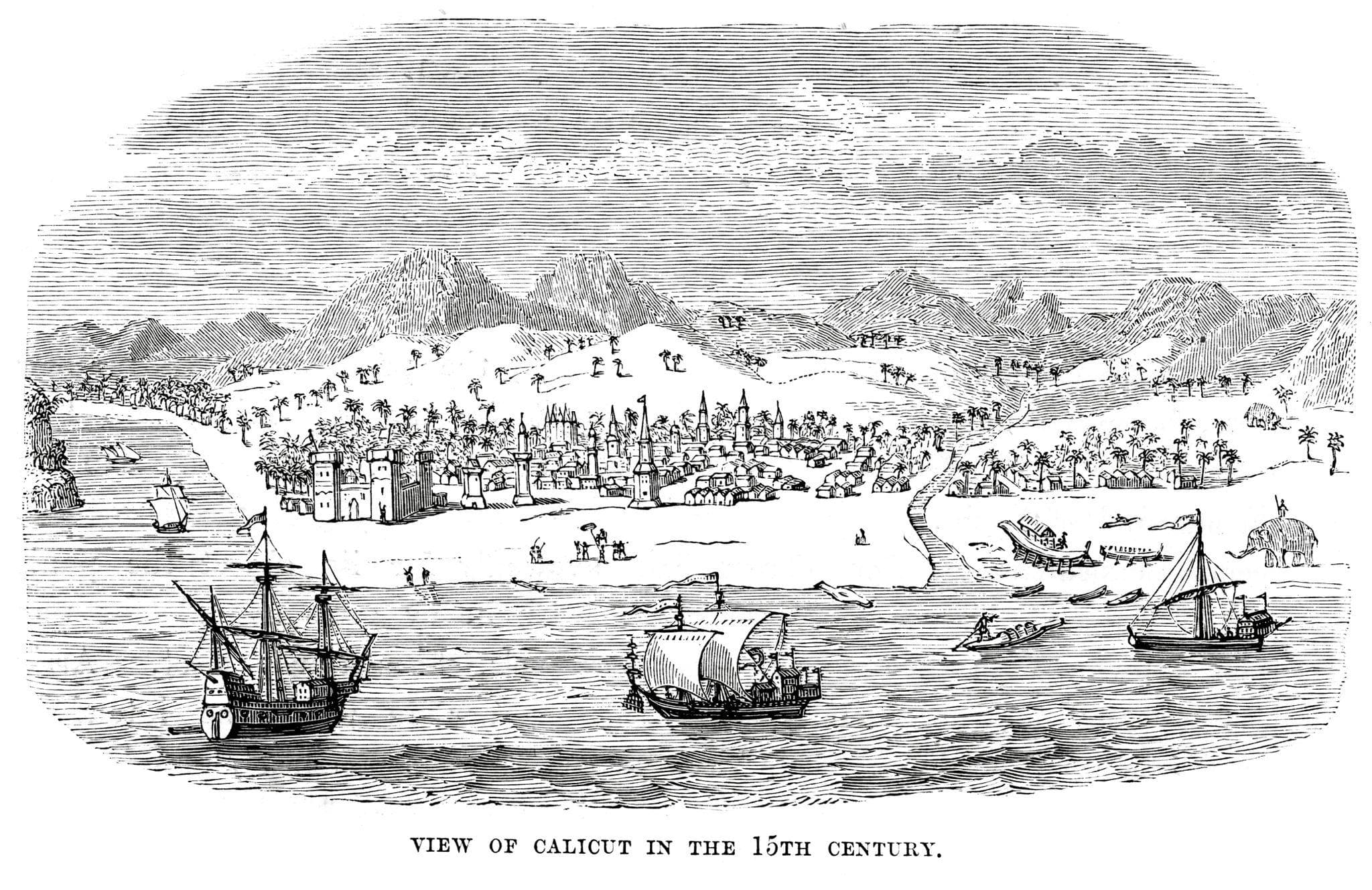
There is something deeply emotional about names. Recently, the proposal to officially use Kerala as Keralam in English documents reopened a quiet question. What are we really correcting when we change a spelling? And what are we leaving behind? In Malayalam, the land has always been കേരളം. The ending is not decorative. It carries linguistic rhythm, history, texture. “Kerala” is an anglicised simplification that arrived through colonial documentation and administrative ease. “Keralam” feels closer to how the land hears itself. But renaming is not as simple as sentiment. Constitutional amendments, updates to central records, international listings, passports, railway codes, postal systems, digital databases, all must align. The name of a state is not just cultural identity. It is legal architecture. And then comes the deeper layer. If Kerala becomes Keralam in English, what about Kozhikode and its older colonial name Calicut? Calicut is not just a British mispronunciation. It entered global vocabulary through trade. Medieval Arab sailors, Portuguese explorers, Dutch merchants, Chinese traders, they all wrote of Calicut. The name travelled. It became shorthand for the Malabar Coast. The English word “calico” is derived from Calicut, referencing the cotton textiles exported from this port. In old Chinese maps where India appeared smaller, but Calicut was marked prominently. That is not accidental. In maritime cartography, ports mattered more than landmass. Power was coastal. Trade was visibility. Calicut was not a city on the map. It was the map. Under the Zamorin, Calicut stood as one of the most important spice trade hubs in the Indian Ocean world. Vasco da Gama did not “discover” India. He arrived at a port that was already globally connected. So when we renamed Calicut to Kozhikode, we reclaimed pronunciation. We restored local phonetics. But we also softened a name that once carried global weight. This is the paradox of renaming. On one hand, restoring indigenous names corrects colonial distortions. Bombay becomes Mumbai. Madras becomes Chennai. Calicut becomes Kozhikode. Aurangabad to Chhatrapati Sambhaji Nagar, Osmanabad to Dharashiv and Kerala becomes Keralam. It feels like linguistic decolonisation. On the other hand, some colonial names absorbed centuries of layered meaning. Calicut is embedded in trade history. In textile vocabulary. In global maritime archives. The question is not whether Keralam is correct. It is. Linguistically and culturally. The question is whether symbolic correction alone creates deeper change. Will Keralam mean stronger language preservation? Will Kozhikode mean stronger urban identity? Will restored spellings influence how we design cities, conserve heritage, protect archives? Or will it remain administrative? Names carry memory. But memory requires maintenance. Calicut tells a story of global trade and oceanic power. Kozhikode tells a story of local continuity. Keralam tells a story of linguistic authenticity. Kerala tells a story of international familiarity. Perhaps the real question is not which name is right. It is whether we are honouring what those names once represented. If Calicut once stood large on world maps, not because of land size but because of influence, are we building cities today that deserve such prominence again? If we insist on Keralam, are we also protecting Malayalam with the same seriousness? A name change makes sense only if it is accompanied by substance. Otherwise, it becomes typography. And history deserves more than spelling. Kerala or Keralam, the feeling is the same.

Why Did the World Become So Plain
There was a time when even a lamp post had dignity. Walk through parts of the London and you will see cast iron lamp posts shaped with intention. Not just poles, but objects of civic pride. Churches across the United Kingdom carry carved stone faces that no one notices anymore. In France, cathedral facades rise with sculpted saints and gargoyles that required decades of labour. In Germany, timber framed houses lean with geometric discipline. In Canada and Australia, older civic buildings carry brickwork patterns and public detailing rarely seen in new construction. Even in the vastness of the former Soviet Union, bus stops were built like small sculptures, experimental, whimsical, almost defiant in design. Somewhere along the way, functionality defeated poetry. Concrete became faster. Steel became cheaper. Glass became universal. Design began answering only to cost, not character. We call it efficiency. But sometimes it feels like amnesia. And yet, when you stand inside a Kerala naalukettu, something else emerges. Nalukettu is not only a house type. It is climate intelligence. Sloping tiled roofs to soften monsoon rain. Inner courtyards to pull light and air into the heart of the home. Wooden beams carved not because they needed to be carved, but because someone believed even structure deserved beauty. Chinese architectural influence travelled through trade routes long before globalisation became a word. Curved rooflines, layered eaves, timber joinery traditions, the idea that wood could bend without breaking. Kerala absorbed ideas the way it absorbed spice routes. You see echoes of that in certain ornamental brackets and roof forms. You see European influence too. The plantation bungalow, like the one at The Hundred House by Kisah Stays, carries British proportions, wide verandahs, fireplaces designed for cooler hill climates, bridges built with colonial engineering logic across rivers and valleys. Architecture here is not pure. It is layered. But what is disappearing is not influence. It is detail. Look closely at old furniture. The leg of a table carved like a tiger gripping a sphere. Chair arms shaped like animal claws. Not machine stamped. Hand chiselled. Slight asymmetry. You can see where the artisan paused. Where the wood resisted. Where patience lived. Those pieces will not be made again in the same way. Not because we cannot. But because we do not allow the time. Labour has become expensive. Patience is unprofitable. Ornament is labelled unnecessary. The world did not become ugly overnight. It became hurried. When everything is optimised for scale, uniqueness feels inefficient. When buildings are investments before they are spaces, detail is trimmed. When furniture is assembled, not carved, the tiger disappears and a metal screw replaces him. But ugliness is not permanent. It is a phase of forgetting. Beauty returns wherever someone slows down enough to care. In old bridges, in carved rafters, in Soviet bus stops shaped like flying wings, in French stone tracery, in British lamp posts, in Kerala wooden brackets darkened by monsoon seasons, in a table leg shaped like a tiger holding a ball. Details are not decoration. They are memory. And memory is what keeps the world from becoming plain.
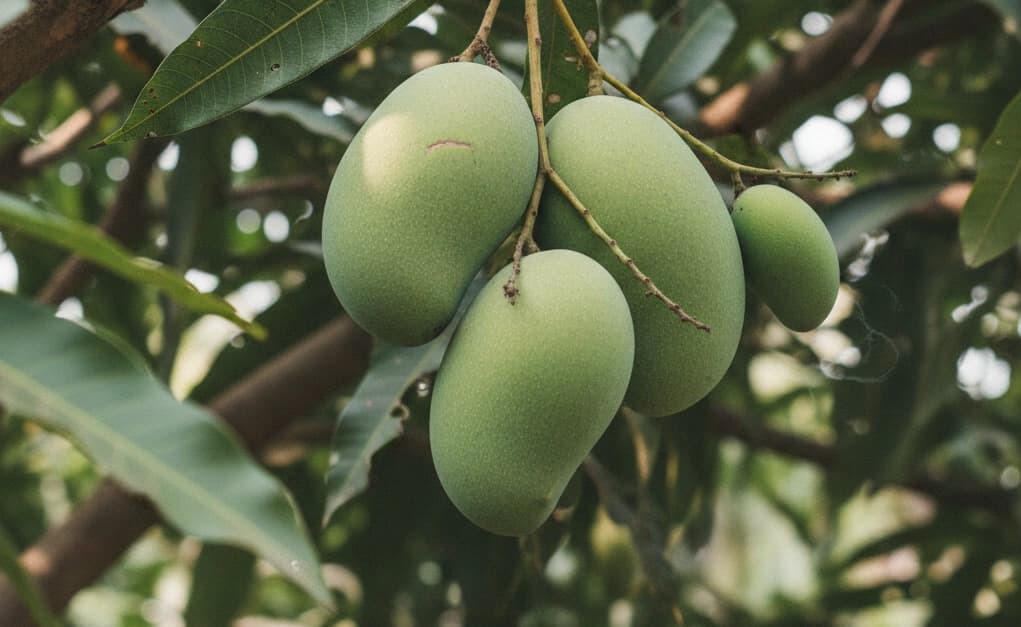
When Avocado City Turned Mango This Season
They call Ambalavayal Avocado City for good reason. This patch of the Western Ghats has made a name for itself with buttery avocado orchards that cascade down the hillsides and fill markets with creamy green harvests. But this season, the hills whisper a different tale. Everywhere you look there are mangoes. Branches sagging under thick fruit clusters, golden globes peeping through glossy leaves, roadside trees dripping bounty onto dusty paths. It’s as though the land has declared itself mango first, avocado second and it’s not just imagination. Across many fruit-growing regions, abundant mango crops this year reflect unusually favourable conditions during the flowering phase. In parts of India such as Karnataka’s mango belt, cold snaps during the crucial flowering months helped produce profuse blossoms, setting the stage for a bumper harvest ahead. In Kerala and Tamil Nadu, too, growers have noted mango trees starting to flower earlier than usual, sometimes as early as December and January. A shift from traditional patterns that can lead to heavier yields. Meteorological quirks play a quiet but profound role. The interplay of temperature, rainfall and dry spells during the pre-flowering months can dramatically influence how many flowers form and how many of those flowers turn into fruit. A cool and dry flowering period helps conserve energy in the tree and supports better pollination, while timely sunshine keeps fruit set healthy and stable. In ecological terms, it’s not that the mango trees suddenly decided to produce more. They responded to a subtle alignment of climatic cues, a kind of whisper from the weather that said, now is your time. It’s the same why mango showers, the pre-monsoon rains famous in southern India, historically signal early ripening and nurture fruit development across the region. For locals this season feels almost poetic. Ambalavayal’s identity has long been tied to avocado. The rich green fruit that gave the town its affectionate nickname. Yet here, in the space where soil and sky meet, nature is reminding us that identity in the natural world is fluid. A hill known for one crop can embrace another when conditions are right. The mango season brings its own memories. The smell of raw mango sprinkled with chilli salt. The sticky sweetness on elbows in the evening. Children arguing over the juiciest slice. It is more than a harvest; it is a season written into culture, imagination and seasons themselves. So when Avocado City turns mango, it is not contradiction or confusion. It is celebration. A reminder that the land has agency and sometimes it offers abundance the way a generous host offers an unexpected second course. Maybe next year the avocados will dominate again. Maybe not. This year, the hills are heavy with mango, and that sweetness is everywhere.
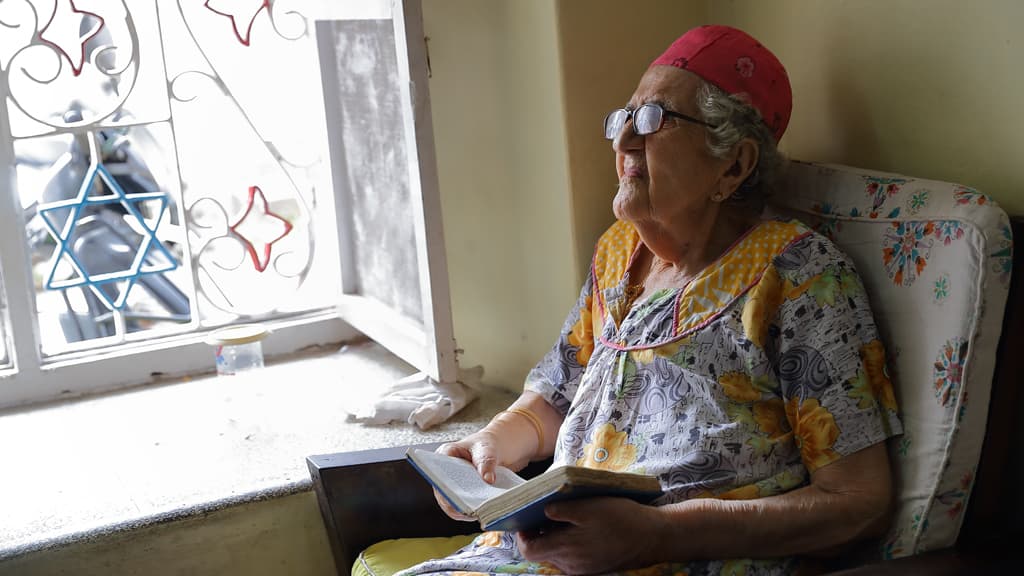
Sarah Cohen’s Home - Kerala Jew
In Mattancherry, near the backwaters of Kochi, there is a narrow stretch of road officially called Jew Street. Locals still call it that without hesitation. The name is not symbolic. It is historical. For centuries, this lane was the heart of Kerala’s Jewish community. At the end of this street stands the Paradesi Synagogue, built in 1568 under the protection of the Cochin Raja after the Jewish community relocated from Cranganore following Portuguese attacks. The synagogue, with its hand painted Chinese tiles and Belgian glass chandeliers, became the spiritual centre of the Cochin Jews, a community whose presence on the Malabar Coast dates back many centuries, possibly even to the early years of the Common Era through maritime trade routes. Jew Street grew around that synagogue. Houses, spice warehouses, prayer rooms, shops. Hebrew mingled with Malayalam. Sabbath lamps were lit in homes where coconut oil burned gently. The Malabar Coast, known for pepper and cardamom, became equally known for something rarer. Religious coexistence. One of the last residents of that once thriving street was Sarah Jacob Cohen. Her house stood close to the synagogue, painted in deep colours, modest and alive. She embroidered kippot by hand, welcomed visitors, and carried within her voice the memory of a community that had slowly migrated to Israel after 1948. By the early twenty first century, only a handful of Jews remained in Kochi. When Sarah passed away in 2019, many believed Jew Street had reached the end of its Jewish chapter. But Kerala rarely allows stories to end abruptly. Today, parts of the synagogue and its daily upkeep are maintained with the help of local residents, including a Muslim caretaker who ensures that the doors are opened, visitors are guided, and rituals are respected. It is a detail that speaks louder than headlines. A synagogue preserved through the care of another faith. A heritage protected not by numbers, but by neighbours. Jew Street has changed. Antique shops have replaced old family homes. Tourists walk where spice traders once negotiated in Hebrew and Malayalam. But the street still carries memory. The name remains. The synagogue stands. The air still feels layered. Adding Jew Street to this story is not just about geography. It is about continuity. It reminds us that faith traditions do not survive only in sacred texts. They survive in streets. In houses. In relationships between communities. Kerala’s Jewish history is not the oldest in India, but it is among the most distinctive. It tells of trade, migration, resilience, and remarkable tolerance. It tells of rulers who granted protection. Of communities that blended without dissolving. Of identity maintained without conflict. And in that small stretch of road in Mattancherry, Judaism is not entirely past tense. It breathes through preservation, through memory, through the simple act of unlocking a door each morning. Jew Street is no longer crowded with Hebrew prayer. But it is still alive with story.
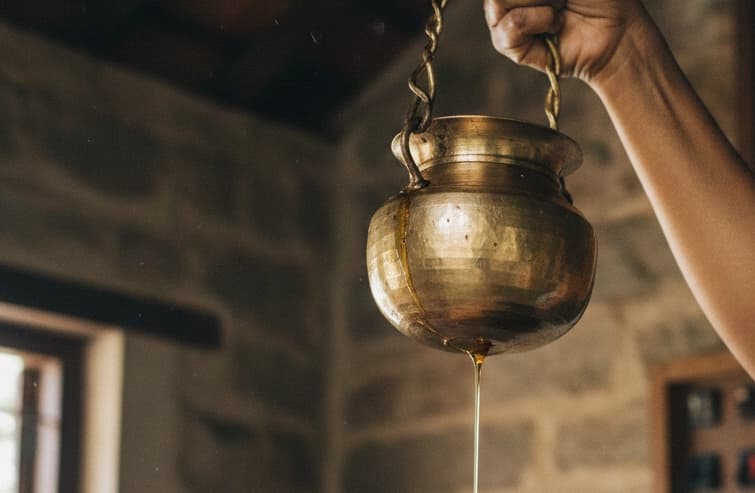
Ayurveda
Long before modern medicine learned to measure the body in numbers, India was learning to read it like a landscape. Ayurveda is not merely a system of treatment. It is a philosophy of balance. The word itself means knowledge of life. Not knowledge of illness, but of life in its fullness. Ayurveda emerged more than three thousand years ago, rooted in ancient texts such as the Charaka Samhita and Sushruta Samhita. It views the human body as part of nature, not separate from it. Just as forests depend on rain and soil, the body depends on balance between the three doshas. Vata, Pitta, and Kapha. These are not diseases but energies, principles of movement, transformation, and stability. In Kerala, Ayurveda found fertile ground. The climate of the Western Ghats, rich in medicinal plants and steady monsoon rainfall, created ideal conditions for herbal medicine to flourish. Generations of vaidyas refined oil treatments, herbal decoctions, and therapies that are now known across the world. Panchakarma, Abhyanga, Shirodhara — these are not spa rituals born for tourism. They are methods developed over centuries to detoxify, restore, and realign. What makes Ayurveda powerful is not only its remedies but its listening. It asks how you sleep. What you eat. How you think. It understands that the mind influences the body, that stress disturbs digestion, that emotion can manifest physically. In this way, Ayurveda feels modern despite its age. It treats the individual, not just the symptom. Today Ayurveda has travelled far beyond Kerala. It appears in wellness centres in Europe, retreats in North America, and research discussions in contemporary healthcare. Yet its essence remains simple. Health is balance. Food is medicine. Nature is teacher. In a world of speed and constant stimulation, Ayurveda invites slowness. Warm oil poured gently across the forehead. The scent of crushed herbs. The quiet rhythm of breath during treatment. Healing becomes less about intervention and more about harmony. Kerala’s identity is deeply intertwined with Ayurveda. It is not only a wellness destination but a living tradition. The forests of the Western Ghats still hold plants used in classical formulations. The knowledge passed down through families continues to evolve with responsible practice and scientific dialogue. Ayurveda reminds us that the body is not a machine to be fixed but a system to be understood. It is storytelling at the cellular level. The pulse tells a story. The tongue tells a story. The skin tells a story. And the healer listens. In the end, Ayurveda is less about curing and more about remembering. Remembering that we are part of the same rhythm as the monsoon and the soil. That health is not an achievement but a balance constantly maintained. That sometimes the most powerful medicine is attention.
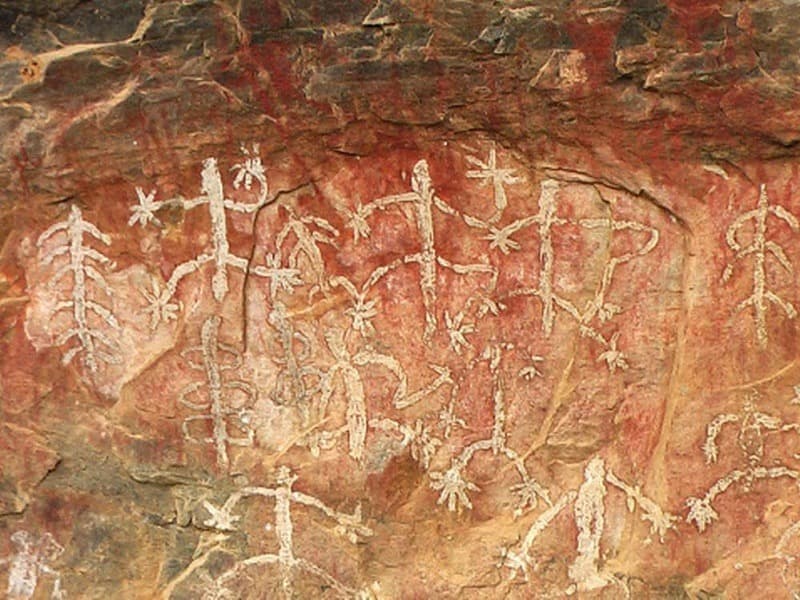
Stories on Wall
Before cave paintings, there were gestures. Before symbols, there were sounds. A warning cry. A lullaby hum. A hand placed gently on a shoulder. Communication did not begin with language. It began with need. The need to survive, to bond, to pass something forward. Then came the courage to mark stone. In the hills of Wayanad, the carvings inside Edakkal Caves remain among the oldest known petroglyphs in Kerala, dating back several thousand years, with some scholars placing them as early as the Neolithic period. Human figures, animals, symbols, geometric forms. These are not decorative scratches. They are early records of thought. They are memory made visible. Nearby, Ezhuthupara, literally meaning writing rock, carries inscriptions that belong to later historic periods. While not older than Edakkal’s prehistoric carvings, Ezhuthupara represents something equally powerful. The shift from symbolic carving to structured script. From image to language. It marks the evolution of communication from primal expression to organised writing. So are they the oldest inscriptions in India. Not exactly. India holds older script evidence such as the Indus Valley symbols. But in Kerala’s context, Edakkal stands as one of the earliest and most significant prehistoric sites. It is a reminder that this land has been telling stories long before literature. The impulse behind those carvings is the same impulse that drives us today. To say we existed. To say we felt something worth remembering. Over centuries, storytelling evolved. Oral epics travelled through memory. Palm leaf manuscripts preserved philosophy. Printing presses multiplied ideas. Radio dissolved distance. Cinema turned emotion into light and shadow. And now, the smallest device in our palm broadcasts our thoughts to the world. Social media is perhaps the fastest transformation storytelling has ever experienced. A moment becomes a post. A feeling becomes a caption. A protest becomes a movement. Communication that once took generations to spread now travels in seconds. We narrate our lives continuously, curating images, shaping identity, performing presence. And yet, the difference between a carved stone in Edakkal and a disappearing story on a screen is permanence. One required effort, time, physical endurance. The other requires a tap. One survived millennia. The other vanishes in twenty four hours. But beneath both lies the same hunger. To connect. To belong. To leave a trace. From cave walls to social walls, storytelling has grown in speed and scale, but its core remains unchanged. It is how humans understand themselves. It is how communities form. It is how memory resists disappearance. And still, there are stories that refuse inscription. Love does not always need carving or caption. The most powerful communication often happens in silence. A glance across a room. A hand held longer than necessary. A shared quiet under a monsoon sky. Before cave paintings, there was feeling. After social media, there will still be feeling. Technology evolves. Platforms rise and fall. But the human instinct to express, to mark time with meaning, will continue. Some stories are carved in stone. Some are posted online. And some are simply lived, deeply and without audience.

SM Street : Sweet Meat Street
In the middle of Kozhikode there is a street that does not merely sell things. It performs them. The air itself feels sugared. The sounds overlap like a chorus. This is SM Street, known locally as Mittai Theruvu, which translates to Sweet Meat Street. A name given during colonial times, when British officers tasted local confections and decided the entire road must belong to sweetness. SM Street is not grand in width, yet it holds centuries. Traders from Arabia once docked along the Malabar Coast, bringing spices, textiles and stories. Kozhikode, once ruled by the Zamorins, was already a thriving port long before European ships appeared on the horizon. The commerce that flowed through the harbour eventually found its rhythm here, between rows of shops that still stand shoulder to shoulder. Walk through it in the evening and you will understand why it remains one of the most visited streets in Kerala. Halwa glows in jewel tones inside glass cases. Banana chips crackle in hot oil. The scent of ghee, roasted cashews and fresh textiles mixes with the metallic hum of shutters and scooters waiting at either end. Old establishments share walls with new brands. Tailors measure fabric beside modern retail stores. The past negotiates gently with the present. SM Street survived fires, renovations and the slow transformation of Kozhikode into a modern city. Yet it retains a certain intimacy. Shopkeepers remember regular customers. Conversations stretch longer than transactions. During festivals the street becomes almost theatrical, strung with lights and filled with families who have walked this path for generations. It is more than a shopping destination in Kozhikode. It is a cultural corridor. A place where Malabar’s trading legacy continues in everyday gestures. Where language shifts between Malayalam, Arabic influenced slang and English without effort. Where history is not displayed in museums but folded into paper packets of halwa and wrapped around parcels of cloth. If you want to understand Kozhikode, you do not begin with monuments. You begin here. On SM Street, where sweetness became geography and trade became tradition.
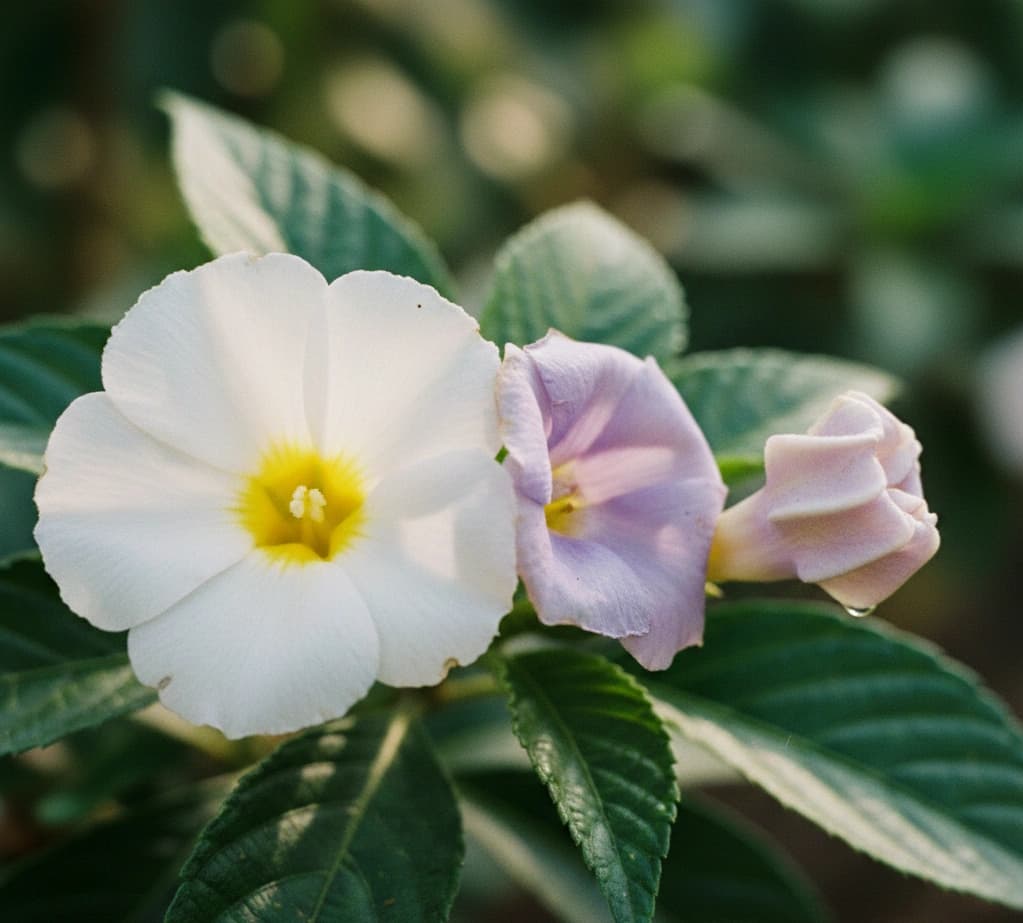
Yesterday Today Tomorrow
The Flower That Changes with Time. In the garden of The Hundred House by Kisah Stays there is a shrub that tells time without a clock. It is called Brunfelsia uniflora, though most people know it by its more poetic name, Yesterday Today Tomorrow. The name is not metaphor alone. The flower truly changes colour over three days. On the first day it blooms a deep violet. By the second day it softens into lavender. By the third, it fades into white. Three colours on the same plant at the same time, like memory, presence and possibility standing side by side. We planted Yesterday Today Tomorrow at The Hundred House because this bungalow lives in all three tenses. Yesterday is in its walls, in its fireplaces, in the stories of plantation workers and monsoon seasons that passed long before us. Today is in the restoration, in the guests who walk through tea-scented mornings, in conversations that stretch across the lawn at dusk. Tomorrow is in what will continue long after we are gone, in trees growing taller, in footsteps yet to arrive. The flower mirrors this philosophy quietly. It does not rush its transformation. It simply becomes. Violet to lavender to white. Nothing dramatic, only change made visible. In a place surrounded by the ancient hills of Wayanad, where even the land itself has travelled continents in geological time, this small flowering shrub becomes a gentle reminder that everything moves forward, even when it appears still. Guests often notice the three shades at once and ask how it is possible. The answer is simple and profound. Time exists together. What bloomed yesterday still stands beside what blooms today. What will fade tomorrow is already beginning. That is why we planted it. Not just as an ornamental flowering plant in Wayanad’s climate, but as a living symbol of continuity. At The Hundred House, yesterday is honoured, today is experienced, and tomorrow is quietly being prepared. The flower makes this visible in colour.
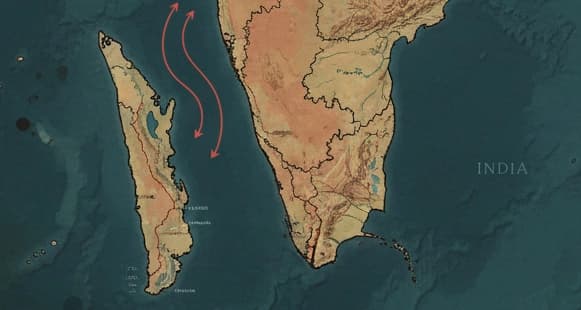
Was Kerala Once Part of Africa?
It sounds improbable at first. That Kerala, with its coconut palms and monsoon rains, was once physically attached to Africa. Yet geology tells us that this is not imagination but memory written in stone. More than 180 million years ago, the land we now call India was part of a vast southern supercontinent known as Gondwana. Africa, Antarctica, Australia, South America and the Indian subcontinent were fused together as one enormous landmass. Kerala was not a coastal state then. It was a fragment of a continent that touched what is now eastern Africa. Over time, Gondwana began to break apart. The section carrying India separated and started drifting northward. This moving block of crust is called the Indian Plate. It travelled across an ancient ocean for millions of years, carrying with it some of the oldest rocks found today in the Western Ghats. Around 50 million years ago, the Indian Plate collided with Eurasia. The force of that impact lifted the earth’s crust upward and gave birth to the Himalayas. These mountains are still rising today. The collision also created the Tibetan Plateau and permanently altered climate systems across Asia. The strengthened monsoon that now defines Kerala’s heavy rainfall patterns is partly a consequence of those towering northern mountains blocking and redirecting atmospheric currents. But Kerala’s own mountains tell an older story. The Western Ghats were not formed by the Himalayan collision. Much of their geological foundation predates it. They were shaped by volcanic activity and tectonic processes linked to the breakup of Gondwana and the early drifting of the Indian Plate away from Africa. Some of the rock formations in Kerala are among the most ancient on the subcontinent. This is where the Palakkad Gap enters the story. If the Western Ghats form a near continuous wall along Kerala’s eastern edge, the Palakkad Gap is a broad natural break in that wall. Its origin lies not in the Himalayan collision but in deep structural weaknesses in the crust, likely dating back to the time when India was separating from Africa and Madagascar. Ancient fracture zones remained embedded in the land. Over millions of years, erosion and tectonic adjustments widened this weak corridor into the low mountain pass we see today. The gap changed more than geography. Because it is lower than the surrounding Ghats, it allows dry winds from Tamil Nadu to move into Kerala. This is why Palakkad is noticeably hotter and less rain soaked than Wayanad or Idukki. The Bharathapuzha River flows through this passage, and for centuries it has been a natural route for trade and migration between the western coast and the Tamil plains. So was Kerala part of Africa. Yes, in deep geological time. Did that drifting journey help shape its mountains. Yes, through ancient volcanic activity, tectonic fractures and the later climatic impact of the Himalayan collision. Even the Palakkad Gap can be traced back to scars left in the crust when continents pulled apart. When you stand in Kerala today, you stand on land that once touched Africa, travelled across oceans, collided with Asia, and rose into mountains. The hills, the gap in Palakkad, the monsoon rains and river valleys are all chapters of that long movement. The earth beneath us is not still. It is a story of separation, impact and slow transformation written over hundreds of millions of years.
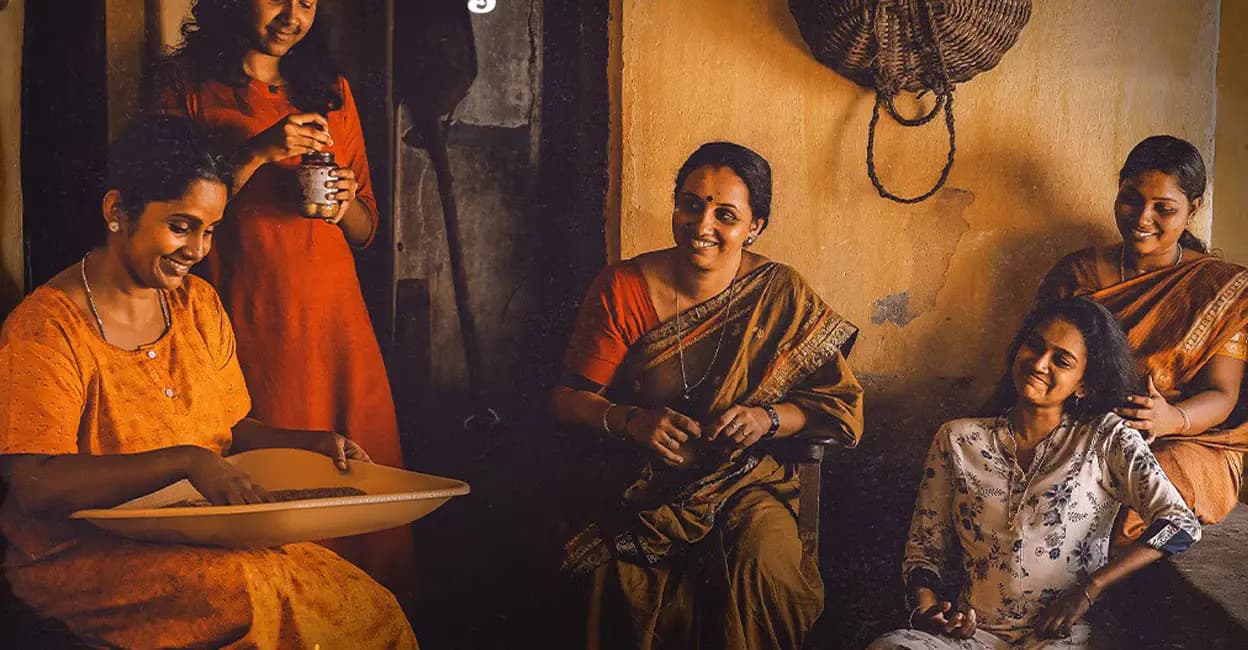
Movies to Know Kerala
We love cinema here the way some places love football or prayer. It is not just entertainment. It is discussion material for tea shops. It is argument inside buses. It is background noise in living rooms and foreground obsession in college hostels. We grow up quoting dialogues before we understand taxation. We understand heartbreak through background score. One evening in between conversations we began speaking about how cinema helps us travel without tickets. You can understand a place you have never visited. You can feel the weight of a language you do not speak. Slowly the ear adjusts. Words that once felt foreign begin to taste familiar. Cinema teaches geography through emotion. It teaches slang before grammar. It teaches food before history. Of course cinema can also teach the wrong things. It can compress complexity into slogans. It can manufacture villains and polish heroes. It can be propaganda wearing poetry. Influence is its secret power. If tomorrow someone makes The Kerala Story 2 perhaps the coconut trees will finally confess their conspiracy and the backwaters will reveal their master plan. Still, despite distortion, cinema remains one of the most honest windows into Kerala. Not the brochure version. Not the curated tourism clip. But the breathing, contradictory, argumentative, affectionate Kerala. Though a list of the best is never possible, we have tried putting together a set of films that offer glimpses into its many worlds.
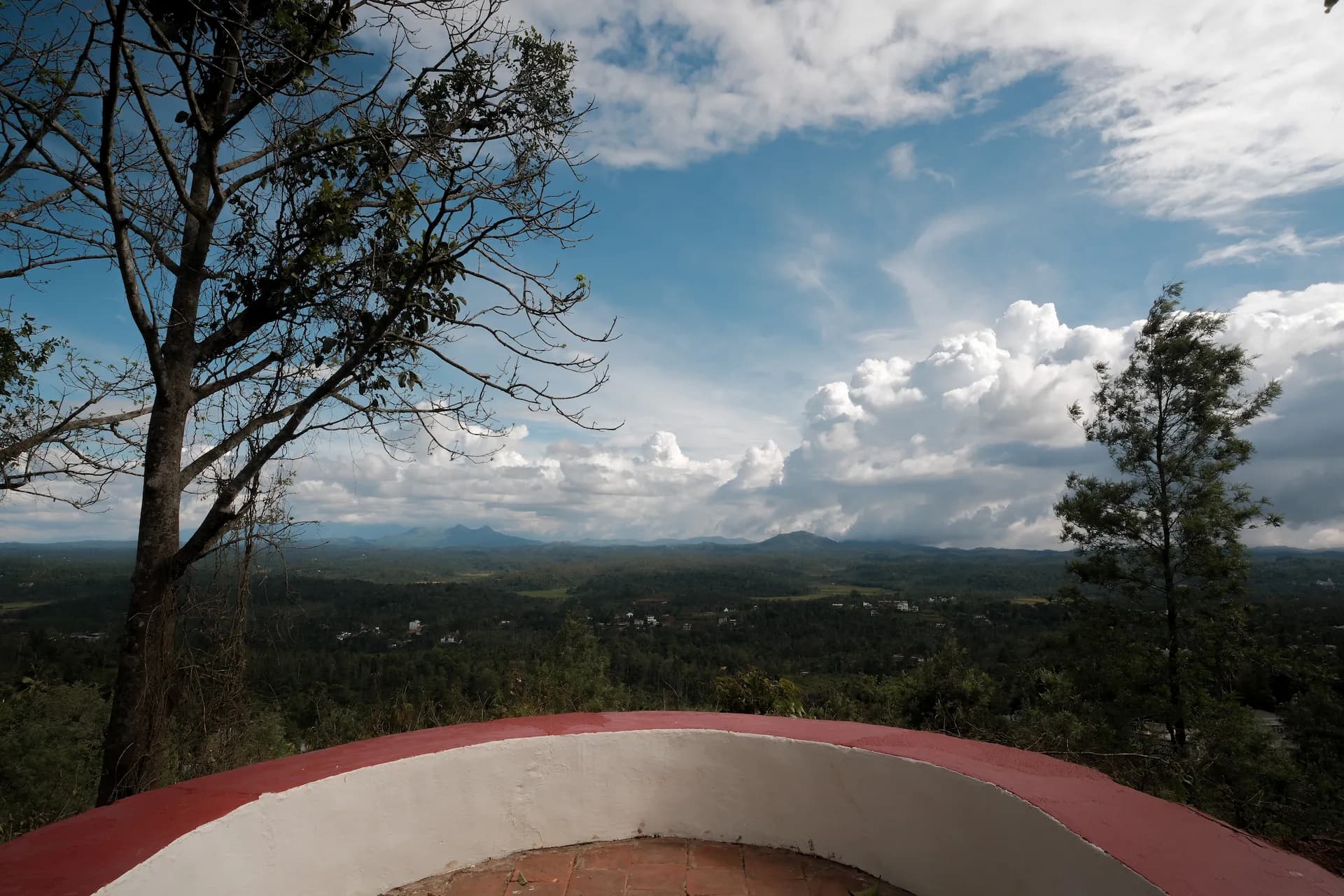
The Ending of Time and the Beginning of Silence
It does not come with thunder or prophecy. It arrives quietly, like mist folding into the hills. The ending of time is not the collapse of clocks or the disappearance of calendars. It is the ending of psychological movement, the restless becoming, the constant reaching toward what should be and running from what has been. The mind today rarely rests. It scrolls. It swipes. It consumes fragments of fear and entertainment in the same breath. Dooms scrolling has become a ritual. Brain rot is not a joke anymore, it is a condition of scattered attention. We live in loops of digital fatigue, caught between outrage and distraction. Even silence has become content. Even stillness is performed. But silence is not performance. Silence is not cultivated through effort. It begins when the mind sees its own noise and does not try to escape it. When the phone is put aside and the urge to pick it up is simply watched. In that watching, something slows down. The machinery of reaction loses momentum. Thought, which was racing ahead to tomorrow or replaying yesterday, pauses. And in that pause there is intelligence. Not the intelligence of information. Not clever argument or borrowed wisdom. A different kind. The intelligence that sees clearly without distortion. A mind that is quiet is not dull. It is extraordinarily alive. It notices the texture of light on a wooden floor. It hears the wind move through pepper vines. It feels the breath without trying to control it. In the hills of Wayanad, where mist arrives without hurry, time loosens its grip. By the sea at Kappad, waves repeat a rhythm older than ambition. In such places there is no urgency to become anything. The old bungalow stands without trying to prove its history. Fireplaces crackle without asking to be filmed. A Malabar giant squirrel leaps across trees without an audience. The world is complete without being uploaded. These are not escapes from reality. They are reminders. When you step into a landscape that does not demand performance, the mind gradually stops performing. Digital detox is not merely switching off devices. It is the ending of inner noise. It is the refusal to feed distraction. It is allowing boredom to open into depth. The ending of time happens now, not in some future retreat, not after achieving peace. It happens when attention is whole. When there is no comparison, no measurement, no inner commentary shaping the moment. Just direct perception. Silence is the beginning of intelligence because only in silence can we see without interference. And perhaps what we call peace is not something to be achieved. It is what remains when the noise ends.
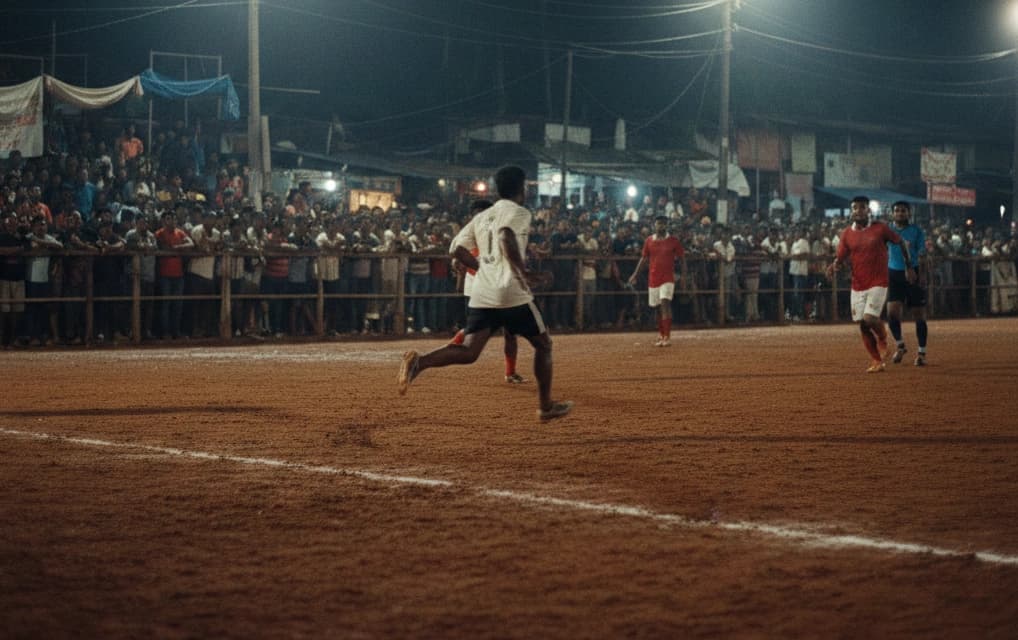
Kerala's Sevens Football
In northern Kerala, especially around Malappuram, Sevens football became a phenomenon. Not academy born. Not television polished. But floodlit, dust rising, announcers shouting into humid air. Seven players on each side. Smaller pitch. Faster pace. No room for hesitation. Sevens is urgency. Unlike the eleven-a-side game that allows structure and patience, Sevens compresses time. Tight spaces demand close control. Defensive errors are punished instantly. Attackers learn to turn in half a second. It rewards instinct. It exposes weakness. It manufactures courage. The tournaments became seasonal festivals. Crowds packed village grounds. Local sponsors backed teams. Players travelled circuit to circuit, some becoming cult figures. It carved out new footballers from unlikely places. Many who later entered professional leagues first learned composure under those harsh white lights. Further south, in Kochi, the Parade Ground stands as a different kind of football cradle. Once a colonial drill ground, where European regiments marched in formation, it has transformed into a democratic sports space. No grandstands. No gatekeeping. Just open sky and turf worn thin by ambition. Even though Sevens culture is strongest in Malabar, grounds like Parade Ground represent something essential to Kerala football. Accessibility. Any boy can walk in with a ball. Any evening can become a training session. Talent here grows informally. It sharpens in street games, beach matches, open grounds. Kerala’s football identity is layered. Sevens in the north with its high-voltage nights. Open urban grounds like Parade in Fort Kochi shaping everyday players. Professional clubs rising in bigger stadiums. Each level feeding the next. Sevens may not follow global rulebooks strictly. It may prioritize flair over formation at times. But it builds reflexes, confidence in tight spaces, hunger for applause. It produces entertainers and survivors. And in places like Parade Ground, where colonial footsteps once echoed, today it is the thud of footballs that carries across the grass. From seven-a-side chaos in Malappuram to open fields in Fort Kochi, Kerala’s football story is not written only in stadiums. It is written in dust, in floodlight glare, in boys who believe that the next match might change everything.
History of Arab Trade in Malabar
Before Europe rounded the Cape of Good Hope, before cannons announced empire, the Malabar coast was already fluent in Arabic. Along the shoreline of what is now Kerala, ports like Kozhikode, Kannur, and Ponnani thrived as nodes in the vast Indian Ocean trade network. As early as the first millennium CE, Arab merchants were sailing with monsoon winds across the Arabian Sea, linking the Middle East, East Africa, and the Malabar coast. They came for pepper. Black pepper, often called black gold, grew abundantly in the forests and hills of Malabar. Cardamom, cinnamon, ginger, and coconut followed. The Arabs did not merely trade; they settled. Seasonal winds made return journeys predictable, but over time, many merchants established permanent communities, marrying into local families and embedding themselves in coastal society. Unlike later European colonisers, early Arab traders did not arrive with territorial ambition. Their influence spread through commerce and kinship rather than conquest. Islam reached Kerala through these maritime connections, not by sword but by sail. Mosques along the Malabar coast reflect this integration. The Mishkal Mosque, built in the 14th century, resembles Kerala temple architecture with its timber structure and sloping tiled roof, a clear sign that faith adapted to local aesthetics. The Zamorins of Kozhikode welcomed Arab traders, recognizing their importance in maintaining global spice networks. In return, Arab merchants acted as intermediaries between Malabar and markets in Cairo, Aden, and beyond. Malayalam absorbed Arabic vocabulary. Culinary habits shifted subtly. Dates, certain spice blends, and techniques entered coastal kitchens. Ponnani became an important centre of Islamic scholarship in South India, sometimes referred to as the little Mecca of Malabar. Madrasas and intellectual exchange flourished, linking Kerala to wider Islamic thought currents stretching from Yemen to Cairo. By the time Vasco da Gama arrived in 1498, he encountered a well-established Arab trading system. The Portuguese entry disrupted these networks violently, seeking to monopolise spice routes and challenge Arab dominance in the Indian Ocean. What followed were naval battles and shifting alliances, but the centuries-old Arab presence could not be erased. Today, the Mappila Muslim community of Malabar carries this layered inheritance. Their songs, known as Mappila paattu, weave Arabic and Malayalam. Their cuisine blends local coconut richness with Gulf influences. Their mosques stand without domes typical of West Asia, yet their calls to prayer echo maritime ancestry. Arab trade in Malabar was not a brief episode. It was a sustained relationship shaped by wind patterns, trust, and mutual benefit. The monsoon itself became collaborator, carrying ships westward for part of the year and back again when seasons shifted. In many ways, Malabar’s openness to the world began not with European colonialism, but with these earlier Arab voyages. They connected Kerala to a global economy long before globalization became a word. The sea remembers these crossings. And along the Malabar coast, in language, food, and faith, their imprint remains quietly alive.
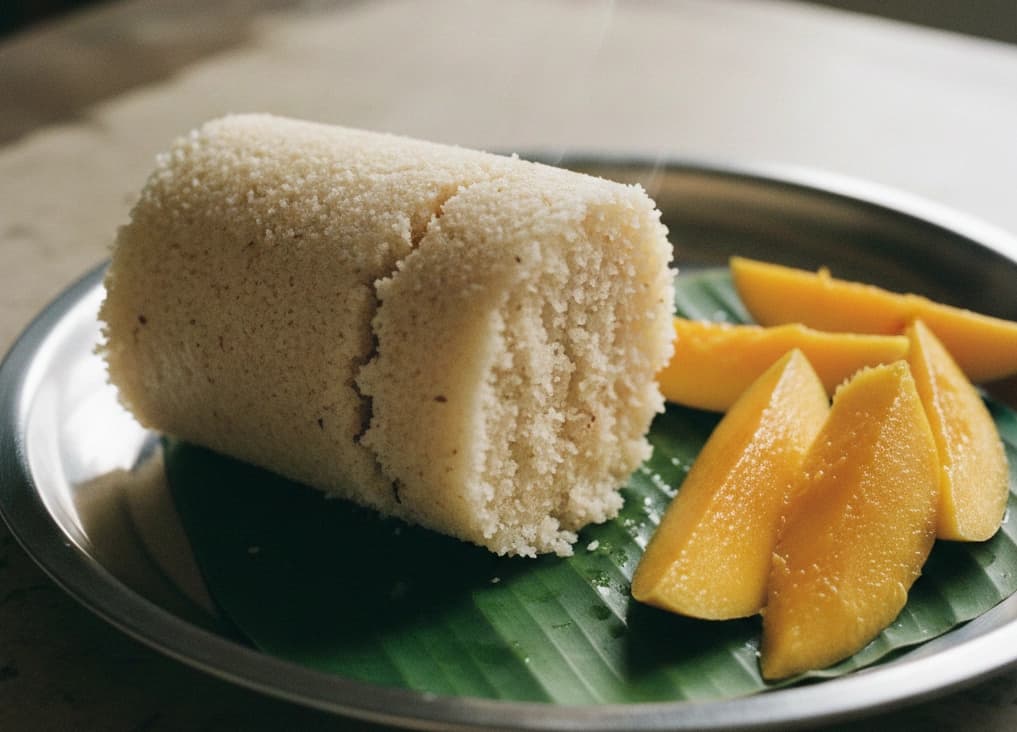
Combi: Kerala’s Beautifully Strange Food Pairings
Kerala does not always follow culinary logic. It follows instinct. Across tea shops and home kitchens in Kerala, there exists a playful culture of food pairings simply called combi. Not recipes written in cookbooks. Not plated for fine dining. Just combinations discovered by appetite, repeated by habit, defended with emotion. Take puttu and payutha manga. Steamed cylinders of rice flour and coconut, mild and grainy, meeting the sharp bite of tender green mango crushed with salt and chilli. One is soft and warm. The other electric and raw. Together they wake each other up. Or pazham pori and beef. Ripe banana fritters fried golden, edges crisp, inside melting sweet. Beside it, dark beef curry slow cooked with pepper, roasted coconut, and spice. Sweet meets heat. Crisp meets gravy. It sounds improbable until the first bite settles the argument. Then there is the famous porotta and beef, perhaps the most argued and adored pairing in Kerala. Flaky layered parotta torn by hand, dipped into thick beef curry. It is late night food, roadside hotel food, post journey food. It is comfort layered in maida and spice. Recently, the combination found itself dragged into political conversation through narratives amplified by films like The Kerala Story and its surrounding propaganda debates. Yet on the ground, far from screens and slogans, porotta and beef remains what it has always been. A plate shared without ideology. A meal that belongs to labourers, students, travellers, families alike. Kerala’s combi culture goes further. Puttu and kadala curry is classic, but some add banana into the mix, sweet pressing into spice. Idiyappam with egg roast. Tapioca with fish curry so fiery it demands surrender. Neypathal dipped in mutton gravy. Even tea shop experiments like omelette inside a parotta folded with chilli sauce have loyal followers. And then comes the chollu, the saying that makes elders shake their heads and youngsters laugh. Halwa and mathi curry. Kozhikode halwa, jewel toned and glossy, sitting beside sardine curry rich with tamarind and red chilli. It sounds like mischief. It is mostly spoken as exaggeration, a metaphor for unlikely pairing. Yet somewhere, someone has probably tried it. What these combinations reveal is not confusion, but confidence. Kerala cuisine is secure enough to play. Sweet can sit beside savoury. Fruit can meet meat. Soft rice can greet raw mango. In tea stalls from Kozhikode to small towns inland, combi is discussed like strategy. Which curry suits which bread. Whether pazham pori tastes better with beef or with tea alone. These are not trivial debates. They are cultural conversation. Food in Kerala is rarely rigid. It bends. It experiments. It absorbs influence from Arab traders, Portuguese chillies, local harvests. So when someone says combi, it means more than pairing. It means curiosity on a plate. Some combinations are tradition. Some are rebellion. Some are jokes that turned serious. All of them belong.

Portuguese Footprints in Kerala
Kerala’s coastline has never belonged to one story. When Vasco da Gama landed at Kappad in 1498, he stepped into a world already alive with Arab, Chinese, and local trade networks. The Malabar coast was not waiting to be found. It was already negotiating with the sea. Yet that landing marked the beginning of sustained European intervention in Kerala’s political and cultural landscape. While the first encounter unfolded near Kozhikode under the Zamorin, Portuguese influence eventually anchored more firmly in Kochi. Kochi became their strategic stronghold, a port from which spice routes could be controlled and fortified. Forts were constructed. Churches were raised. Administrative systems were introduced. The coastline shifted from open marketplace to contested territory. In Fort Kochi, the Portuguese presence still lingers in stone and timber. St. Francis Church, originally built in 1503, stands as one of the oldest European churches in India. For a brief period, even Vasco da Gama’s remains rested there before being taken back to Lisbon. The architecture is restrained, adapted to humidity and monsoon, European in intent yet Malayali in material execution. Language absorbed influence quietly. Malayalam borrowed from Portuguese vocabulary in ways now so natural they go unnoticed. Almari from armário for cupboard. Janala from janela for window. Sabola echoing cebola for onion. These words sit inside daily speech like fossils of maritime contact. Cuisine transformed more dramatically. The Portuguese introduced chilli from the Americas, forever altering Kerala’s flavour profile. Before their arrival, black pepper dominated heat. After chilli spread, curries blazed red across kitchens. Vinegar found stronger footing in coastal cooking. Dishes evolved. Vindaloo, derived from vinho e alho, meaning wine and garlic, was adapted into Indian spice logic. Even cashew trees, brought from Brazil, took root along Kerala’s coast and now feel native. Further north, Mahe tells another chapter of European presence, though under French administration later on. Its existence within Kerala’s geography reflects how the coastline became a patchwork of colonial ambitions. Yet even in Mahe, as in Kochi, what survives today is not empire but imprint. Kerala’s story is not solely Malabar. It stretches from Kasaragod down to Thiruvananthapuram, each region layered with maritime exchange. Kochi, especially, embodies that layered identity. Jewish synagogues, Dutch palaces, Portuguese churches, Arab trade memory, British administrative structures, all coexist within narrow streets scented by the sea. The Portuguese came seeking pepper and power. They left behind altered vocabulary, transformed cuisine, hybrid architecture, and Christian communities shaped by European liturgy and Kerala craftsmanship. What remains now is neither domination nor resentment etched in stone. It is fusion. A coastline that absorbed influence without surrendering itself. A culture that learned to negotiate with every sail on the horizon. Kerala is not just Malabar. It is also Kochi’s tiled roofs and church bells, Mahe’s quiet colonial echoes, and the long, complex conversation between land and sea that continues even today.
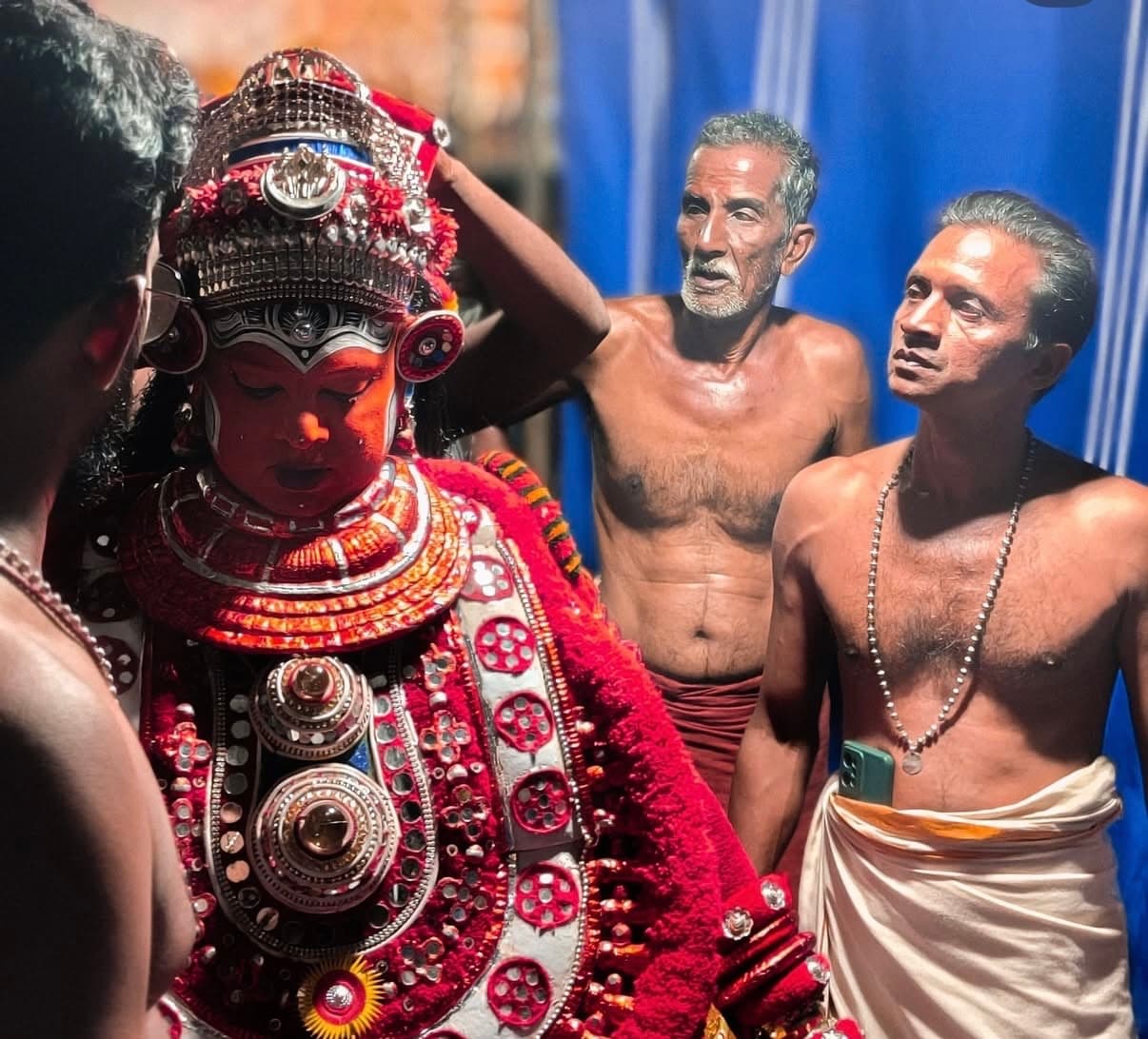
Thira and Theyyam
In the northern districts of Kerala, divinity does not remain distant. It arrives in fire. Thira and Theyyam are ritual performance traditions rooted deeply in the Malabar region, especially in areas like Kannur and Kasaragod. Though often spoken together, Thira and Theyyam differ in costume scale and regional practice, yet both belong to the same sacred grammar where performer and deity merge. The word Theyyam is believed to derive from daivam, meaning god. In these rituals, the artist does not merely portray a deity. He becomes the deity. For hours before the performance, transformation begins. The body is painted with intricate patterns in red, white, and black. The face becomes a canvas of geometry and mythology. Towering headgear is assembled with bamboo, cloth, coconut leaves. Layers of ornaments are tied. Every detail holds symbolism tied to specific deities, ancestral spirits, and local legends. When the ritual begins, the air shifts. The chenda drum resounds first. Its rhythm is not background music. It is invocation. The tempo rises and falls, guiding the body toward trance. Flames crackle. Torches illuminate the night courtyard of a temple or sacred grove. The performer moves in measured steps, eyes widening, breath altering. At a certain threshold, the boundary dissolves. The community believes the deity has descended. The artist is no longer addressed by his personal name. Devotees approach with folded hands. They seek blessings, counsel, sometimes justice. Theyyam has historically given voice to subaltern histories. Many deities represented in Theyyam originate from marginalized communities, warriors, women wronged, local heroes who were deified. In this ritual space, caste hierarchies invert. The performer, often from communities once considered lower in social order, becomes the embodiment of divine authority. Even upper-caste patrons bow. Thira, practiced in parts of North Malabar, shares similar devotional intensity but often features slightly less elaborate costumes compared to the grand vertical extensions of Theyyam headgear. Both rely on narrative recitation, music, and fire. Both blur theatre and worship. Both are lived tradition rather than staged art. The visual spectacle is overwhelming. Costumes can rise several meters high. Circular skirts flare outward like solar halos. Mirrors catch torchlight. Sweat glistens on painted skin. The smell of oil, ash, and earth merges into a sensory field that feels ancient. But beneath spectacle lies discipline. The artist trains for years. He memorizes genealogies of gods, chants, gestures. Physical endurance is immense. Some performances involve walking across embers or dancing through flames. Yet the trance is not theatrical illusion. It is psychological and communal transformation. The audience participates. Their faith completes the ritual. Theyyam season traditionally runs from October to May, aligning with temple calendars. Performances begin at dusk or deep into night and continue until dawn. Villages gather not as spectators but as participants in a shared spiritual event. In a rapidly modernizing Kerala, Thira and Theyyam remain stubbornly alive. They resist reduction into folklore for tourists, though curated performances exist. In their original settings, they remain acts of devotion. Here, art is not separate from belief. The body becomes shrine. The drum becomes heartbeat. Fire becomes language. And when the ritual ends, when headgear is removed and paint washed away, the artist returns to his ordinary life. But for those hours beneath flame and drum, he carried a god.
Journey of Coffee to India
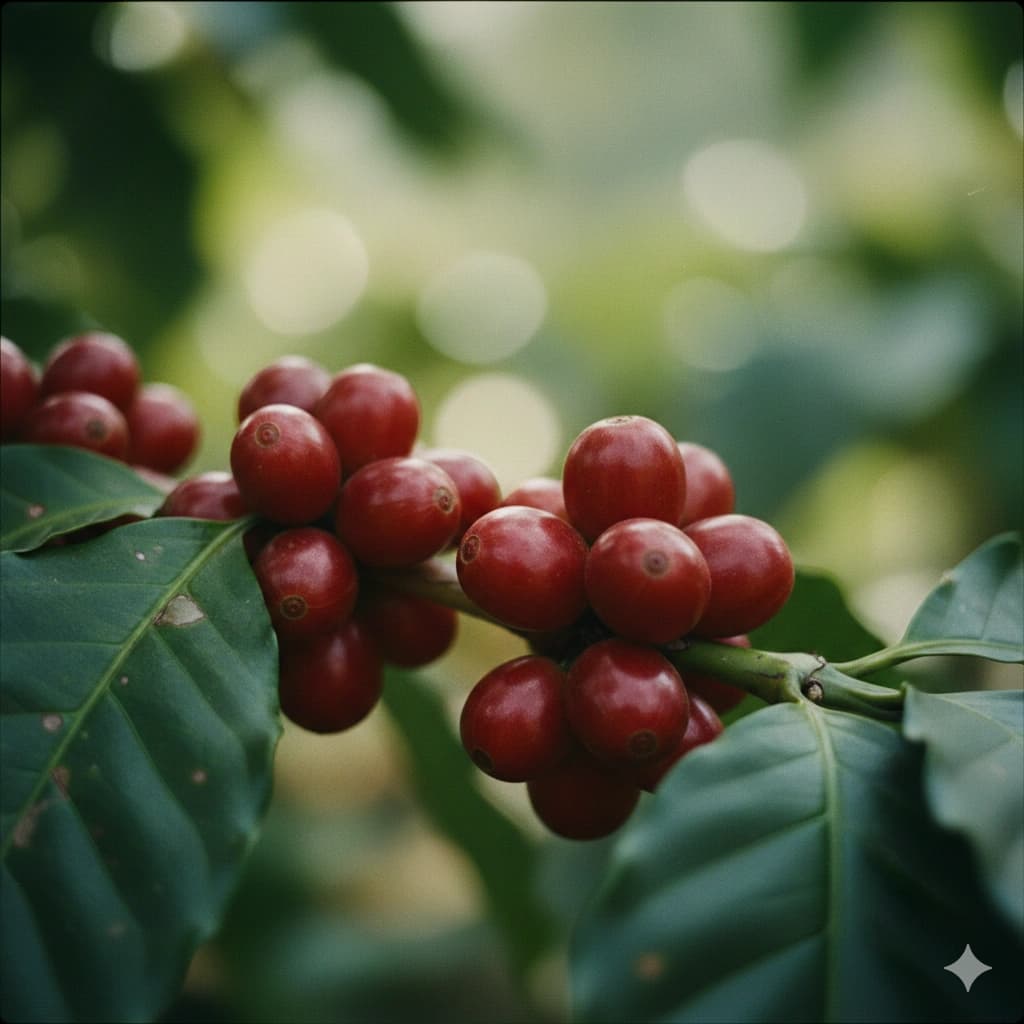
Before coffee became a morning habit, it was a smuggled secret. Its story begins in Ethiopia, where wild coffee plants grew in forest undergrowth, their red cherries chewed by shepherds who noticed wakefulness in their flock. From there it travelled to Yemen, where Sufi mystics brewed it to sustain night prayers. The drink moved through the Arabian Peninsula, guarded carefully. Fertile beans were rarely allowed to leave those shores. In the seventeenth century, legend says that a pilgrim named Baba Budan journeyed to Mecca. On his return, he is believed to have concealed seven coffee beans in his robes and brought them across the Arabian Sea to the hills of southern India. He planted them in the slopes of what is now known as Baba Budan Giri in Chikmagalur. Whether embroidered by myth or anchored in fact, coffee did take root there. The climate of the Western Ghats, shaded forests, generous monsoon, and red laterite soil proved hospitable. The plant adapted. It grew beneath tall trees, often intercropped with pepper and cardamom. By the eighteenth and nineteenth centuries, coffee cultivation expanded under British colonial enterprise. Large plantations were established across the hills of Karnataka, Tamil Nadu, and later in Wayanad. Estate bungalows rose among slopes of green. Labour systems reshaped local communities. Coffee became commodity as much as crop. The British introduced systematic cultivation, curing works, and export channels linking Indian ports to Europe. The bean that once travelled secretly now moved in bulk through maritime trade routes. Indian coffee, especially from the Malabar region, developed a distinctive identity. Monsoon winds in coastal warehouses transformed green beans into what the world would later call Monsooned Malabar. Yet coffee did not remain confined to export. It entered kitchens. In South India, filter coffee emerged as ritual. Dark decoction dripped slowly through metal filters into steel tumblers. Milk and sugar joined in measured proportion. The beverage became conversation starter, hospitality gesture, daily anchor. Today India stands among the world’s significant coffee producers, though it is not always loud about it. Much of its cultivation remains shade grown, biodiversity friendly, intertwined with forest canopy. The Western Ghats continue to nurture Arabica and Robusta varieties that travel to global markets. What began as seven hidden beans crossing the Arabian Sea has become a landscape of plantations stretching across southern hills. Coffee’s journey to India is not merely agricultural history. It is migration, adaptation, resilience. From Ethiopian forests to Yemeni monasteries, from Sufi legend to colonial estates, from hill slopes to morning cups, coffee in India carries layers of movement within its aroma. And somewhere in that steam rising from a freshly poured tumbler, there lingers the memory of a pilgrim who believed that some treasures are worth carrying across oceans.
Malabar Monsooned Coffee
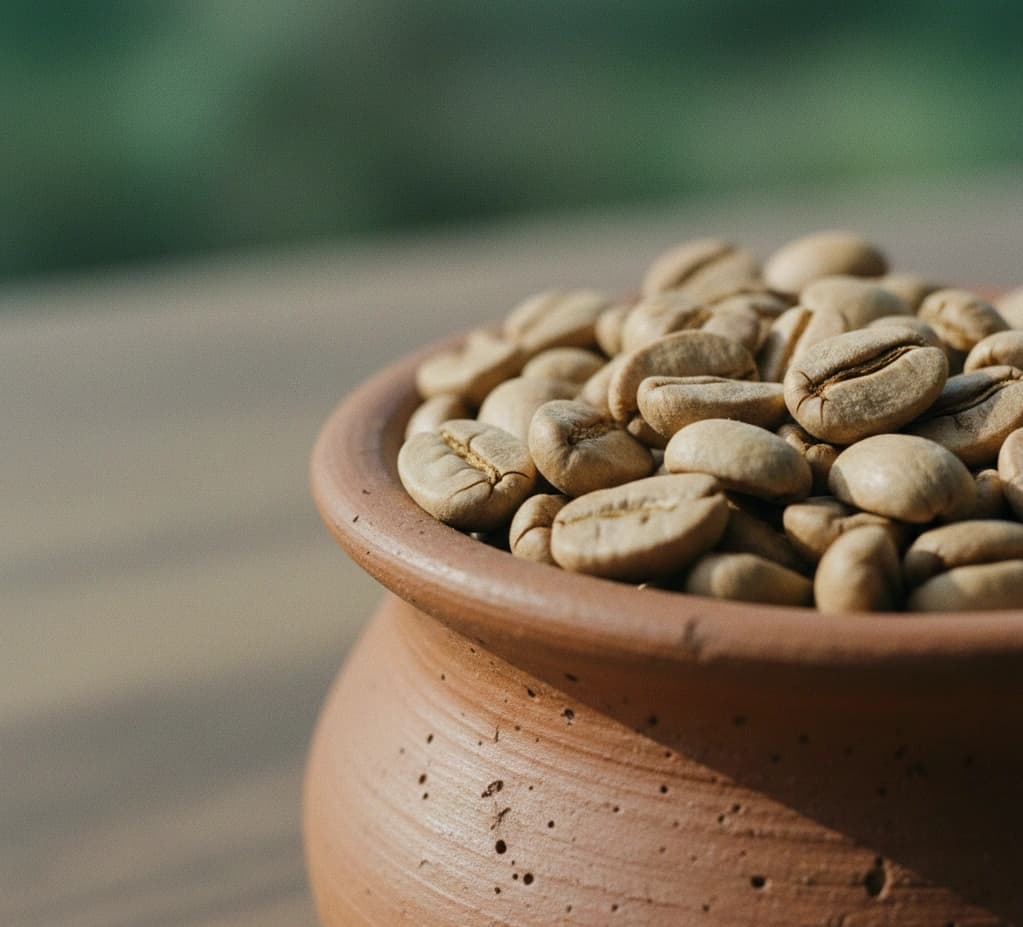
There is a coffee that tastes of rain. Along the Malabar coast of Kerala, traders once loaded green coffee beans onto wooden ships bound for Europe. The journey was long. Months at sea. Monsoon winds swelling sails. Salt air wrapping itself around burlap sacks. By the time the beans reached distant ports, they had changed. They had absorbed moisture, expanded, softened in acidity. The Europeans grew fond of this altered profile, unaware at first that it was the Indian Ocean that had seasoned their cup. When steamships later shortened travel time, that accidental transformation disappeared. The flavour shifted. Something was missing. So Indian exporters recreated the sea. Thus was born Monsooned Malabar coffee, sometimes locally mispronounced as masoned coffee, though the monsoon is the true mason shaping its character. In coastal warehouses around Mangalore and the Malabar belt, carefully selected Arabica beans are spread in layers during the monsoon months. Humid winds sweep through open-sided godowns. The beans swell, pale in colour, and lose their sharp acidity. For weeks they are raked and turned by hand, allowing moisture to penetrate evenly. The result is distinct. Low acidity. Heavy body. Earthy aroma. Notes that carry hints of spice, wood, sometimes tobacco. It is a coffee that does not shout brightness. It settles into the palate like wet soil after rain. In the hills of Wayanad, where coffee grows beneath shade trees alongside pepper vines, the bean begins its journey. Farmers harvest red cherries, dry or wash them, and send them onward. From mountain mist to coastal humidity, the bean experiences two climates before it reaches the roaster. Monsooned Malabar became one of India’s most recognized specialty exports, protected by geographical indication status. European espresso blends often use it to soften sharper African beans. Its character brings depth rather than sparkle. There is poetry in the process. The monsoon, often seen as disruption, becomes collaborator. Rain that floods fields also crafts flavour. Humidity that rusts iron enriches coffee. Nature is not obstacle but artisan. In a brass tumbler of South Indian filter coffee, dark and aromatic, a trace of that maritime history lingers. The cup carries echoes of trade routes, of sacks breathing in salt air, of warehouses open to seasonal wind. Malabar monsooned coffee is not simply roasted seed. It is climate distilled. A reminder that sometimes what we call imperfection is simply transformation in progress.
Kudumbashree: The Architecture of Dignity in Kerala
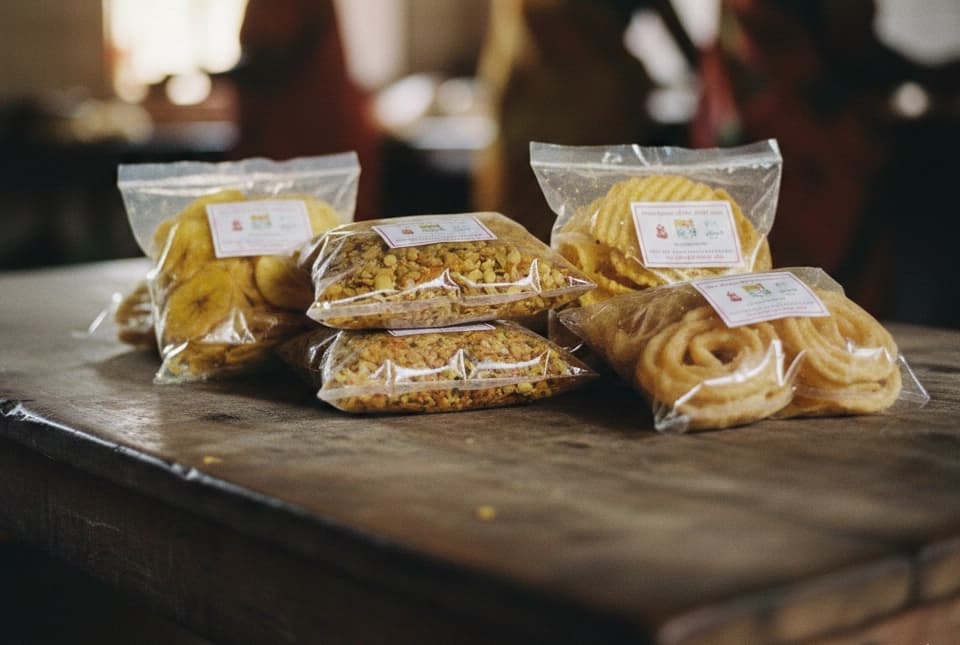
There is a truth about Kerala that numbers alone cannot explain. The state does not possess the industrial scale of Maharashtra, nor the financial capital of Gujarat, nor the manufacturing corridors of Tamil Nadu. Its land is narrow. Its resources are limited. It depends heavily on remittances from a vast diaspora working in the Gulf. By conventional economic comparison, Kerala has long stood with constraints. And yet, its human development indicators tell another story. High literacy. Strong public health. Social awareness that often outpaces income. Beneath this paradox stands one of the most remarkable grassroots movements in India: Kudumbashree. Launched in 1998 by the Government of Kerala, Kudumbashree was not merely a poverty eradication program. It was an idea that poverty could be addressed through collective dignity rather than charity. Built as a network of women-led neighbourhood groups, it created a structure where small savings became shared capital, where voices that had long remained inside kitchens entered public decision-making. The word itself means prosperity of the family. But prosperity here was never defined as luxury. It meant stability. It meant food security. It meant the ability of a woman to earn, to decide, to speak. Across Kerala’s villages and towns, Kudumbashree neighbourhood groups began meeting regularly. Women pooled modest savings. Microcredit emerged. Small enterprises were born. Catering units. Tailoring centres. Farming collectives. Cafés that served local cuisine. Even tourism initiatives where women guided visitors through villages, telling stories that had never before been considered economic assets. In a state often described as economically fragile, Kudumbashree became a counterargument. It demonstrated that social capital can be stronger than industrial capital. That literacy, when combined with organization, can produce resilience. Kudumbashree also reshaped gender equations. Women who once remained invisible in economic data began handling accounts, negotiating with banks, managing enterprises. Decision-making moved gradually from male-dominated households into shared spaces. Political participation increased. Self-confidence followed income. During floods and crises, Kudumbashree units mobilized rapidly, running community kitchens and relief operations. In times of pandemic, they produced masks and sanitizers. The network proved that empowerment is not abstract when it is institutionalized. Kerala’s relative economic limitations did not disappear. Youth unemployment remains a concern. Migration continues. But Kudumbashree created a parallel narrative where development was not only about large factories or corporate investments. It was about decentralized, human-scale entrepreneurship rooted in community. There is something quietly revolutionary in that model. It suggests that prosperity need not roar. It can assemble in small rooms, over shared notebooks and steel tumblers of tea. It can grow from weekly meetings where women discuss loans and life with equal seriousness. Kerala may not always dominate GDP charts. Yet through Kudumbashree, it has shown the world a different metric of wealth. A wealth measured in literacy, in organized solidarity, in the steady transformation of self-worth into livelihood. In the end, Kudumbashree is more than a program. It is proof that when dignity becomes policy, even a resource-constrained state can produce extraordinary social strength.
Atithi Devo Bhava - The Guest is God.
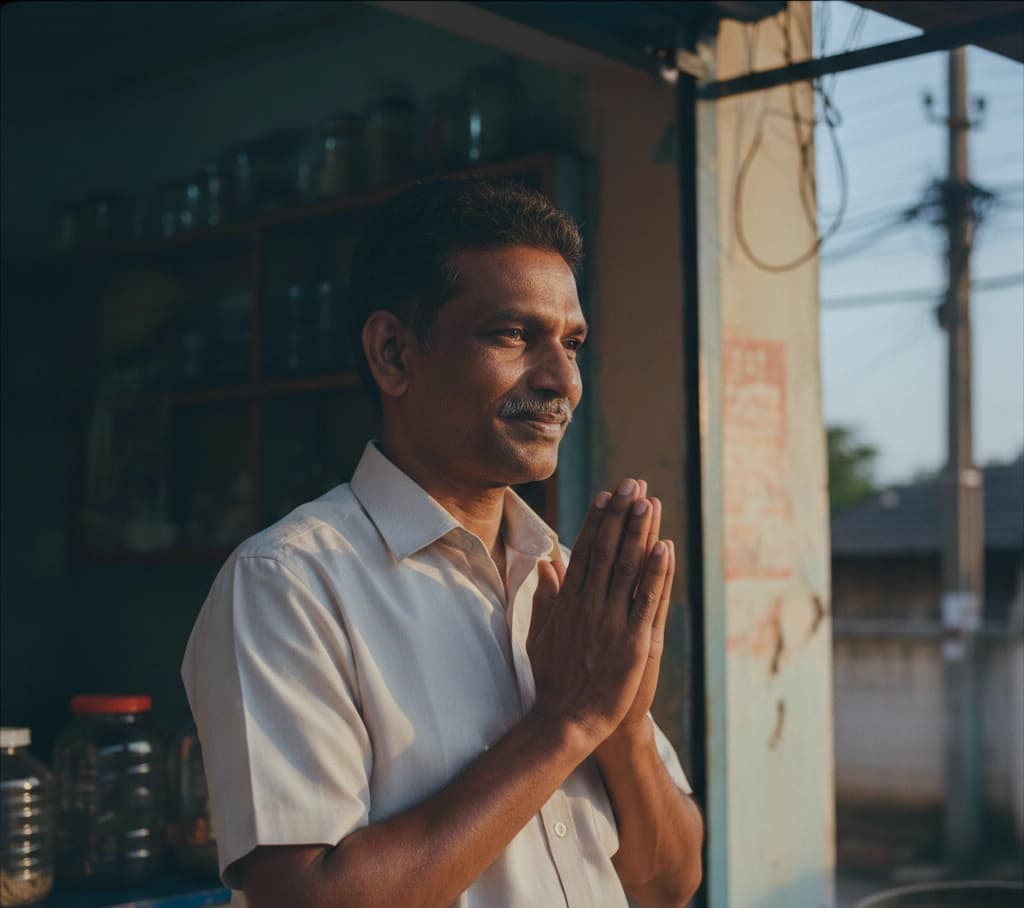
There is a phrase that lives quietly in the courtyards of Kerala, carried not in banners but in behaviour. Atithi Devo Bhava. The guest is divine. The guest is god. The words originate from ancient Sanskrit texts, part of the Taittiriya Upanishad, where the householder is instructed to revere the unexpected visitor as one would revere the sacred. In Kerala, this teaching did not remain scripture. It entered kitchens, verandahs, and the rhythm of daily life. When someone arrives at a traditional home in Kerala, there is no interrogation before warmth. Water is offered first, cool and steady, to settle the dust of travel. A chair is drawn closer. Tea appears without being requested. Food is served not in measured portions but in abundance, because hospitality here is not transaction. It is offering. In agrarian societies across the Malabar and Travancore regions, travellers once moved slowly, by foot or bullock cart. Inns were rare. Homes became shelters. To refuse a guest was considered both social and spiritual failure. Over generations, this ethic shaped the cultural backbone of the region. The ritual of lighting the nilavilakku lamp at dusk carries the same philosophy. Illumination is shared. The house is not merely private property but a space of welcome. Even today, during festivals or family gatherings, meals are served on banana leaves with the host standing, watching carefully, ready to refill rice before it empties. Kerala’s layered history of trade deepened this instinct. Arab merchants, Chinese sailors, Portuguese explorers, Dutch traders, British officers, all arrived on its shores. Ports such as Kozhikode and Kochi learned early that openness was survival. Hospitality became both virtue and diplomacy. The visitor was never just a stranger. He was potential friend, ally, witness. In modern tourism, the phrase has been adopted widely across India as a slogan. Yet in Kerala, it feels less like branding and more like inheritance. It lives in the way a homestay owner checks if you have eaten. In the way an elderly woman presses bananas into your hand as you leave. In the way conversations stretch long after the formalities are over. To treat a guest as divine does not mean worship. It means recognition. It means understanding that every visitor carries a story, a fatigue, a hope. And that to host is to hold space for all of it. In a world where hospitality often calculates margins, Atithi Devo Bhava remains a quiet resistance. It reminds Kerala that true welcome cannot be automated. It must be felt. And perhaps that is why, when you leave a Kerala home, you rarely feel like you were simply accommodated. You feel, for a brief moment, as though you were entrusted with something sacred.
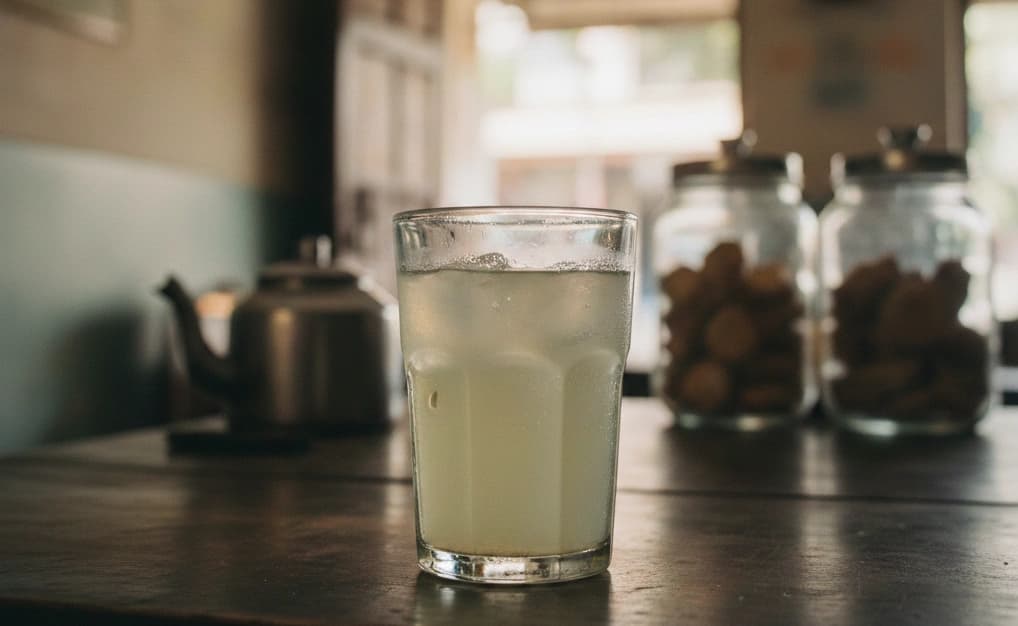
Sarbath: The Sweet Pulse of Malabar
In the heat of a Malabar afternoon, when the sun rests heavily on tiled roofs and the air tastes faintly of salt, there is one word that cools the tongue even before it is spoken. Sarbath. Along the streets of Kozhikode, sarbath is not merely a drink. It is punctuation between hours. Glass tumblers clink against steel counters. Ice cracks like small thunder. Lemon, sugar, and soaked basil seeds swirl into something that feels older than refrigeration and younger than thirst. The word itself travelled. Derived from the Persian sharbat, meaning a sweetened drink, it arrived along maritime trade routes that shaped the Malabar coast. Arab and Persian merchants who anchored on Kerala’s shores brought not only spices and silk but also tastes. Syrups infused with rose, lime, or fruit entered coastal kitchens. Over time, the drink shed formality and settled into the everyday language of tea shops and roadside stalls. Kerala adopted sarbath with improvisation. Lime sarbath became the simplest expression, sharp and bright, often softened with sugar syrup prepared in advance. Soaked sabja seeds, translucent and delicate, float like tiny constellations in the glass. Some vendors add a whisper of ginger. Others stir in crushed mint. In Kozhikode, kulukki sarbath emerged, shaken vigorously in steel tumblers, the motion aerating the sweetness and lifting the citrus aroma. Then came milk sarbath, a Kozhikode invention that refuses to choose between indulgence and refreshment. Sweet chilled milk meets sugar syrup, basil seeds, sometimes a splash of fruit essence, occasionally a ribbon of condensed milk. The result is neither purely dessert nor simple drink. It is comfort disguised as hydration. Creamy but not heavy, sweet yet cooling, milk sarbath feels like summer softened. Unlike packaged beverages, sarbath carries the touch of the person who prepares it. The squeeze of lemon. The rhythm of stirring. The instinctive adjustment of sugar depending on the day’s heat. It is personal hydration. It is craft without declaration. Sarbath also belongs to Ramadan evenings, to iftar tables where fasting mouths meet cool sweetness. It belongs to summer school vacations when children return home dusty and impatient. It belongs to bus stands where travellers pause between journeys, glass in hand, before climbing back aboard. There is something democratic about sarbath. It requires no ceremony. No menu description. No branding. A few ingredients. A cube of ice. A willing hand. It stands as a small example of how Kerala absorbed Persian vocabulary and folded it into Malayalam speech without strain. In a state celebrated for elaborate cuisine and complex spice blends, sarbath remains disarmingly simple. Yet its simplicity is its endurance. Even as cafés modernize and bottled drinks multiply, the roadside sarbath stall persists, loyal to heat and thirst. In that chilled glass, sweet and sharp, rests a fragment of Malabar’s maritime history. A reminder that trade once carried flavour as easily as it carried pepper. And that sometimes heritage is not found in monuments or manuscripts, but in the quiet relief of a cold drink against a burning afternoon.
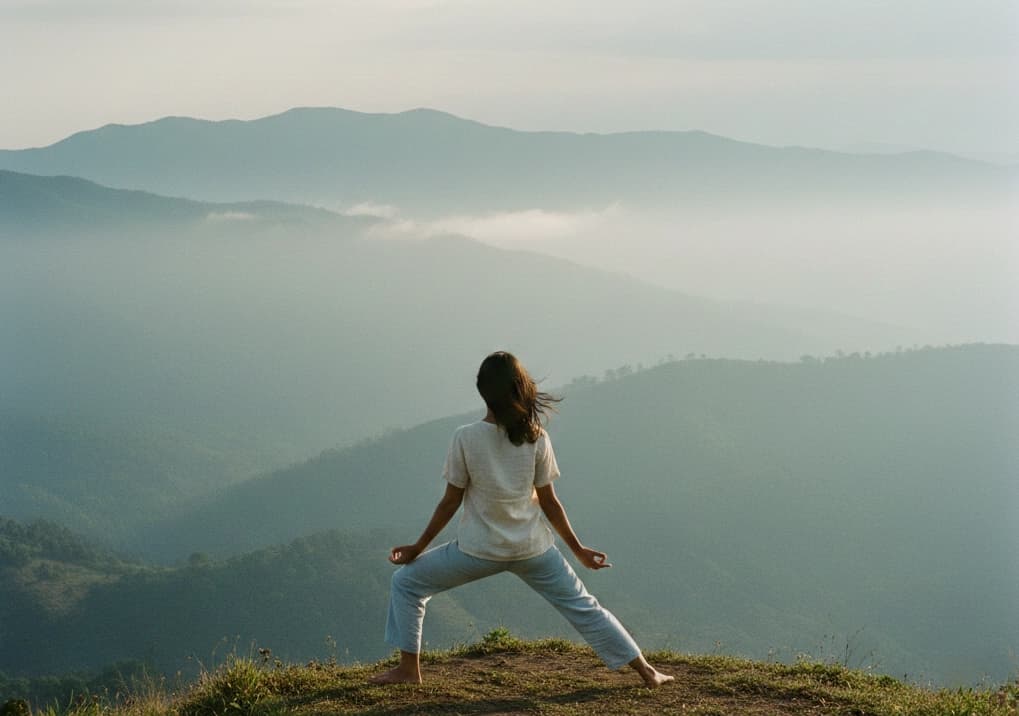
Wellness of Kerala: Health Beyond the Physical
In Kerala, wellness was never invented as an industry. It grew like a medicinal plant in monsoon soil. Quietly. Persistently. Without announcement. Long before the word spa entered brochures, Kerala practiced a form of health that refused to separate body from breath, mind from season, food from climate. The foundations lie in Ayurveda, a system of medicine whose classical texts date back more than two millennia. While Ayurveda flourished across the subcontinent, Kerala became one of its most disciplined custodians. Palm-leaf manuscripts were preserved in traditional households. Lineages of vaidyas carried forward formulations of oils, decoctions, and therapies refined over generations. Wellness here has always meant alignment. The human body is seen as a landscape governed by balance among elements. Treatment is not a quick correction but a process. Oil warmed and poured in steady rhythm. Steam rising from herbal bundles. Diet adjusted according to constitution and season. The Western Ghats provided raw material, roots, leaves, bark, minerals. The monsoon season, especially, was considered ideal for deep rejuvenation therapies, when pores opened and the body responded more readily to treatment. Historical records from travellers and colonial observers often mentioned Kerala’s distinctive healing traditions. European accounts from the seventeenth and eighteenth centuries describe local physicians skilled in bone setting and herbal medicine. Even during British rule, traditional medicine continued alongside Western practices, not erased but adapted. Yet wellness in Kerala extends beyond Ayurveda. The geography itself participates in healing. Backwaters move slowly, encouraging breath to slow with them. Hill stations such as Wayanad and Munnar offer elevation, cooler air, and silence broken only by birds. Coconut groves filter light into soft green calm. Rain arrives not as inconvenience but as cleansing force. Food is another dimension of health. Meals served on banana leaves balance taste with digestion. Coconut, turmeric, curry leaves, black pepper, fermented rice preparations, all hold medicinal logic within culinary tradition. Eating is not separate from healing. It is part of it. In recent decades, Kerala’s wellness identity has evolved. Structured Ayurvedic resorts emerged. Government-supported certification systems sought to protect authenticity. Yoga integrated into retreat spaces. International travellers began arriving not for sightseeing alone, but for restoration. And now, a new chapter is unfolding. Digital exhaustion has become the modern ailment. Screens glow longer than sunsets. Notifications replace silence. In this climate, Kerala’s slow landscapes offer something radical. Absence. In forest-fringed estates and riverside retreats, digital detox is not marketed as novelty but practiced as return. Phones rest in drawers. Mornings begin with mist rather than messages. Conversations extend without interruption. True wellness here does not promise transformation in three days. It suggests recalibration. Walks through pepper vines. Tea brewed with fresh ginger. Evenings lit by lamps instead of LED glare. Sleep that deepens because night is allowed to be dark. Kerala’s approach to health has survived because it was never only about the body. It recognized early that rest is medicine. That touch can heal. That climate influences temperament. That silence is not emptiness but nourishment. In a world accelerating toward burnout, Kerala stands as a reminder that healing is not always an addition. Sometimes it is subtraction. Less noise. Less urgency. Less artificial light. And in that quiet subtraction, something essential returns.

Why Kerala Has Not Yet Reached Its Full Tourism Potential
Kerala is often called God’s Own Country. The phrase is beautiful, almost dangerous in its perfection. Because when something is named divine, people assume it has already arrived. But Kerala has not yet arrived at its full tourism potential. It lingers somewhere between immense promise and incomplete execution. The state holds everything a global traveller seeks. Backwaters in Alappuzha that glide like silver threads through coconut groves. Mist-covered tea estates in Munnar. Wildlife corridors in Wayanad. Colonial streets and layered maritime history in Fort Kochi. Ayurveda traditions that predate modern wellness by centuries. Cuisine shaped by Arab, Persian, and European exchange. High literacy. Cultural depth. Political awareness. And yet, the world still knows Kerala in fragments. One reason lies in infrastructure that does not always match aspiration. Roads to extraordinary places can be narrow and unpredictable. Airport connectivity, though improving, is not yet positioned as seamlessly as competing Asian destinations. Public transport rarely feels curated for tourism. When accessibility is inconsistent, experience becomes fragile. Another reason rests in marketing. Kerala’s tourism campaigns once set benchmarks in storytelling, but global competition has grown sharper. Countries now invest aggressively in digital visibility, influencer circuits, cinematic promotion. Kerala still carries poetic branding, but the messaging often feels static, repeating backwaters and Kathakali while underrepresenting tribal heritage, contemporary art, plantation life, culinary trails, and boutique heritage stays. There is also the tension between sustainability and scale. Kerala is ecologically sensitive. The Western Ghats are fragile. Monsoons are unpredictable. Overdevelopment threatens the very charm travellers come seeking. Houseboats crowding backwaters, plastic creeping into hill stations, unregulated construction in highlands. Tourism cannot grow blindly here. It must grow intelligently. That balance has not always been carefully maintained. Service culture, though warm, can be inconsistent. Kerala produces an enormous skilled diaspora that works across the Gulf and beyond, yet within the state, hospitality training and guest experience sometimes lack uniform refinement. Small details matter. Clean signage, seamless booking systems, multilingual guides, thoughtful curation. When these are uneven, potential remains untapped. Then there is perception. Kerala is often seen as a honeymoon or monsoon destination, not as an all-season experiential hub. It is not yet positioned globally as a serious adventure circuit, a culinary capital, a heritage trail destination, or a slow travel sanctuary, though it could be all of these. And yet perhaps Kerala’s incomplete arrival is also its quiet strength. It has not surrendered fully to mass tourism. It still wakes slowly. In places like Wayanad, mornings remain mist-heavy and unhurried. In small coastal towns, fishermen still return at dawn before cafés open. There is space here for meaningful travel rather than consumption. Kerala’s full tourism potential will not be reached through bigger resorts alone. It will unfold through better storytelling, stronger infrastructure, preservation of heritage architecture, community-driven experiences, and a sharper global voice that reflects its complexity. The land has already done its part. The mountains stand. The backwaters breathe. The cuisine simmers. What remains is coordination, vision, and belief that Kerala is not merely beautiful, but capable of becoming one of the most thoughtfully curated tourism destinations in the world. Perhaps its greatest potential lies not in becoming louder, but in becoming clearer.
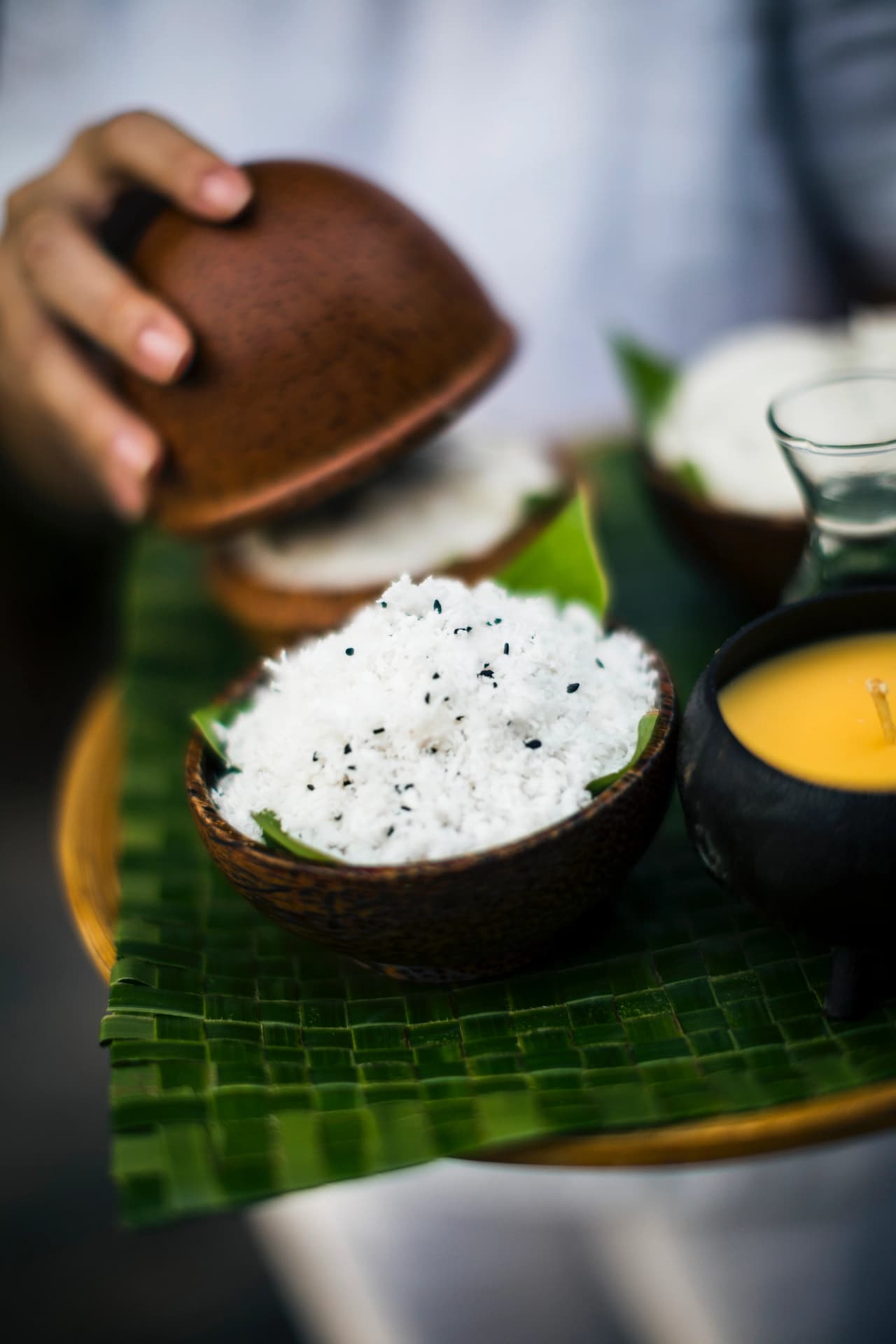
Legendary Restaurants in Kozhikode
There was a time when buses slowed down as they entered Kozhikode not because of traffic, but because of hunger. Travellers from Kannur to Kochi, from Wayanad to the coast, would plan their journey around a meal. Kozhikode was not just a stop. It was a ritual pause. Engines cooled. People stepped down, stretched their legs, and walked straight toward familiar signboards that promised rice, spice, and memory. Paragon Restaurant remains one of the most iconic names in this story. Its Malabar biryani, layered with fragrant kaima rice and tender meat, has drawn generations through its doors. The wait outside often becomes part of the experience. Conversations rise in the queue. Plates arrive steaming. For many, Kozhikode tastes like Paragon. Hotel Rahmath carries its own loyal following. Known especially for its beef biryani and unapologetically rich gravies, Rahmath has long been a favourite for those who prefer intensity over refinement. The flavours feel close to home kitchens, bold and generous. And then there is Sagar Restaurant. For decades, Sagar was more than a dining space. It was a landmark. Many still remember journeys where the bus would halt, passengers would rush in for a quick meal, and leave satisfied before the horn called them back. Sagar became woven into travel culture itself. Its meals were dependable, comforting, familiar. The kind of place where families returning from Gulf visits, students heading to colleges, and traders on tight schedules all found common ground over a steel plate of biryani or meals. Bombay Hotel belongs to another cherished chapter. Its biryani has a slightly different tone, subtle, balanced, layered without excess. Many locals argue that Bombay Hotel carries an old-school charm that refuses to fade. The name itself hints at a time when cities borrowed glamour from one another, when Kozhikode’s culinary confidence could comfortably echo faraway Bombay while remaining deeply Malabar at heart. What makes these restaurants important is not only taste. It is memory. Kozhikode became known as a food capital because it fed travellers without pretension. Rice was measured with care. Meat was cooked slowly. Ghee shimmered but did not overwhelm. Even tea after the meal felt like punctuation. Today highways have changed, cars move faster, and journeys are less dependent on scheduled halts. Yet the idea remains. Kozhikode is still the place where people detour for lunch. Where biryani is discussed with the seriousness of politics. Where restaurants become part of family history. In the end, these establishments are not just eateries. They are milestones. They mark journeys. They anchor nostalgia. And in a city shaped by centuries of trade and arrival, it feels fitting that even modern travellers continue to arrive first at the table.
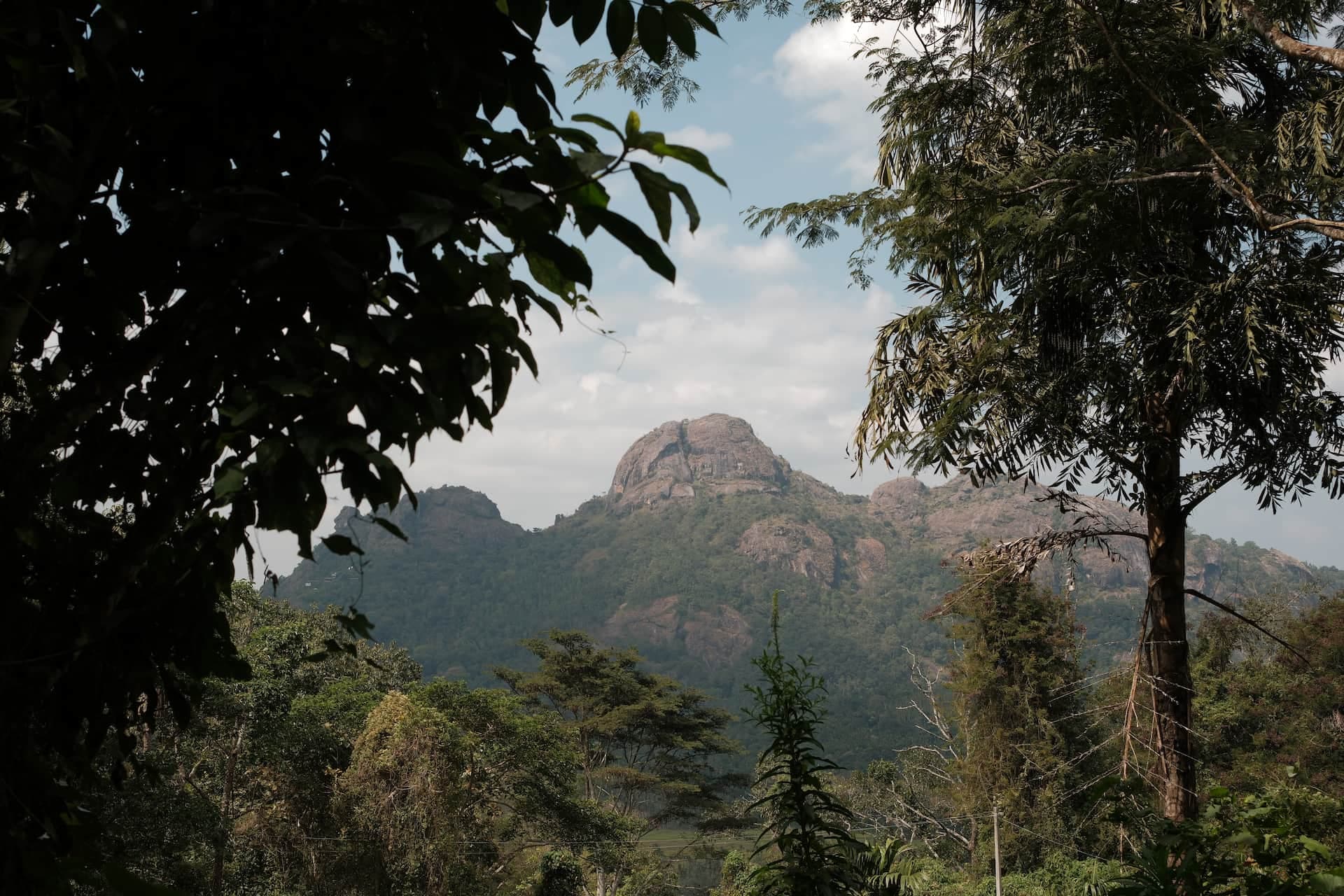
Top Places to Visit in Wayanad
Wayanad is not a destination you rush through. It unfolds in layers of mist, forest, rock, and water. Tucked into the Western Ghats of Kerala, this highland district carries ancient human markings, colonial echoes, and wilderness that still feels unclaimed. Among the most compelling sites is Edakkal Caves, where prehistoric petroglyphs carved into stone surfaces date back thousands of years. These are not conventional caves but fissures formed by massive rock formations. Climbing up through forest paths to reach them feels like ascending into time itself. The carvings, human figures, symbols, animals, remain etched with a stubborn clarity, reminding visitors that Wayanad’s story began long before plantations and borders. For those drawn to panoramic landscapes, Chembra Peak rises as one of the highest points in the region. The trek moves through grasslands and mist, leading to the heart-shaped lake that rests midway, a natural basin that seems almost imagined. From the summit, the Western Ghats roll outward in endless green folds, tea estates and forests blending into horizon. Water finds its grand expression at Banasura Sagar Dam, one of the largest earthen dams in India. Set against hills that mirror themselves in still water, the reservoir expands like a quiet inland sea. Small islands rise from its surface during summer, creating a landscape that feels both engineered and wild. It is a place where geology and human ambition meet without disturbing the serenity of the hills. Then there is Soochipara Waterfalls, also known as Sentinel Rock Waterfalls. Water cascades down in white ribbons through dense forest, pooling at the base in clear basins. The descent to reach it passes through tea plantations and shaded paths, the air gradually cooling as the roar grows louder. It is not just a waterfall but an immersion into the elemental sound of falling water. For those seeking encounters with wildlife, the Wayanad Wildlife Sanctuary offers forest drives through stretches of protected woodland connected to the Nilgiri Biosphere Reserve. Herds of deer move like shifting light between trees. Elephants cross roads with unhurried authority. Birdsong fills the canopy. It is one of the few places where the forest still feels sovereign. Wayanad does not compete for attention with spectacle. Its beauty is quieter, layered in archaeology, ecology, and memory. Each site reveals a different dimension of the district, from ancient carvings to engineered reservoirs, from mountain peaks to protected wilderness. Together they shape Wayanad not merely as a tourist destination, but as a landscape where history and nature continue to coexist.
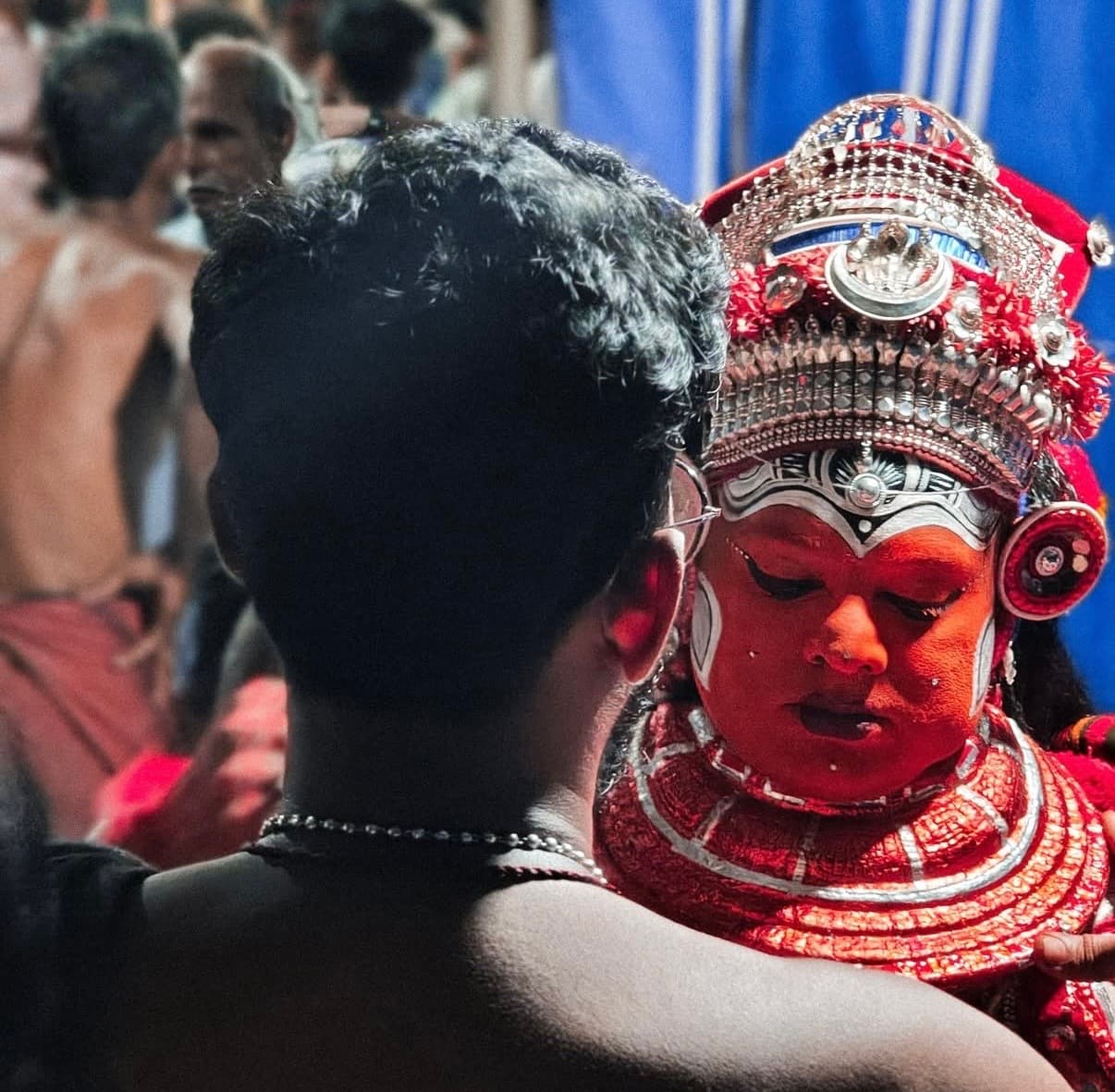
Heritage of Kerala
Heritage in Kerala does not stand still. It moves like water through backwaters, like monsoon across laterite roofs, like incense rising in temple corridors. It is not locked inside monuments. It breathes in daily ritual, in cuisine simmering with coconut and spice, in the slow dignity of wooden houses that have survived more than a century of rain. Kerala’s geography shaped its history long before kingdoms were named. The Arabian Sea opened the coast to trade, while the Western Ghats guarded the hinterland with forests and mist. This delicate balance between mountain and sea made Kerala a crossroads. Arab traders anchored on the Malabar coast. Chinese fleets visited its ports. Portuguese, Dutch, and British powers followed. Yet the land absorbed each arrival without surrendering its essence. In the north, ritual art forms like Theyam transform performers into living deities, their painted faces and towering headgear carrying stories older than written record. In temple towns, oil lamps flicker against granite walls. The Padmanabhaswamy Temple stands as a monumental example of Dravidian architecture, layered with devotion and legend. Mosques along the coast, such as the historic Mishkal Mosque in Kozhikode, mirror temple-style woodwork rather than Middle Eastern domes, proving that faith here learned to wear local timber. The backwaters of Alappuzha glide quietly through villages where life remains tethered to tide. Kettuvallam houseboats, once rice barges, now float as reminders of an inland trade culture that connected communities through canals rather than highways. In the hills of Wayanad, tribal traditions endure in song, craft, and agricultural rhythm, while colonial-era bungalows whisper of plantation economies that once reshaped the highlands. Kerala’s architectural heritage is carved from climate. Sloping tiled roofs bend under monsoon generosity. Courtyards open inward to light and rain. Laterite stone walls hold coolness against humid afternoons. Wooden beams are etched with motifs that echo both sacred geometry and local flora. Homes are not separate from environment but in conversation with it. Cuisine forms another layer of inheritance. Coconut appears in countless forms, grated, roasted, pressed into milk. Black pepper and cardamom speak of ancient spice routes. Malabar biryani carries Arab influence softened by Kerala rice. Syrian Christian stews reflect West Asian memory mingled with local harvest. Sadya meals served on banana leaves celebrate abundance with discipline and harmony. Literature and reform movements have also shaped Kerala’s identity. Social reformers challenged caste hierarchies. Poets and writers turned landscape into metaphor. Education became not privilege but policy. Heritage here is not only ancient but progressive, a society shaped by both ritual continuity and questioning thought. What makes Kerala’s heritage remarkable is its capacity for coexistence. Temples, mosques, churches, and synagogues share skylines without erasing one another. Festivals overlap in calendar and spirit. Languages borrow words freely. Architecture blends without apology. To speak of Kerala’s heritage is to speak of water and wood, of spice and stone, of faith carried by wind and adapted by soil. It is a living inheritance, not preserved behind glass but practiced in kitchens, courtyards, and shoreline markets. The monsoon will return each year, drenching tiled roofs and feeding rivers. And with it, Kerala’s heritage will continue its quiet cycle of renewal, not as a relic of the past, but as a rhythm that refuses to disappear.
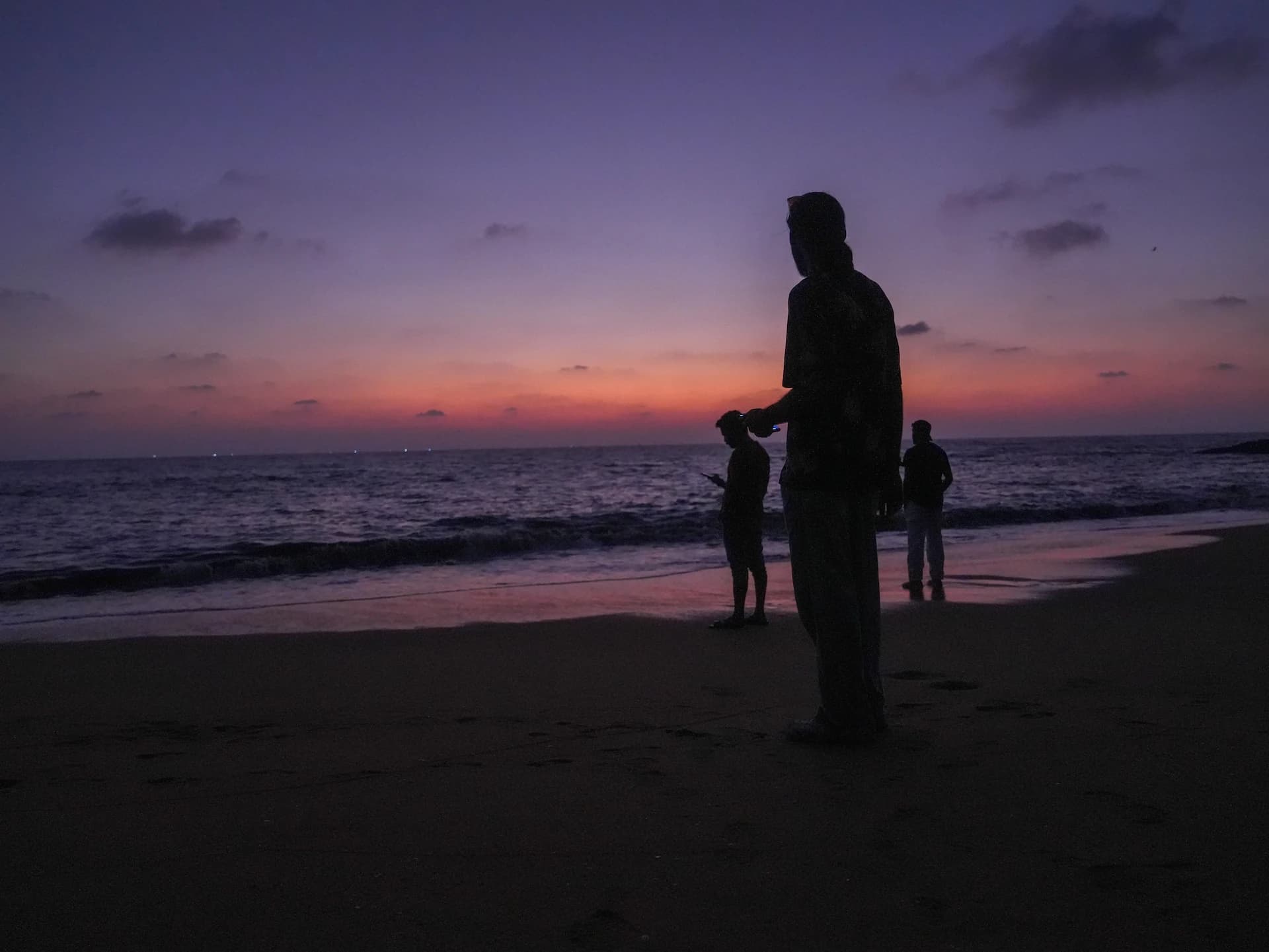
Kozhikode: Where Faiths Arrived by Sea
Some cities are built by kings. Kozhikode was built by currents. Along the Arabian Sea in Kerala, Kozhikode emerged as one of the most powerful port cities of the medieval Indian Ocean world. Under the Zamorins, it became a magnet for traders who did not merely exchange goods but carried with them faith, language, architecture, and memory. The shoreline became a manuscript written in many scripts. Arab merchants were among the earliest to anchor here in large numbers. By the 12th and 13th centuries, Kozhikode was deeply woven into the Indian Ocean trade network linking Arabia, Persia, East Africa, and Southeast Asia. Islam along the Malabar coast took on a distinct form shaped by Kerala’s timber architecture and humid climate. The Mishkal Mosque, built in the 14th century, stands as one of the finest examples. Without domes or towering minarets, its layered wooden structure resembles a temple more than a Middle Eastern mosque. Persian and Arab theological currents flowed through its prayer halls, yet its body was unmistakably Malayali. Persian influence along the Malabar coast was not only spiritual but linguistic and culinary. Trade with ports in the Persian Gulf introduced textiles, ceramics, and subtle flavours. Words of Persian origin slipped into local vocabulary. Elements of Gulf cuisine merged with Malabar spices to create dishes that still taste of travel. The Shia presence in Kerala, though numerically smaller than Sunni communities, reflects these enduring Gulf connections that shaped pockets of ritual life along the coast. From the east came the Chinese. During the early 15th century, the fleets of Zheng He visited the Malabar coast as part of the Ming dynasty’s maritime expeditions. Chinese records describe Calicut as a thriving, diplomatically significant port. Archaeologists have found fragments of Chinese porcelain along Kerala’s coast, quiet proof of sustained contact. The iconic cantilevered fishing nets, known locally as cheena vala, are widely believed to have been introduced through Chinese influence, later absorbed seamlessly into Kerala’s fishing traditions. Jain presence, though less visible in Kozhikode city itself, shaped the broader northern Kerala region. In nearby Wayanad and parts of North Malabar, ancient Jain temples carved from stone stand as reminders of merchant communities who once travelled these trade routes. Structures like the Jain temple at Sultan Bathery reveal that commerce moved inland as well, carrying belief beyond the coastline into forested hills. Christianity too arrived early. Long before European colonialism, Syrian Christian communities had already established themselves along the Malabar coast, tracing their origins to early apostolic traditions and West Asian contact. Later, the arrival of Vasco da Gama in 1498 marked a new European chapter, altering political and commercial balances but not erasing the older networks that had long defined Kozhikode. Temples dedicated to local deities stood alongside mosques shaped by Arab carpenters. Jewish traders passed through these ports on wider Indian Ocean circuits. Buddhist and Jain influences travelled through merchant guilds in earlier centuries. Kozhikode was not a singular culture but a confluence. What makes this port remarkable is not merely diversity, but adaptation. Foreign ideas did not remain foreign for long. Chinese technique became Kerala craft. Persian ritual absorbed coconut oil lamps and monsoon woodwork. Arab trade married Malayalam speech. Even architecture refused purity. Mosques wore temple roofs. Coastal houses opened wide verandahs to sea wind rather than fortress walls. Kozhikode’s history is tidal rather than linear. Each wave carried something. Porcelain. Horses. Dates. Theology. Cartography. Stories. And when the tide receded, it left behind fragments that settled into the soil. To stand on Kozhikode beach at dusk is to face more than horizon. It is to face centuries of arrival. The sea here was never a boundary. It was a bridge. And the city that grew beside it remains a quiet testament to what happens when the world chooses to meet rather than conquer.

Malabar Coastal and Culinary
The Malabar coast does not introduce itself loudly. It arrives as salt on the breeze, as the slow roll of the Arabian Sea touching shorelines that have witnessed centuries of arrival and departure. Along this stretch of northern Kerala, trade winds once carried Arab merchants, Portuguese explorers, Dutch traders, and British ships. What they left behind was not only commerce but taste. Malabar culinary history is a story written in spice and tide. In port towns like Kozhikode, Kannur, and Thalassery, kitchens became crossroads. Black pepper, cardamom, cinnamon, and cloves travelled outward from these shores, while new techniques and ingredients travelled inward. The result was a cuisine layered with memory. Rice met saffron. Coconut milk met slow-cooked meat. The sea offered prawns, mussels, sardines, and kingfish, each simmered in gravies that balanced heat with fragrance. Malabar biryani, especially the Thalassery style, is perhaps the most poetic example of this mingling. Unlike its northern counterparts, it uses short-grain kaima rice, delicate and aromatic. The meat is cooked separately with spices, then folded gently into rice scented with ghee and fried onions. It is not merely a dish. It is inheritance, shaped by Arab influence and local sensibility. Seafood along the Malabar coast carries its own rhythm. Fish curry stained red with Kashmiri chilli and mellowed by coconut. Mussels stuffed with spiced rice paste and steamed. Pathiri, soft rice flatbread, absorbing gravies like a patient companion. Malabar parotta, layered and elastic, served with slow-simmered beef or chicken curry, reflects the region’s openness to adaptation and improvisation. Yet Malabar cuisine is not only about abundance. It is also about balance. Tamarind sharpens richness. Curry leaves crackle in hot oil like punctuation marks. Coconut appears in many forms, grated, roasted, pressed into milk, grounding every dish in the geography of palm-lined shores. Food here tastes of humidity, of ocean wind, of trade routes that shaped appetite. The Malabar coast itself has always been porous. Waves carry stories. Fishing boats leave at dawn and return with silver flicker. Mosques with ancient wooden beams stand near temples and colonial structures, each community leaving its imprint on flavour. Hospitality in Malabar homes is instinctive. A visitor is rarely allowed to leave without tea, without something fried crisp in coconut oil, without a second helping pressed gently onto the plate. To speak of Malabar coastal cuisine is to speak of migration and memory. It is the culinary expression of centuries of exchange. The spice trade once drew the world to these shores. Today, what remains is the quiet confidence of a cuisine that never needed spectacle. It only needed fire, coconut, and time. Along the Arabian Sea, as evening light fades and fishing nets rest, kitchens continue their ancient choreography. Steam rises. Mustard seeds burst in oil. Rice is washed in brass vessels. And somewhere between sea breeze and spice, Malabar reminds us that history is not only written in monuments. It is tasted, shared, and remembered at the table.
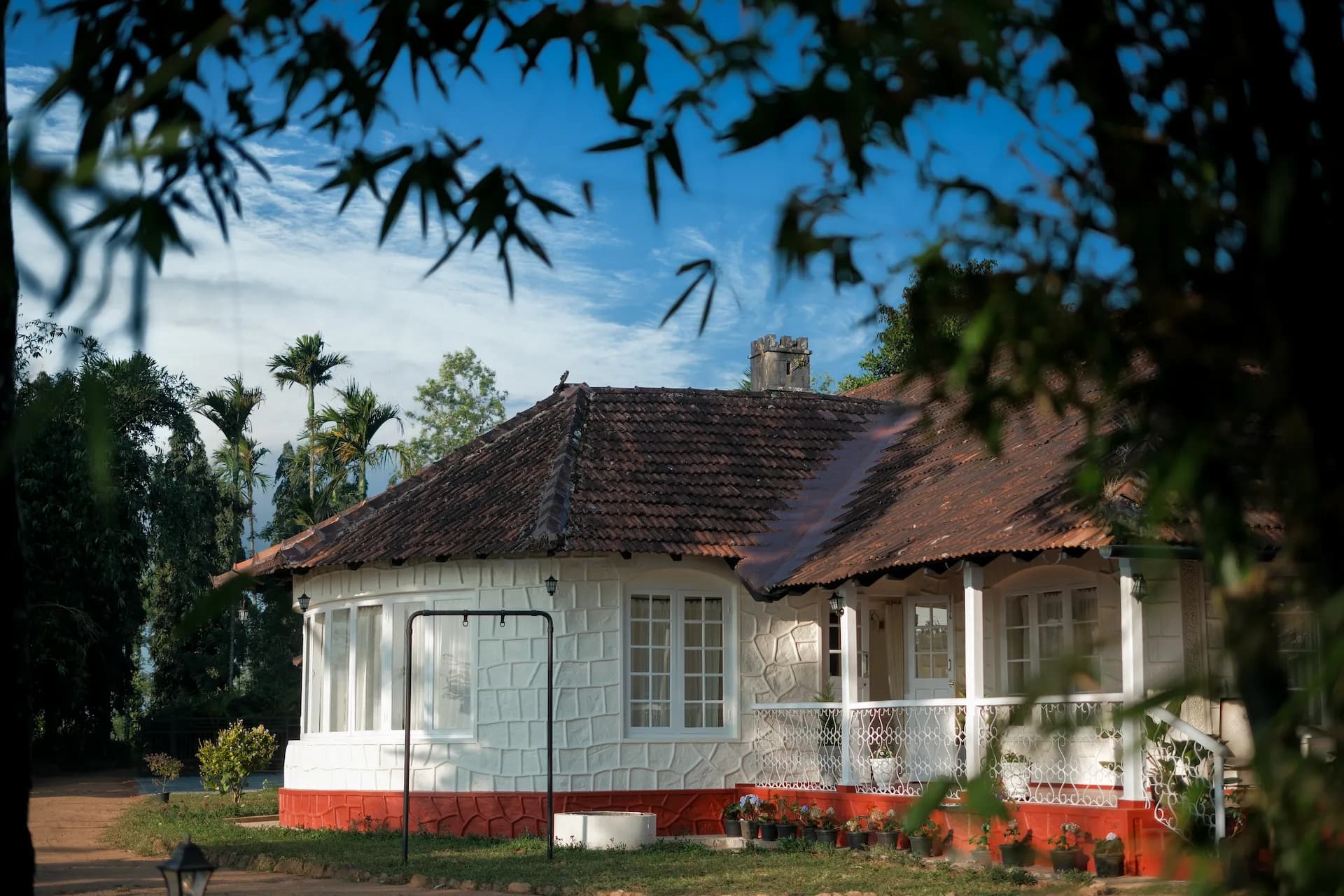
Colonial Era British-Made Heritage Bungalows in India
There was a time when architecture travelled with empire. It crossed seas in the minds of surveyors and engineers, arrived on Indian soil, and then slowly, almost reluctantly, began to change. The colonial-era British bungalow in India is one such transformation. It began as an imported idea of residence and authority, and over decades it softened into something rooted in Indian earth. The word bungalow itself comes from the Bengali term bangla, meaning a house in the style of Bengal. When the British encountered this low, verandah-wrapped structure in eastern India, they adapted it for their own needs. By the nineteenth century, the bungalow had become the preferred residential form for British officers, civil servants, and plantation managers across the subcontinent. In hill regions like Wayanad, Ooty, Darjeeling, and Shimla, these heritage bungalows took on a distinct character. They were often built on elevated ground, overlooking tea estates, forests, or valleys. Sloping roofs carried Mangalore tiles. Wide verandahs created a shaded buffer between wilderness and interior life. High ceilings allowed air to circulate. Thick stone or laterite walls responded to heavy rain and mountain chill. Fireplaces appeared even in tropical climates, gestures of memory toward distant England. The purpose of these bungalows was layered. They were residences, yes, but also administrative centres. In plantation economies, especially in the Western Ghats and northeast India, the manager’s bungalow functioned as the nerve centre of vast estates. From here, crop decisions were made, accounts maintained, and labour supervised. The house symbolised hierarchy within the colonial system, standing apart from workers’ lines and local settlements. The so-called Hundred House, remembered in estate histories as a manager’s residence overseeing extensive acreage, embodied this dual role of domestic space and authority. It was designed to command visibility, to observe the rhythm of plantations that once employed hundreds. Yet over time, its walls absorbed more than orders and ledgers. They absorbed languages, smells, silences, and festivals. Salary days brought temporary markets and gatherings. Malayalam songs drifted across lawns where English conversations once dominated. The bungalow became less a foreign implant and more a quiet meeting point of cultures. Colonial heritage bungalows in India are rarely purely British in construction. They relied heavily on local craftsmanship. Indian masons cut stone blocks. Carpenters shaped teak and jackfruit wood into doors and beams. Artisans adapted decorative motifs to suit climate and available materials. What emerged was Indo-European architecture, a hybrid shaped by negotiation rather than imitation. Beyond residential bungalows, the British also left behind other significant structures that continue to shape India’s landscape. In cities like Mumbai, grand Gothic Revival buildings such as Chhatrapati Shivaji Maharaj Terminus rose in stone and stained glass, blending Victorian ambition with Indian ornamentation. In Kolkata, Victoria Memorial was built in white marble as a monument to imperial presence. Hill stations like Shimla became seasonal capitals, dotted with churches, clubs, and administrative lodges that mirrored English towns in distant mountains. Railway stations, bridges, cantonments, and civil lines across India still carry the imprint of British planning. Yet among all these, the bungalow remains the most intimate legacy. It was where administrators lived, where families raised children, where evenings unfolded beside fireplaces while monsoon rain pressed against windows. After independence, many of these bungalows were repurposed, inherited, or neglected. Some became government residences. Others transformed into heritage homes and boutique stays. Their meaning shifted. No longer symbols of rule, they stand now as architectural archives, holding within their verandahs the complicated story of encounter between coloniser and colonised. In places like Wayanad, when mist gathers around a century-old manager’s bungalow, it no longer speaks of empire. It speaks of endurance. Of stone walls that have witnessed transition from plantation authority to local belonging. Of cultures that met not only in conflict but also in craft, cuisine, and shared landscape. The colonial-era British bungalow in India began as an assertion of presence. Over time, it became something else entirely. A structure claimed by climate, by moss, by memory, and by the many lives that passed through its rooms.
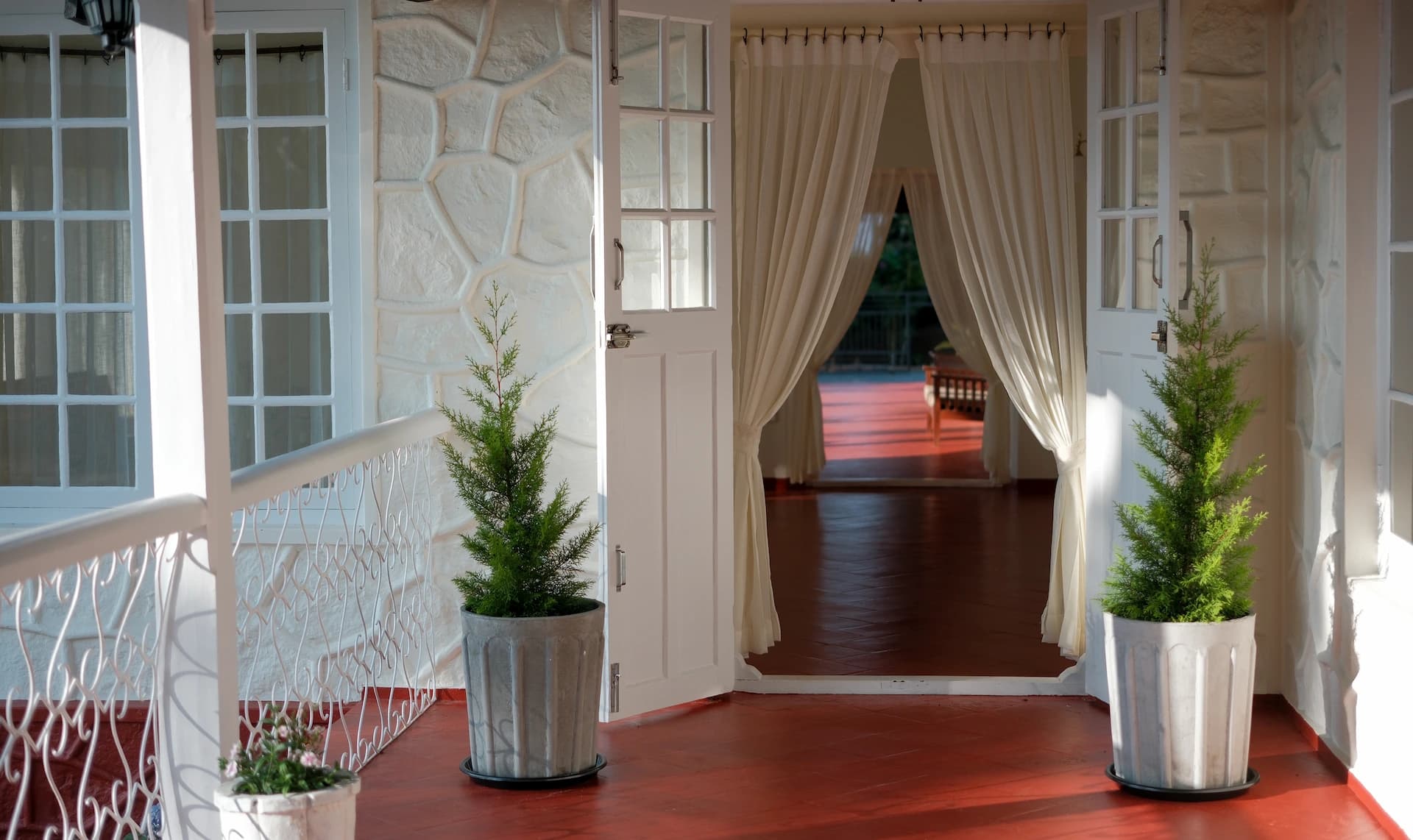
Architecture of Bungalows Built with Karinkal
In the hills of Wayanad, there are houses that do not merely stand on the earth but seem to rise from it. Their walls are not painted dreams but carved patience. They are built from karinkal, the dark laterite stone that holds both monsoon and memory within its pores. Karinkal is not a fashionable material. It does not glitter. It does not pretend. It is quarried from the very soil it returns to, shaped by hand, lifted by human shoulders, stacked with an understanding that architecture here must listen to rain. In the colonial era across Kerala, especially in high altitude plantation regions, bungalows were constructed with thick laterite blocks because the hills demanded resilience. The monsoon was not a season but a force. The sun was not gentle either. Karinkal answered both. A bungalow made of karinkal breathes differently. The walls are heavy, sometimes two feet thick, insulating the interior from harsh heat and unexpected chill. During the rains, the stone darkens, drinking the water like an old farmer lifting his face to the sky. During summer, it holds coolness inside, creating rooms that feel naturally tempered. Long before the language of sustainable architecture entered design magazines, these homes practiced it quietly. The British planters who built estate bungalows in Wayanad adapted to local materials quickly. Imported brick would have cracked. Imported ideas would have failed. Karinkal, cut from the land, allowed structures to root deeply into terrain that was sloped, uneven, alive. Sloping tiled roofs crowned these stone walls, directing heavy rainfall away from foundations. Wide verandahs wrapped around the house, casting shade, creating thresholds between wilderness and interior life. But beyond function, karinkal carries a mood. There is a gravity to it. When you run your hand along a laterite wall, you feel texture that remembers chisels. Tiny cavities speak of the stone’s volcanic origin, formed through centuries of geological quiet. In the evening light, these walls glow not brightly but with a muted warmth, as though the house itself is holding back a story. The architecture of karinkal bungalows in the Western Ghats is also about proportion. High ceilings allow heat to rise. Large windows frame mist rolling over tea estates. Fireplaces are embedded into stone walls, their chimneys rising through tiled roofs like solemn declarations of survival. Every element responds to climate, to land, to the rhythm of plantation life that once unfolded around them. Today, when concrete rises quickly and uniformly, a karinkal bungalow feels almost defiant. It reminds us that buildings were once slow decisions. That houses were shaped with foresight for generations, not seasons. The stone ages gracefully. Moss settles into crevices. Vines begin to claim corners. Time collaborates rather than destroys. In Wayanad’s older estates, these stone bungalows remain testimonies to a meeting between colonial blueprint and indigenous material wisdom. Whatever their origins, they now belong entirely to the landscape. They mirror the dark earth after rain. They echo the strength of the hills. A bungalow built with karinkal does not seek admiration. It asks only to endure. And in that endurance lies its quiet poetry, standing against wind and monsoon, absorbing decades, becoming less of a structure and more of a presence.
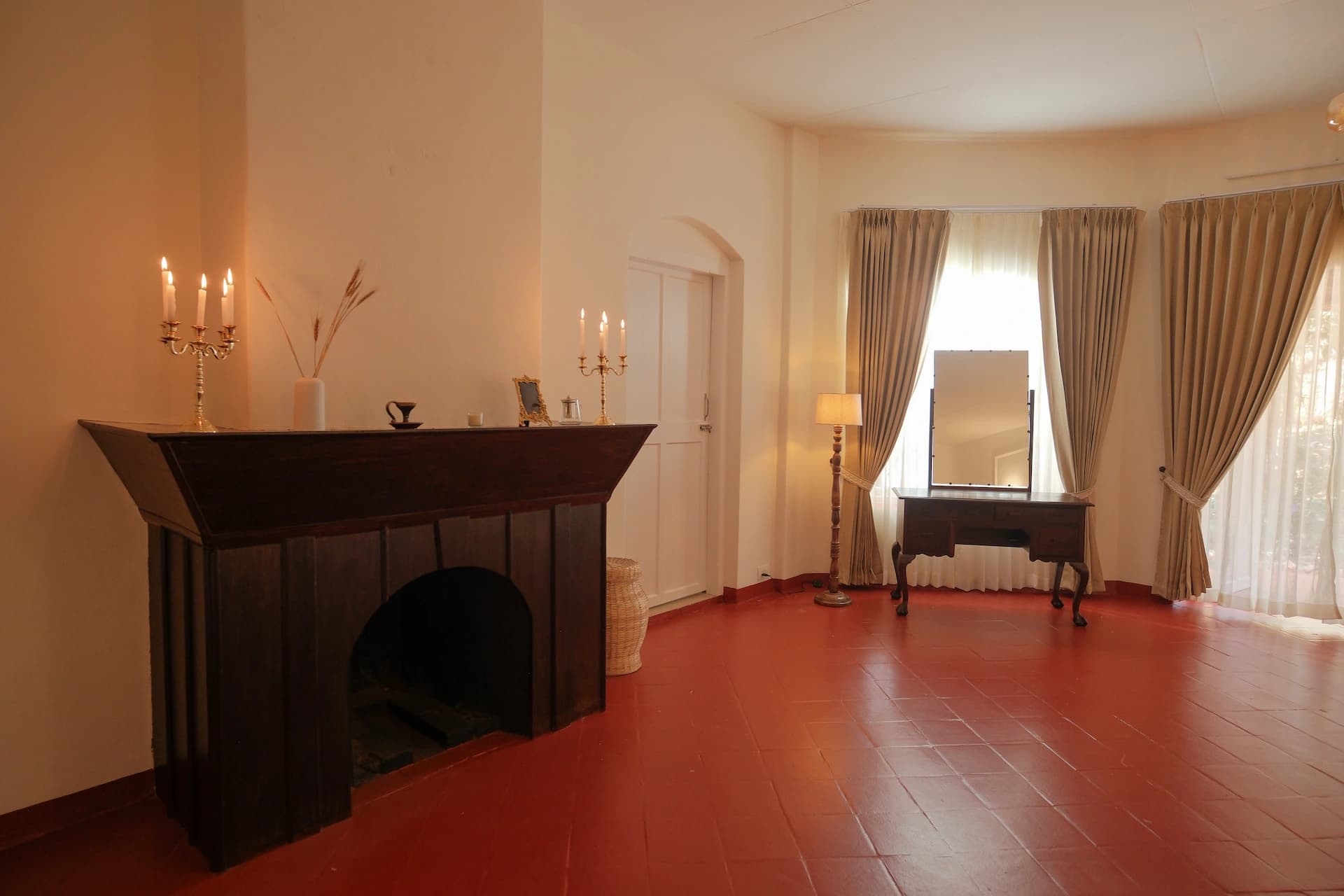
Culture of Slow Evenings at Fireplaces
In the highlands of Kerala, where the evenings descend not with drama but with a patient hush, fireplaces once carried the responsibility of conversation. Long before television light flickered against whitewashed walls, before phones hummed in palms, fire was the centre of the room and therefore the centre of attention. In old plantation bungalows across Wayanad, flames were not merely for warmth. They were ritual. They were punctuation. They were pause. The colonial bungalow was designed for air and shadow, for monsoon winds and mist that slipped through hills. During the British plantation era in South India, fireplaces were architectural necessities in high altitude estates. The nights grew unexpectedly cold. Tea planters and administrators, far from their homelands, built hearths as memory anchors. Stone mantels rose like quiet altars. Chimneys pierced tiled roofs. Wood crackled with a language older than empire. Yet what remains today is not the empire. It is the fire. In heritage homes that have survived more than a century, fireplaces hold the scent of stories that cannot be archived. Plantation workers gathered after long days in tea and pepper estates. Letters were read aloud. Salary day plans were whispered. Children watched embers collapse into soft red galaxies. Time moved differently then. There was no urgency to leave the room. No reason to scroll away from silence. A fireplace in a colonial home teaches patience. It demands waiting. The wood must be arranged with care. The flame must be coaxed. You cannot rush it without consequence. In that waiting, something softens inside the human body. Shoulders lower. Voices drop. Listening becomes natural. Slow evenings were once an inheritance of the hills. Mist outside the windows, cardamom-scented air drifting in from the estate, the distant cry of night birds, and the rhythm of fire breathing in the hearth. This was hospitality before it became industry. Warmth offered not in watts but in wood. Light that flickered, imperfect and alive. Across heritage bungalows in Wayanad and the Western Ghats, many fireplaces now stand unused, sealed, or decorative. Modern travel has replaced embers with screens, replaced conversation with distraction. The culture of slow evenings has quietly thinned. But when a fire is lit again in a century old hearth, something ancient returns. The room changes shape. Even the walls seem to lean closer. Fireplaces in colonial homes are not aesthetic relics. They are reminders that warmth once required participation. That evenings were events, not empty hours to be filled. In a world that moves at the speed of signal, a hearth insists on the speed of breath. And perhaps that is why these old fireplaces matter more today than they did a hundred years ago. They invite us back into stillness. Into shared silence. Into stories that do not need electricity to glow. In the hills of Wayanad, where heritage bungalows continue to stand against wind and monsoon, a lit fireplace becomes an act of preservation. Not of colonial memory, but of human tempo. Of the forgotten art of sitting together while the fire slowly, tenderly, turns wood into light.
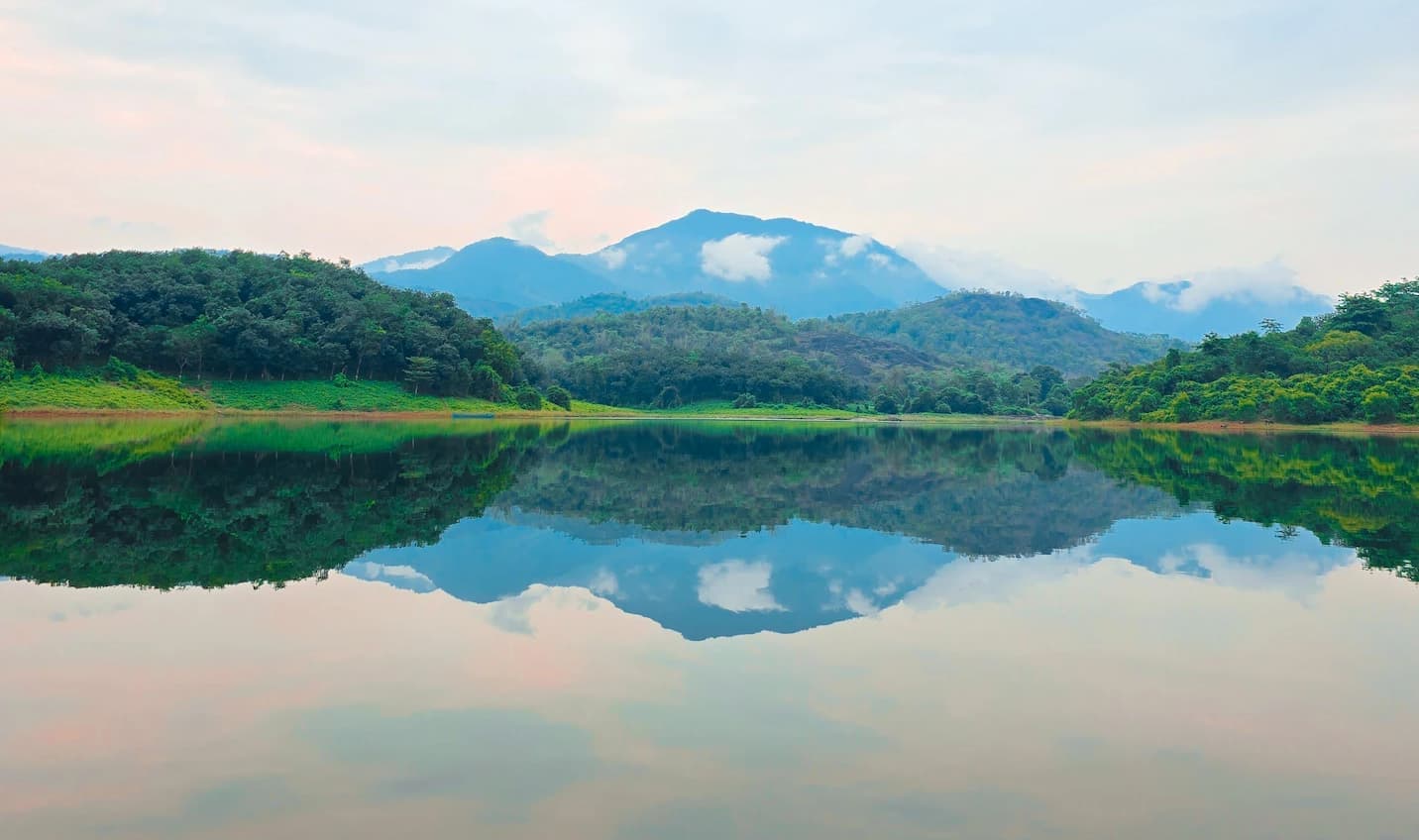
Top 5 Places To Visit In Kerala
Kerala is not merely a state on a map. It is rain stitched to memory. It is salt resting on skin. It is a green thought that keeps returning long after you leave. Some places you visit. Some places enter you quietly and rearrange the furniture of your heart. Here are five places in Kerala where that quiet rearrangement happens. Wayanad In Wayanad the morning does not rise in a hurry. Mist loosens itself from the hills like a shawl slipping from old shoulders. Tea estates roll endlessly, disciplined yet tender. Pepper vines climb trees as though they are writing love letters to the sky. In the forests, the Malabar giant squirrel flashes across branches, a quick flame of rust and black. On ancient rocks at Thovarimala, carvings wait in silence, patient as elders who have seen empires arrive and fade. Wayanad is not dramatic. It is intimate. The air smells of damp soil and cardamom. Plantation workers move through slopes with steady rhythm, their laughter rising softer than birdsong. For those searching for misty hill stations in Kerala, plantation walks, wildlife sightings, and heritage landscapes, Wayanad remains one of the most soulful destinations in South India. Kozhikode At Kappad Beach the sea carries history in its tide. In 1498, Vasco da Gama arrived on this shore, opening maritime routes that altered the world’s appetite for spice and silk. Yet the waves today speak less of conquest and more of continuity. Nearby, Kozhikode hums with layered memory. Once known as the thriving port of Calicut under the Zamorins, it welcomed Arab traders long before European sails appeared on the horizon. The air smells faintly of sea breeze and warm halwa cooling in shop windows. Evenings unfold along Kozhikode Beach where families gather, children chase foam, and the sky softens into amber. In the old quarters, mosques, temples, and colonial echoes stand not in competition but in quiet coexistence. Together, Kappad and Kozhikode offer more than coastal beauty. They hold centuries of trade, migration, resistance, and hospitality. For travelers seeking historic beaches in Kerala, cultural heritage, Malabar cuisine, and coastal sunsets, this stretch of shore is essential. Fort Kochi In Fort Kochi time does not move in straight lines. It circles gently. Chinese fishing nets rise against the evening sky like delicate sketches. At St. Francis Church wooden beams hold centuries of whispered prayer. Portuguese, Dutch, and British histories linger in pastel walls and narrow lanes. Step into an art café and you will find that the present is just as alive as the past. Painters, poets, travelers, fishermen. All sharing the same salted breeze. Fort Kochi remains one of the most culturally rich places to visit in Kerala for heritage walks, colonial architecture, and contemporary art. Munnar Munnar stretches like an emerald sea frozen in motion. Tea plantations ripple across slopes in precise lines, as if the earth has been combed gently by hand. Within Eravikulam National Park the endangered Nilgiri Tahr navigates cliffs with quiet authority. Clouds drift low enough to brush your thoughts. Munnar offers cool mountain air, scenic viewpoints, and protected wildlife habitats, making it one of the most beloved hill stations in Kerala for honeymooners and nature seekers alike. Alappuzha In Alleppey water is the main road. Houseboats glide through backwaters slowly, their reflections trembling in canals that connect village to village. Coconut trees lean toward their mirrored selves. The rhythm of life follows tide and sunlight rather than clocks. Alappuzha is not just about scenic houseboat cruises. It is about witnessing Kerala’s backwater culture, paddy fields shimmering with water, and communities living in graceful balance with land and lagoon. A Land That Lingers From the mist of Wayanad to the historic shores of Kappad and Kozhikode, from the layered streets of Fort Kochi to the tea valleys of Munnar and the serene backwaters of Alappuzha, Kerala unfolds like a long poem. You may arrive as a visitor. But somewhere between hill and harbor, between spice and silence, Kerala will begin to speak your name.
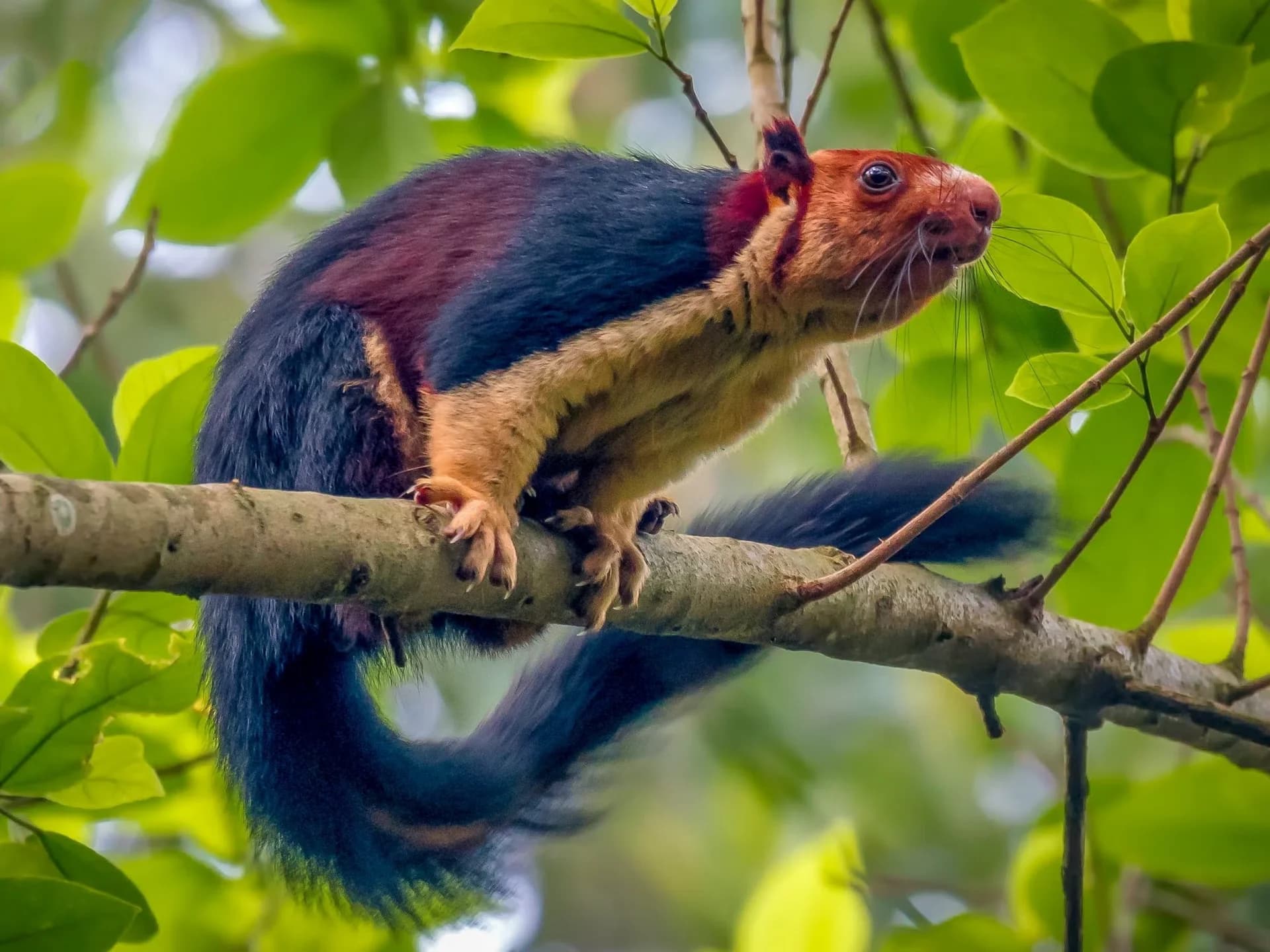
The Acrobat : Malabar Giant Squirrel
High above the tea bushes and pepper vines of our estate in Wayanad, a sudden rustle rearranges the silence. Leaves tremble. A branch bends with intention. Then he appears, stretched across the green architecture of the Western Ghats like a streak of moving color. The Malabar giant squirrel, scientifically known as Ratufa indica, does not resemble the small nervous squirrels of town compounds. He is larger, deliberate, almost theatrical. His fur carries unexpected shades of maroon, burnt orange, beige and deep chocolate brown. In certain light he looks hand-painted, as if the forest hired him to add contrast to its endless green. We see him often in the estate. So often that it feels as though he reports for duty. A paid artist of the canopy. He rehearses his movements with a seriousness that makes you want to applaud. There is something faintly comic about the way he stretches his body before a leap, tail lifted like a question mark, head tilted in calculation. He studies the distance, the wind, the bend of the branch. Then he launches. For a second he is airborne, an arc of fur against the sky. The Malabar giant squirrel of Kerala is endemic to India and thrives in the tall forests of the Western Ghats. Unlike ground-dwelling species, he spends almost his entire life in the trees. He can leap several meters between branches, using his long bushy tail for balance. Adults can grow up to three feet in length including the tail, making them one of the largest squirrel species in the world. He builds large, globular nests high in the canopy, woven from twigs and leaves. Sometimes there are several nests within his territory, each carefully chosen for safety and vantage. From up there he feeds on fruits, nuts, bark, flowers and seeds, occasionally insects. In feeding, he becomes a silent planter of forests, dispersing seeds across distances that no human hand could manage. The Malabar giant squirrel plays a crucial ecological role in maintaining the biodiversity of Wayanad and the wider Western Ghats ecosystem. Yet beyond facts and forest data, there is personality. He hangs upside down with the casual arrogance of a seasoned performer. He pauses mid-branch to chew, eyes bright, as if aware of being watched. There is mischief in his stillness. A Basheer-like humor in his presence. A Nerudian lyricism in the way his tail writes curves in the air. And somewhere in that canopy, a quiet reminder that forests are not scenery but living republics, each citizen necessary. When guests join us for a plantation walk in Wayanad, we speak of birds and mist and the smell of wet earth. But secretly, we hope they look up at the right moment. Because seeing a Malabar giant squirrel in the wild is not just wildlife spotting. It is an encounter with movement made elegant by necessity. He does not rush. He does not descend to prove himself. He remains in the heights, trusting the branches that have held generations before him. His stage is unbroken canopy. When forests are fragmented, his leaps become dangerous. When old trees fall, his theatre collapses. Today he crossed from the jackfruit tree near the bungalow to the tall silver oak beyond the lawn. A clean, confident arc. No applause. No curtain call. Only the wind adjusting itself after his passage. And below, in the estate, we stand humbled by a creature who turns survival into art, who makes the everyday act of moving through trees feel like a performance written by the forest itself.
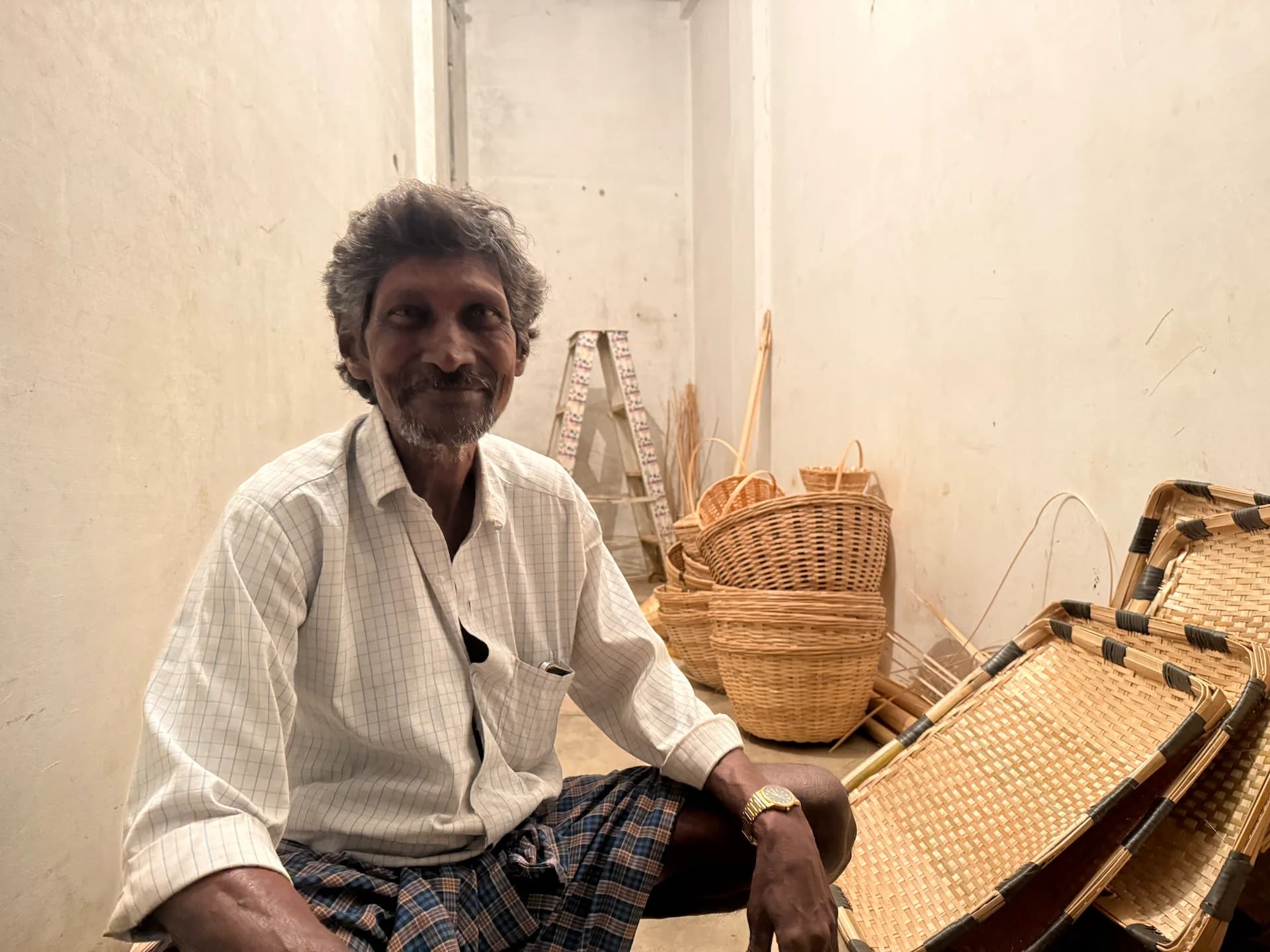
The Hands That Hold Our Guests
There is a man who sits with a knife and a bundle of eetta, and from his hands comes a small forest. He does not call it craft. He does not call it sustainability. He calls it work. The quiet, honest kind. The kind that smells of split cane and sun-warmed earth. When he bends the strips into circles and crosses them over each other, it is not design he is thinking of. It is habit, inherited like the shape of his palms. His father’s fingers once moved the same way. The river must have watched them too. At Kisah Stays, when you enter your room and find your towels folded inside a woven basket, or your fruits resting gently in a cradle of eetta, you are holding more than utility. You are holding the afternoon light of a village courtyard. You are holding a rhythm that began long before resorts and websites and curated experiences. We could have ordered plastic trays from a catalogue. Smooth. Identical. Forgettable. Instead, we drove a little deeper into Wayanad’s quieter roads and met this man. We sat with him. We listened. We watched his blade sing through the reed. We chose the uneven edge, the slight bend, the human fingerprint left behind in every weave. Because to source locally is not a marketing decision for us. It is a promise. A promise that the money you spend here travels only a few kilometres before it becomes someone’s evening tea, someone’s school notebook, someone’s small relief. A promise that the story of this land does not stay framed on our walls, but continues to breathe through the objects you touch.
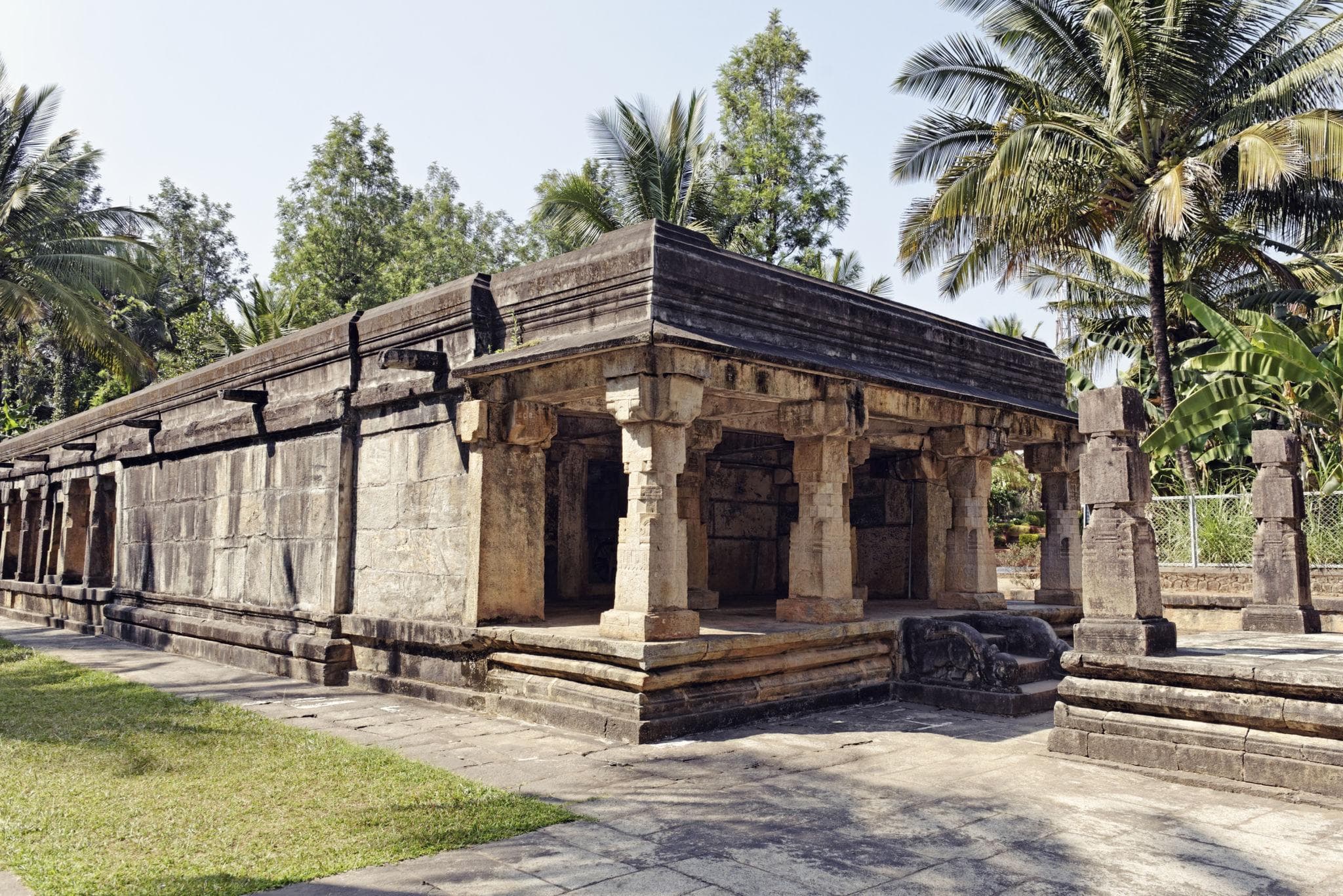
Sultan’s Battery
There is a town in Wayanad where history does not sit inside museums. It breathes in the mist. It leans against mossed stone. It lingers in the silence between two birdsongs. Sultan Bathery was once called Sultan’s Battery, a name given by Tipu Sultan, who is believed to have used the ancient Jain temple here as an ammunition depot during his campaigns in Malabar. “Battery,” they say, came from the storing of weapons. But the word feels too loud for a place that now holds only wind and memory. Before the gunpowder, before the marching boots, the temple stood in quiet devotion. Built in the 13th century, it is one of the finest surviving Jain shrines in Kerala. Granite blocks interlocked without drama. Pillars carved with patience. A geometry that feels less constructed and more grown, as if the hill itself decided to shape a sanctuary. You can touch the walls and feel centuries hum beneath your fingertips. No plaques will shout dates at you. No grand arches will try to impress. This is architecture that speaks softly, like an elder who knows stories are powerful only when told without noise. In the afternoons, light enters through narrow openings and settles gently on the stone floor. Lizards dart like punctuation marks across paragraphs of shadow. The temple does not demand reverence; it invites stillness. And in that stillness, you begin to hear it. The layered histories of Wayanad. Jain monks who once walked barefoot across these courtyards. Soldiers who stacked ammunition where prayers once rose. Farmers who later leaned their bicycles against the same ancient walls. The town around it has grown tea shops, small stores, bus horns, schoolchildren in uniform. Yet the temple remains, unhurried. It has survived belief, conquest, neglect, and curiosity. It has watched names change. There is something profoundly Wayanadan about Sultan Bathery — this quiet coexistence of memory and mist. It reminds us that history here is not a straight line. It is a forest path. It curves. It disappears. It returns when you least expect it. When guests from Kisah walk through Sultan Bathery, they are not merely visiting a monument. They are stepping into a conversation between faith and force, between stone and silence. The name may carry the echo of cannons, but what lingers today is something gentler, a reminder that even places once claimed by power eventually return to stillness. And if you stand there long enough, you will feel it, not the weight of history, but its breath.
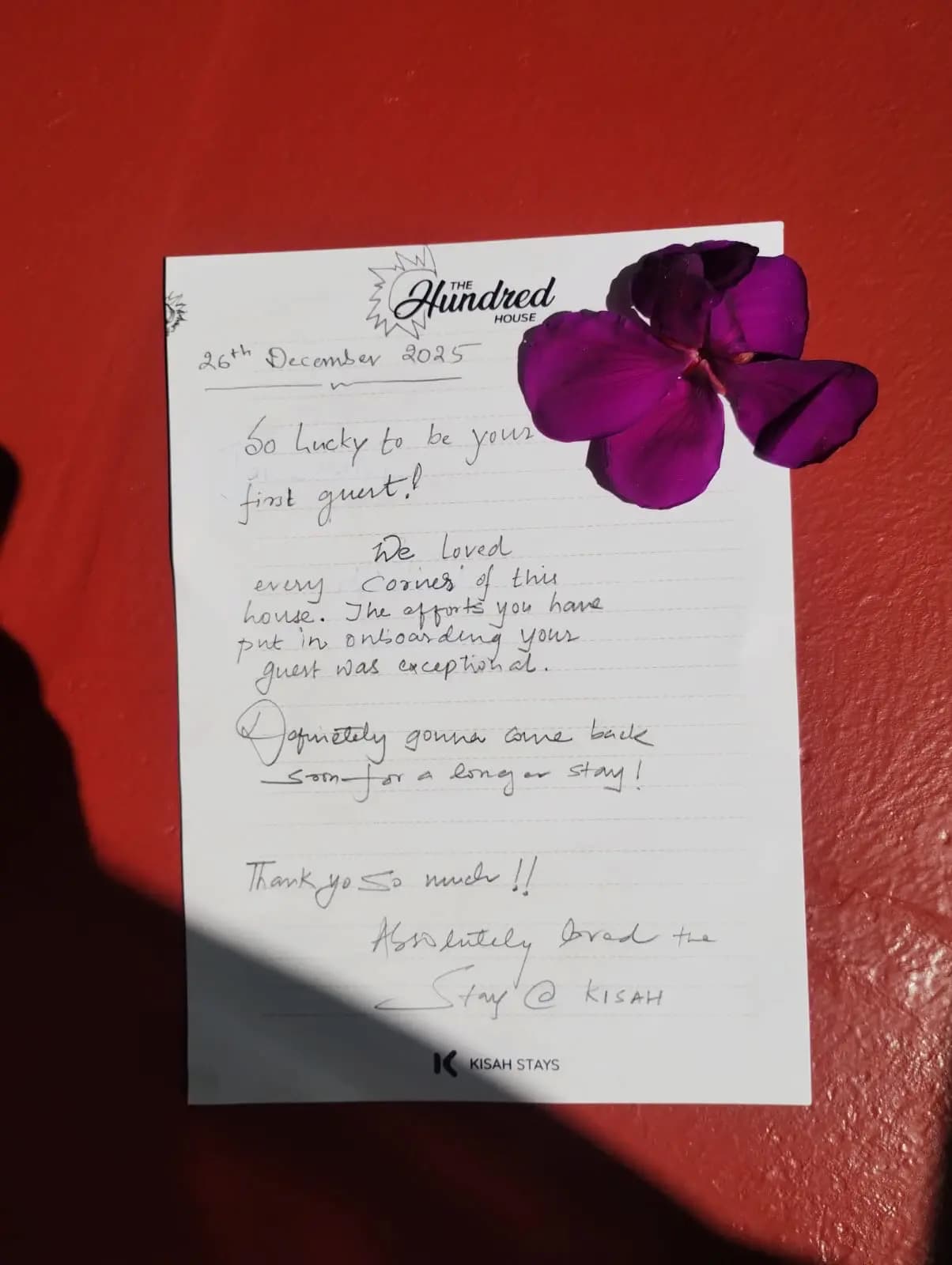
Our first review!
He writes, 26th December 2025, So lucky to be your first guest! We loved every corner of this house. The efforts you have put in onboarding your guest was exceptional. Definitely gonna come back soon for a longer stay! Absolutely loved the stay at Kisah Stays. This means the world to us. Notes like this are truly the fuel that keeps us going. Thank you for being part of our beginning.