 CUISINE
 HISTORY
 JOURNALS
 PEOPLE
 CONSERVATION
Thira and Theyyam
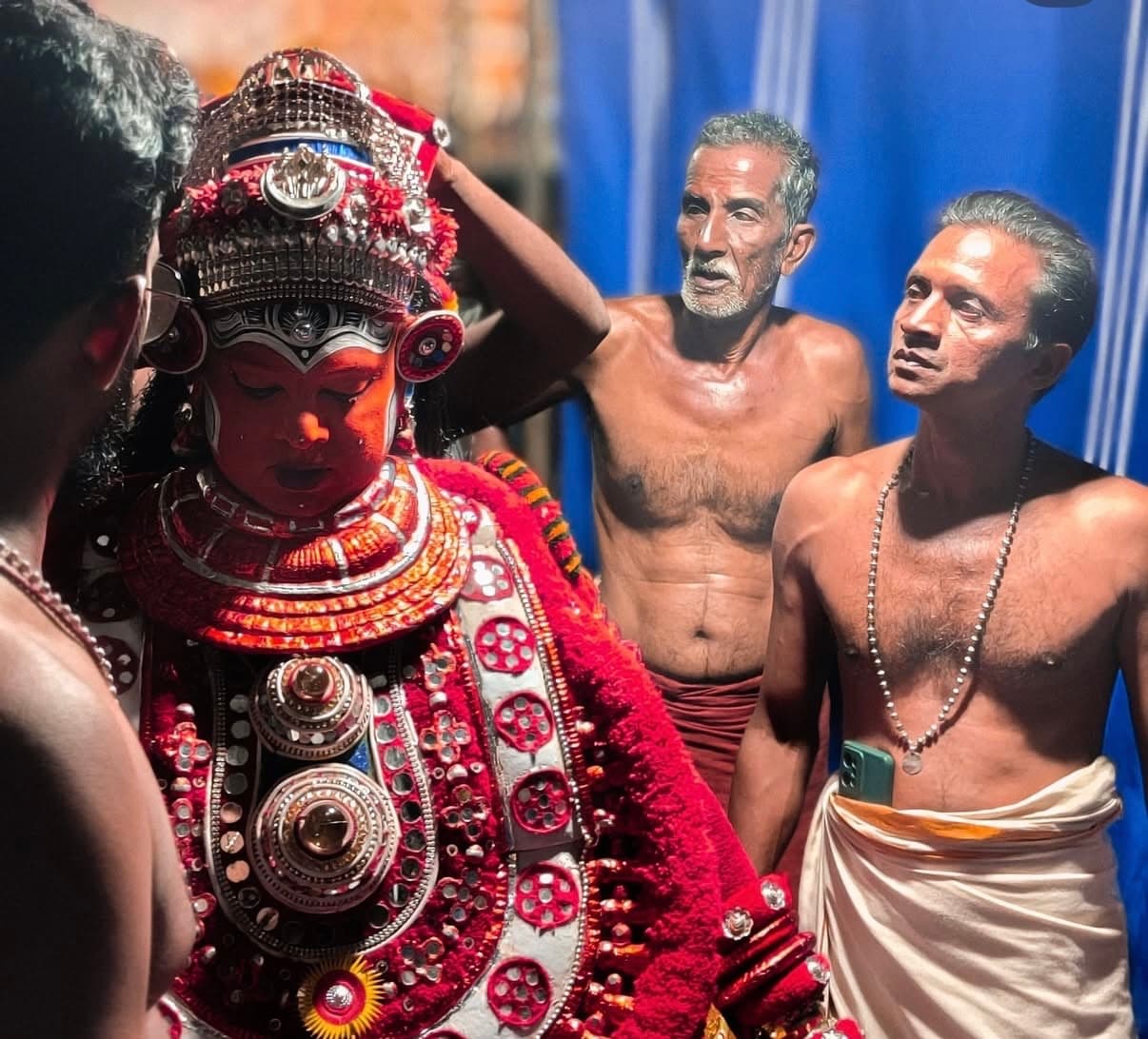
In the northern districts of Kerala, divinity does not remain distant. It arrives in fire. Thira and Theyyam are ritual performance traditions rooted deeply in the Malabar region, especially in areas like Kannur and Kasaragod. Though often spoken together, Thira and Theyyam differ in costume scale and regional practice, yet both belong to the same sacred grammar where performer and deity merge. The word Theyyam is believed to derive from daivam, meaning god. In these rituals, the artist does not merely portray a deity. He becomes the deity. For hours before the performance, transformation begins. The body is painted with intricate patterns in red, white, and black. The face becomes a canvas of geometry and mythology. Towering headgear is assembled with bamboo, cloth, coconut leaves. Layers of ornaments are tied. Every detail holds symbolism tied to specific deities, ancestral spirits, and local legends. When the ritual begins, the air shifts. The chenda drum resounds first. Its rhythm is not background music. It is invocation. The tempo rises and falls, guiding the body toward trance. Flames crackle. Torches illuminate the night courtyard of a temple or sacred grove. The performer moves in measured steps, eyes widening, breath altering. At a certain threshold, the boundary dissolves. The community believes the deity has descended. The artist is no longer addressed by his personal name. Devotees approach with folded hands. They seek blessings, counsel, sometimes justice. Theyyam has historically given voice to subaltern histories. Many deities represented in Theyyam originate from marginalized communities, warriors, women wronged, local heroes who were deified. In this ritual space, caste hierarchies invert. The performer, often from communities once considered lower in social order, becomes the embodiment of divine authority. Even upper-caste patrons bow. Thira, practiced in parts of North Malabar, shares similar devotional intensity but often features slightly less elaborate costumes compared to the grand vertical extensions of Theyyam headgear. Both rely on narrative recitation, music, and fire. Both blur theatre and worship. Both are lived tradition rather than staged art. The visual spectacle is overwhelming. Costumes can rise several meters high. Circular skirts flare outward like solar halos. Mirrors catch torchlight. Sweat glistens on painted skin. The smell of oil, ash, and earth merges into a sensory field that feels ancient. But beneath spectacle lies discipline. The artist trains for years. He memorizes genealogies of gods, chants, gestures. Physical endurance is immense. Some performances involve walking across embers or dancing through flames. Yet the trance is not theatrical illusion. It is psychological and communal transformation. The audience participates. Their faith completes the ritual. Theyyam season traditionally runs from October to May, aligning with temple calendars. Performances begin at dusk or deep into night and continue until dawn. Villages gather not as spectators but as participants in a shared spiritual event. In a rapidly modernizing Kerala, Thira and Theyyam remain stubbornly alive. They resist reduction into folklore for tourists, though curated performances exist. In their original settings, they remain acts of devotion. Here, art is not separate from belief. The body becomes shrine. The drum becomes heartbeat. Fire becomes language. And when the ritual ends, when headgear is removed and paint washed away, the artist returns to his ordinary life. But for those hours beneath flame and drum, he carried a god.