 CUISINE
 HISTORY
 JOURNALS
 PEOPLE
 CONSERVATION
History of Arab Trade in Malabar
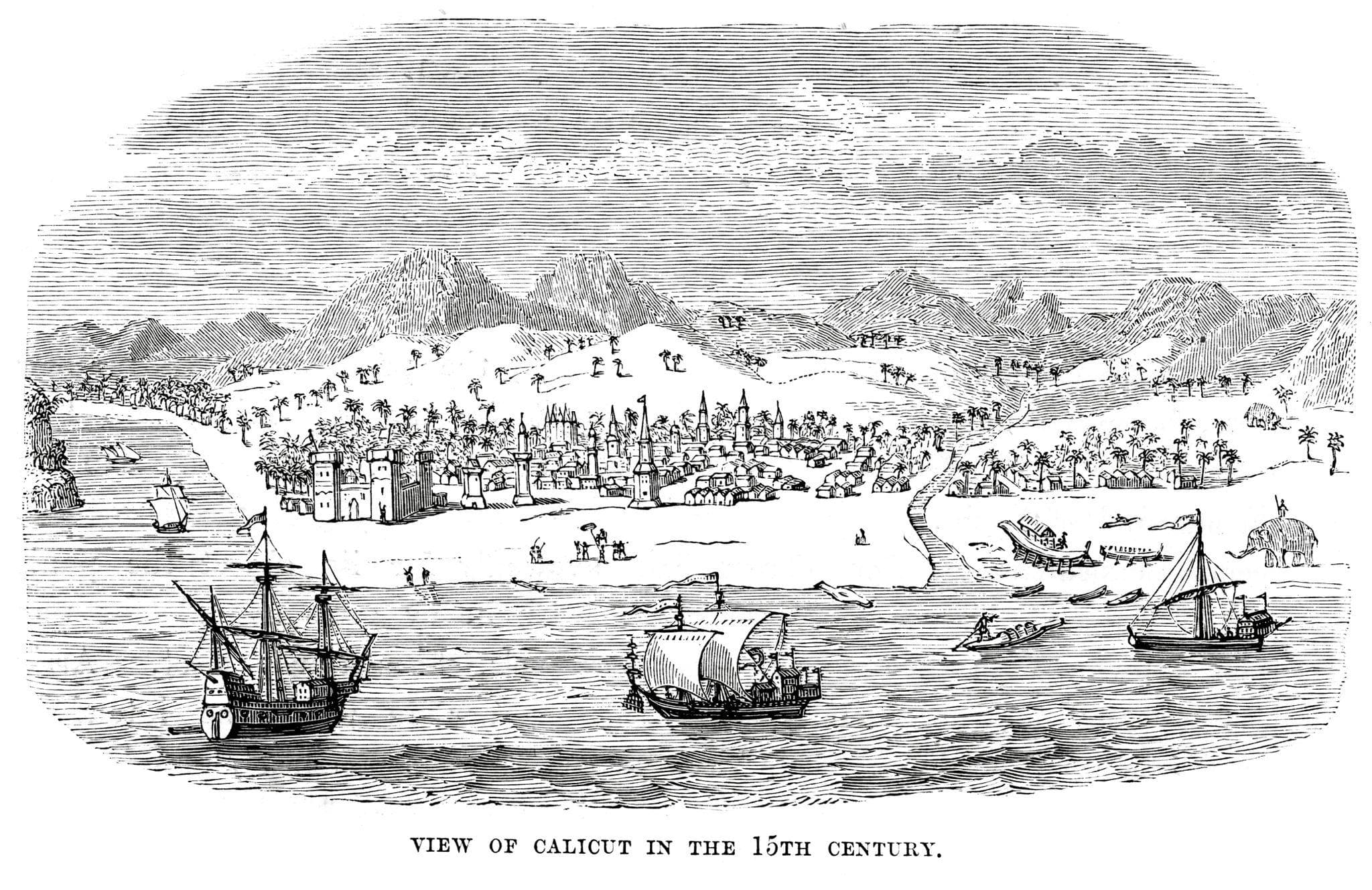
Before Europe rounded the Cape of Good Hope, before cannons announced empire, the Malabar coast was already fluent in Arabic. Along the shoreline of what is now Kerala, ports like Kozhikode, Kannur, and Ponnani thrived as nodes in the vast Indian Ocean trade network. As early as the first millennium CE, Arab merchants were sailing with monsoon winds across the Arabian Sea, linking the Middle East, East Africa, and the Malabar coast. They came for pepper. Black pepper, often called black gold, grew abundantly in the forests and hills of Malabar. Cardamom, cinnamon, ginger, and coconut followed. The Arabs did not merely trade; they settled. Seasonal winds made return journeys predictable, but over time, many merchants established permanent communities, marrying into local families and embedding themselves in coastal society. Unlike later European colonisers, early Arab traders did not arrive with territorial ambition. Their influence spread through commerce and kinship rather than conquest. Islam reached Kerala through these maritime connections, not by sword but by sail. Mosques along the Malabar coast reflect this integration. The Mishkal Mosque, built in the 14th century, resembles Kerala temple architecture with its timber structure and sloping tiled roof, a clear sign that faith adapted to local aesthetics. The Zamorins of Kozhikode welcomed Arab traders, recognizing their importance in maintaining global spice networks. In return, Arab merchants acted as intermediaries between Malabar and markets in Cairo, Aden, and beyond. Malayalam absorbed Arabic vocabulary. Culinary habits shifted subtly. Dates, certain spice blends, and techniques entered coastal kitchens. Ponnani became an important centre of Islamic scholarship in South India, sometimes referred to as the little Mecca of Malabar. Madrasas and intellectual exchange flourished, linking Kerala to wider Islamic thought currents stretching from Yemen to Cairo. By the time Vasco da Gama arrived in 1498, he encountered a well-established Arab trading system. The Portuguese entry disrupted these networks violently, seeking to monopolise spice routes and challenge Arab dominance in the Indian Ocean. What followed were naval battles and shifting alliances, but the centuries-old Arab presence could not be erased. Today, the Mappila Muslim community of Malabar carries this layered inheritance. Their songs, known as Mappila paattu, weave Arabic and Malayalam. Their cuisine blends local coconut richness with Gulf influences. Their mosques stand without domes typical of West Asia, yet their calls to prayer echo maritime ancestry. Arab trade in Malabar was not a brief episode. It was a sustained relationship shaped by wind patterns, trust, and mutual benefit. The monsoon itself became collaborator, carrying ships westward for part of the year and back again when seasons shifted. In many ways, Malabar’s openness to the world began not with European colonialism, but with these earlier Arab voyages. They connected Kerala to a global economy long before globalization became a word. The sea remembers these crossings. And along the Malabar coast, in language, food, and faith, their imprint remains quietly alive.