 CUISINE
 HISTORY
 JOURNALS
 PEOPLE
 CONSERVATION
Ayurveda
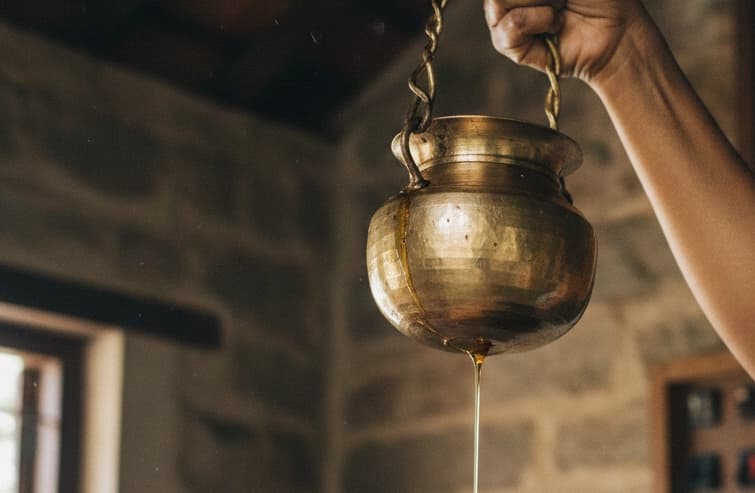
Long before modern medicine learned to measure the body in numbers, India was learning to read it like a landscape. Ayurveda is not merely a system of treatment. It is a philosophy of balance. The word itself means knowledge of life. Not knowledge of illness, but of life in its fullness. Ayurveda emerged more than three thousand years ago, rooted in ancient texts such as the Charaka Samhita and Sushruta Samhita. It views the human body as part of nature, not separate from it. Just as forests depend on rain and soil, the body depends on balance between the three doshas. Vata, Pitta, and Kapha. These are not diseases but energies, principles of movement, transformation, and stability. In Kerala, Ayurveda found fertile ground. The climate of the Western Ghats, rich in medicinal plants and steady monsoon rainfall, created ideal conditions for herbal medicine to flourish. Generations of vaidyas refined oil treatments, herbal decoctions, and therapies that are now known across the world. Panchakarma, Abhyanga, Shirodhara — these are not spa rituals born for tourism. They are methods developed over centuries to detoxify, restore, and realign. What makes Ayurveda powerful is not only its remedies but its listening. It asks how you sleep. What you eat. How you think. It understands that the mind influences the body, that stress disturbs digestion, that emotion can manifest physically. In this way, Ayurveda feels modern despite its age. It treats the individual, not just the symptom. Today Ayurveda has travelled far beyond Kerala. It appears in wellness centres in Europe, retreats in North America, and research discussions in contemporary healthcare. Yet its essence remains simple. Health is balance. Food is medicine. Nature is teacher. In a world of speed and constant stimulation, Ayurveda invites slowness. Warm oil poured gently across the forehead. The scent of crushed herbs. The quiet rhythm of breath during treatment. Healing becomes less about intervention and more about harmony. Kerala’s identity is deeply intertwined with Ayurveda. It is not only a wellness destination but a living tradition. The forests of the Western Ghats still hold plants used in classical formulations. The knowledge passed down through families continues to evolve with responsible practice and scientific dialogue. Ayurveda reminds us that the body is not a machine to be fixed but a system to be understood. It is storytelling at the cellular level. The pulse tells a story. The tongue tells a story. The skin tells a story. And the healer listens. In the end, Ayurveda is less about curing and more about remembering. Remembering that we are part of the same rhythm as the monsoon and the soil. That health is not an achievement but a balance constantly maintained. That sometimes the most powerful medicine is attention.