 CUISINE
 HISTORY
 JOURNALS
 PEOPLE
 CONSERVATION
The Hands That Hold Our Guests
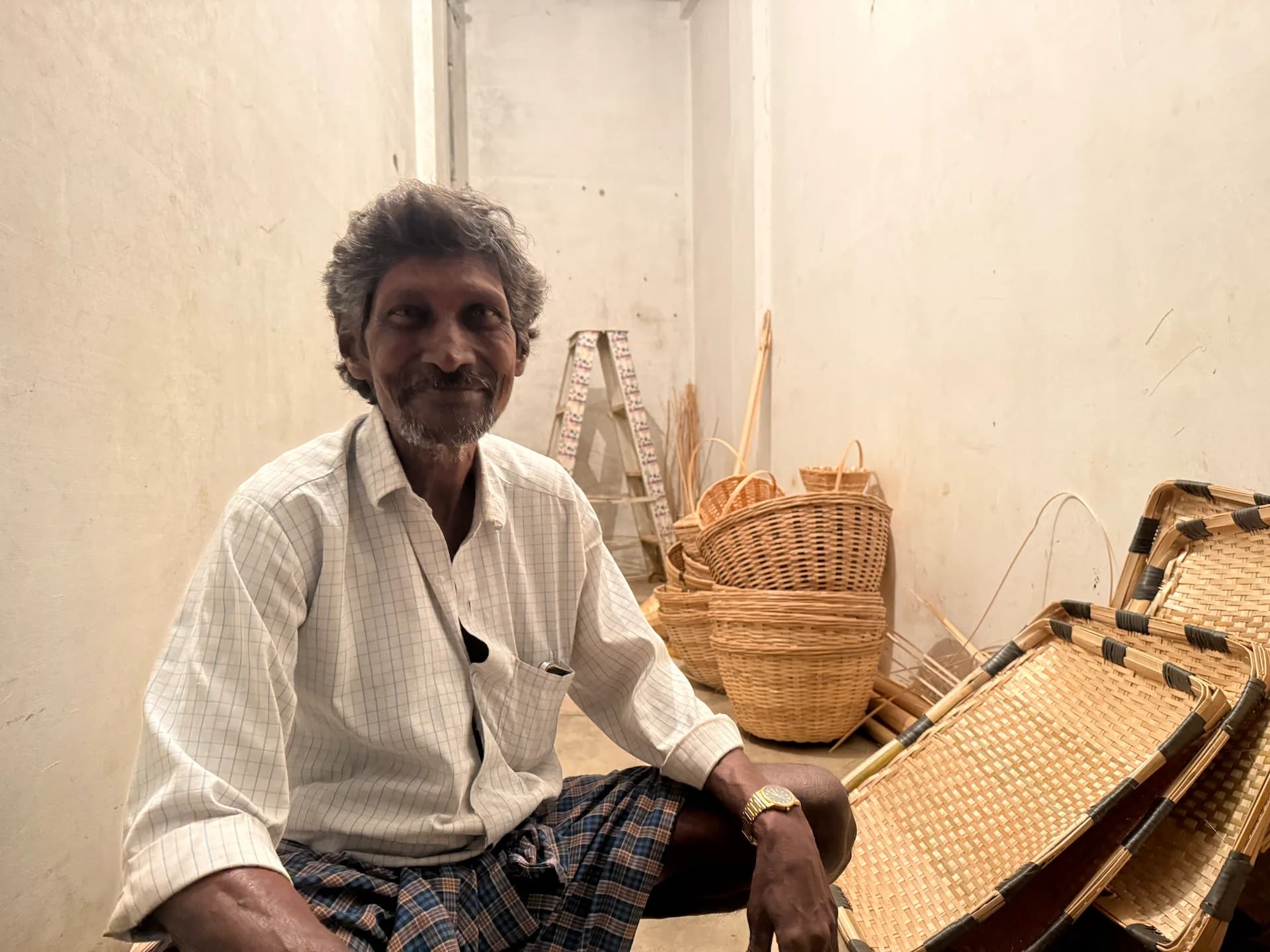
There is a man who sits with a knife and a bundle of eetta, and from his hands comes a small forest. He does not call it craft. He does not call it sustainability. He calls it work. The quiet, honest kind. The kind that smells of split cane and sun-warmed earth. When he bends the strips into circles and crosses them over each other, it is not design he is thinking of. It is habit, inherited like the shape of his palms. His father’s fingers once moved the same way. The river must have watched them too. At Kisah Stays, when you enter your room and find your towels folded inside a woven basket, or your fruits resting gently in a cradle of eetta, you are holding more than utility. You are holding the afternoon light of a village courtyard. You are holding a rhythm that began long before resorts and websites and curated experiences. We could have ordered plastic trays from a catalogue. Smooth. Identical. Forgettable. Instead, we drove a little deeper into Wayanad’s quieter roads and met this man. We sat with him. We listened. We watched his blade sing through the reed. We chose the uneven edge, the slight bend, the human fingerprint left behind in every weave. Because to source locally is not a marketing decision for us. It is a promise. A promise that the money you spend here travels only a few kilometres before it becomes someone’s evening tea, someone’s school notebook, someone’s small relief. A promise that the story of this land does not stay framed on our walls, but continues to breathe through the objects you touch.
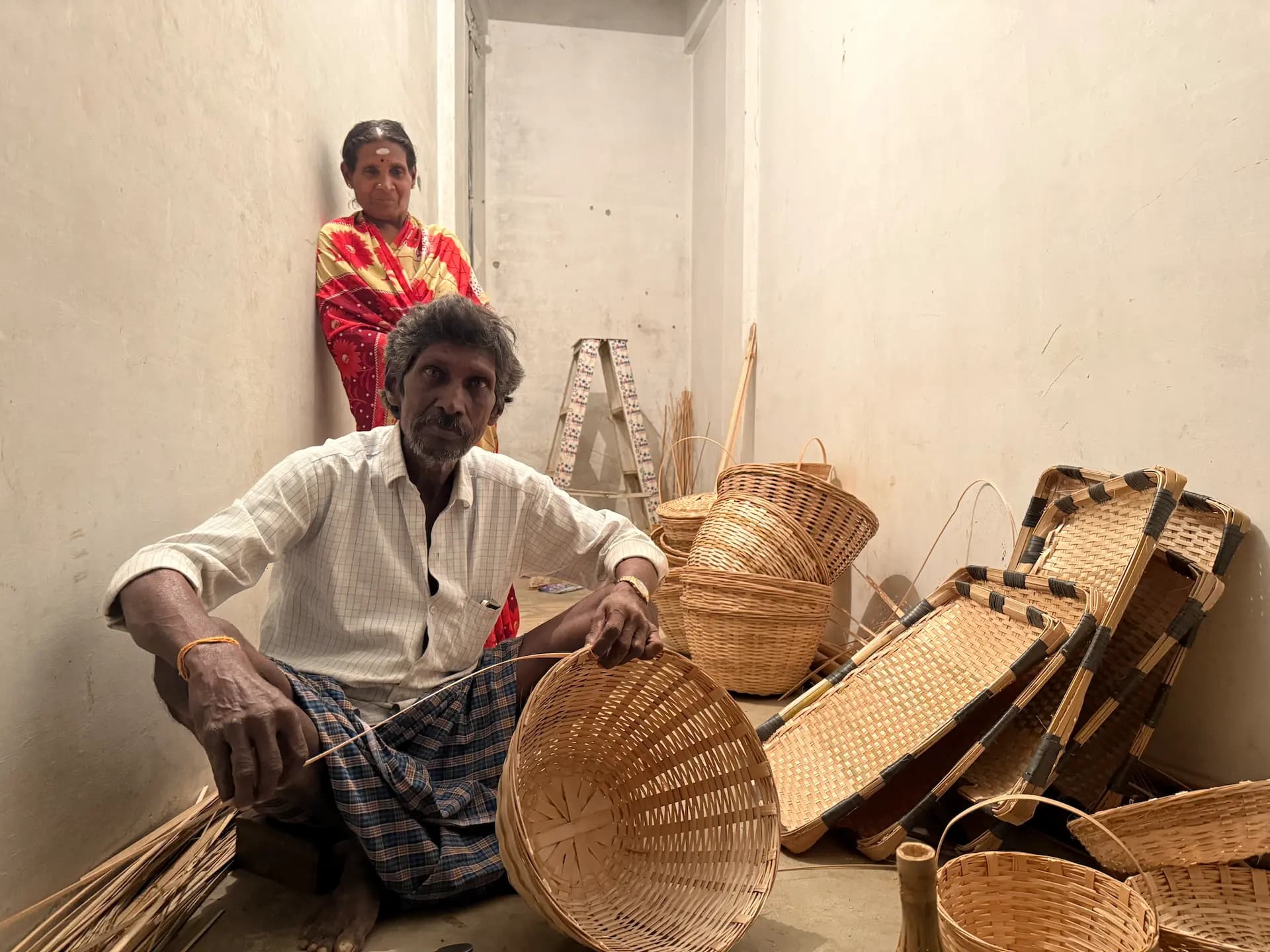
When you lift a chapati from that basket, when you peel a papad from its curve, when you gather your toiletries before a bath, you participate in something tender and circular. The forest becomes home. The home becomes livelihood. The livelihood becomes dignity. There is poetry in that circle. Like a line from Neruda, simple and full of salt. Like a page from Basheer, where the ordinary man stands taller than kings. Like a quiet river sentence that Arundhati might leave flowing across a valley. In the end, this basket is small. It can hold a towel, a fruit, a handful of warmth. But it also holds our belief that places are strongest when they remember their people.