 CUISINE
 HISTORY
 JOURNALS
 PEOPLE
 CONSERVATION
Stories on Wall
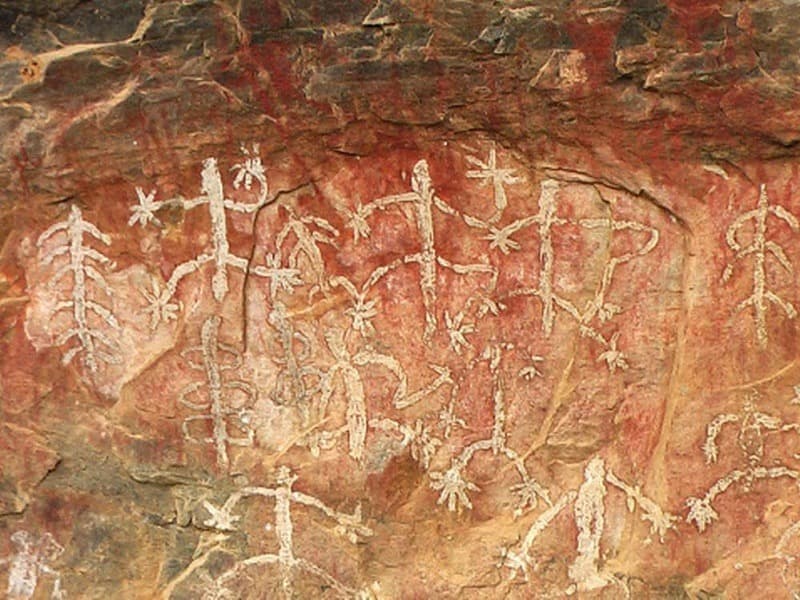
Before cave paintings, there were gestures. Before symbols, there were sounds. A warning cry. A lullaby hum. A hand placed gently on a shoulder. Communication did not begin with language. It began with need. The need to survive, to bond, to pass something forward. Then came the courage to mark stone. In the hills of Wayanad, the carvings inside Edakkal Caves remain among the oldest known petroglyphs in Kerala, dating back several thousand years, with some scholars placing them as early as the Neolithic period. Human figures, animals, symbols, geometric forms. These are not decorative scratches. They are early records of thought. They are memory made visible. Nearby, Ezhuthupara, literally meaning writing rock, carries inscriptions that belong to later historic periods. While not older than Edakkal’s prehistoric carvings, Ezhuthupara represents something equally powerful. The shift from symbolic carving to structured script. From image to language. It marks the evolution of communication from primal expression to organised writing. So are they the oldest inscriptions in India. Not exactly. India holds older script evidence such as the Indus Valley symbols. But in Kerala’s context, Edakkal stands as one of the earliest and most significant prehistoric sites. It is a reminder that this land has been telling stories long before literature. The impulse behind those carvings is the same impulse that drives us today. To say we existed. To say we felt something worth remembering. Over centuries, storytelling evolved. Oral epics travelled through memory. Palm leaf manuscripts preserved philosophy. Printing presses multiplied ideas. Radio dissolved distance. Cinema turned emotion into light and shadow. And now, the smallest device in our palm broadcasts our thoughts to the world. Social media is perhaps the fastest transformation storytelling has ever experienced. A moment becomes a post. A feeling becomes a caption. A protest becomes a movement. Communication that once took generations to spread now travels in seconds. We narrate our lives continuously, curating images, shaping identity, performing presence. And yet, the difference between a carved stone in Edakkal and a disappearing story on a screen is permanence. One required effort, time, physical endurance. The other requires a tap. One survived millennia. The other vanishes in twenty four hours. But beneath both lies the same hunger. To connect. To belong. To leave a trace. From cave walls to social walls, storytelling has grown in speed and scale, but its core remains unchanged. It is how humans understand themselves. It is how communities form. It is how memory resists disappearance. And still, there are stories that refuse inscription. Love does not always need carving or caption. The most powerful communication often happens in silence. A glance across a room. A hand held longer than necessary. A shared quiet under a monsoon sky. Before cave paintings, there was feeling. After social media, there will still be feeling. Technology evolves. Platforms rise and fall. But the human instinct to express, to mark time with meaning, will continue. Some stories are carved in stone. Some are posted online. And some are simply lived, deeply and without audience.